
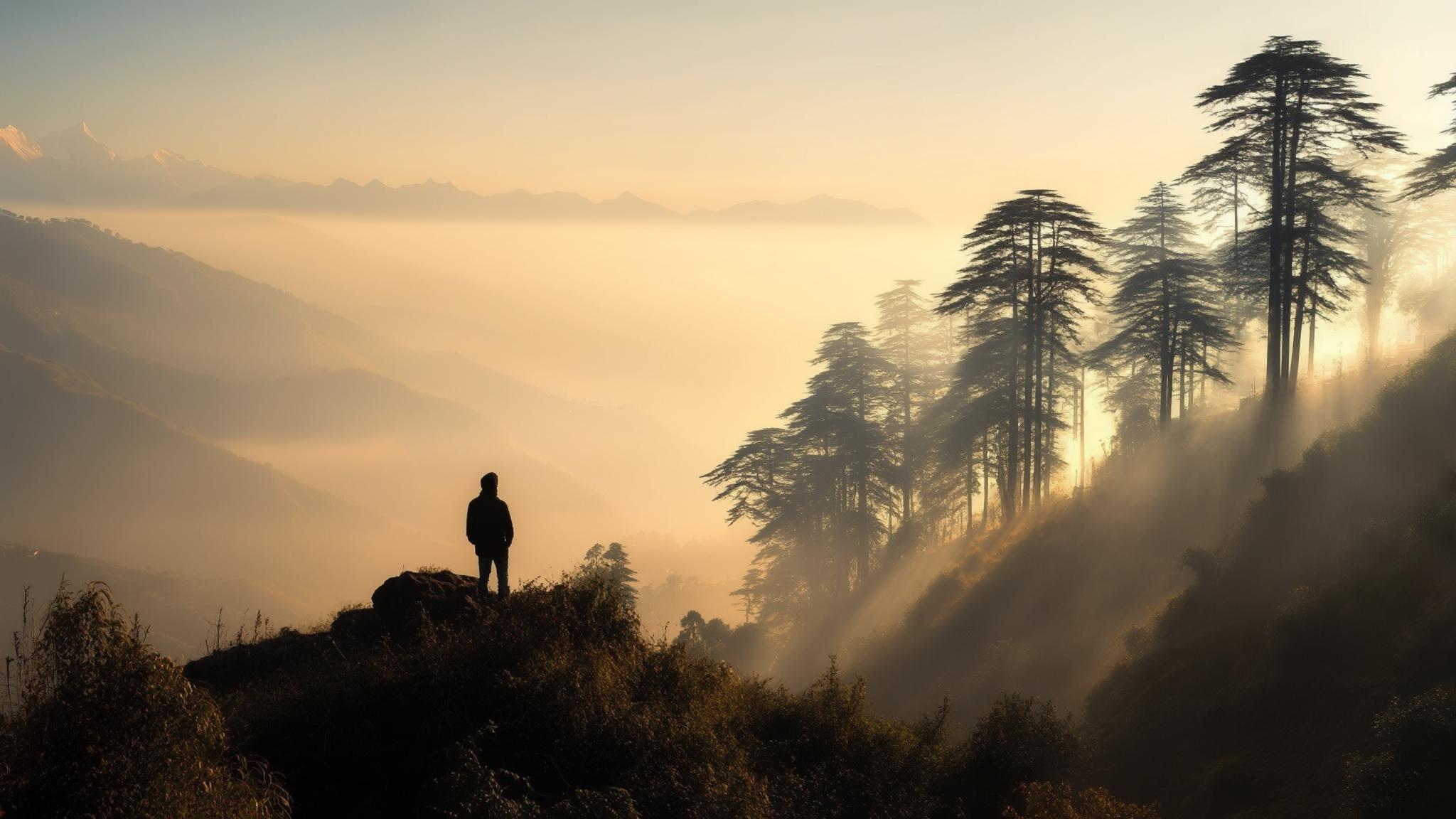
Mussoorie has a reputation problem — not because it’s a bad destination, but because the version most people visit is a pale imitation of the real thing. The Queen of Hills deserves better than three hours on Mall Road, a disappointing bowl of Maggi at Kempty Falls, and a return drive in bumper-to-bumper traffic. The travelers who fall in love with Mussoorie are the ones who ignore the standard playbook entirely.
The truth is that Mussoorie rewards preparation and punishes impulse tourism. At roughly 2,000 meters above sea level in the Garhwal Himalayan foothills of Uttarakhand, it offers panoramic Himalayan views, colonial-era architecture, dense oak forests, and a pace of life that genuinely slows you down — if you know where to find it.
The Timing Trap That Ruins Most Mussoorie Visits
Most Indian families plan Mussoorie in May or June, treating it as a summer school-holiday default. This is the single biggest planning mistake you can make. During peak summer, the 30-kilometer stretch from Dehradun to Mussoorie can take four hours by car — a journey that should take 45 minutes. Hotels charge peak-season premiums that can push a mid-range room to ₹8,000–₹12,000 per night, and Mall Road becomes so congested it loses every ounce of charm.
The sweet spot is shoulder season. March through mid-April offers something genuinely rare: clear skies, visible Himalayan peaks, blooming rhododendrons along the hillsides, and hotel occupancy low enough that you can negotiate rates on arrival. September and October deliver similar benefits after the monsoon clears — the air is washed clean, the green is impossibly vivid, and the mountains appear close enough to touch.
Monsoon season (July–August) is a calculated gamble. Landslides can block roads, and cloud cover eliminates mountain views for days at a stretch. Budget travelers sometimes find extraordinary deals — ₹1,500–₹2,000 per night for rooms that cost three times as much in summer — but factor in the real possibility of being stuck or rained in.
What Mall Road Is and What It Definitely Is Not
Mall Road is where most first-time visitors spend the bulk of their trip, and there is nothing wrong with that — provided you understand what it actually is. It is a commercial promenade, roughly 5 kilometers long, lined with shops selling woolens, local jams, souvenirs, and fast food. It has energy, views, and a lively atmosphere, particularly at dusk. It is not, however, the soul of Mussoorie.
The classic mistake is spending two full days on Mall Road and its immediate surroundings, then concluding that Mussoorie is overrated. The town’s genuine character lives in its quieter corners: the lanes behind Christ Church, the forested paths toward Landour Bazaar, and the colonial bungalows that cling to ridgelines above the main road.
The best time to walk Mall Road is early morning — 6:30 to 8:00 AM — when locals use it as a walking track, the mountains are usually clear, and the chai stalls are just opening. This single shift in timing transforms the experience entirely.
Landour: The Version of Mussoorie That Locals Actually Love
Landour sits about 400 meters above Mall Road and is technically a cantonment area, which has kept it quieter and less commercialized than its famous neighbor. Most visitors either don’t know it exists or assume it’s off-limits. It is neither — and it is, by a significant margin, the most atmospheric part of the greater Mussoorie area.
Author Ruskin Bond has lived in Landour for decades, and his presence has drawn a community of writers, artists, and long-term expats who have preserved much of the town’s Raj-era character. The Char Dukan area — literally “four shops” — is a cluster of small cafes and bakeries on a ridge at roughly 2,200 meters that serves some of the best coffee and baked goods in the hills. Prices are honest: expect to spend ₹150–₹300 per person for a full breakfast with coffee.
The Landour Language School, established in 1914, still operates as a Hindi and Urdu language institute for foreign diplomats and missionaries. Walking past its stone buildings on the Camel’s Back Road — a 3-kilometer loop trail popular among morning walkers — connects you to a layer of Mussoorie’s history that the souvenir shops on Mall Road simply cannot offer.
- Char Dukan (Landour): Best breakfast spot in the Mussoorie area — approx. ₹200 per person
- Camel’s Back Road: 3 km walking loop with unobstructed Himalayan views, no entry fee
- Lal Tibba: Highest point in Mussoorie at 2,275 m, with a telescope for mountain viewing (₹30 fee)
- Sisters Bazaar: Quiet colonial-era market with local provisions and zero tourist markup
The Real Cost of a Mussoorie Trip: A Transparent Breakdown
Travel blogs routinely publish either wildly optimistic budgets or luxury itineraries that have no bearing on how most Indian families actually travel. Here is an honest, category-by-category breakdown for a three-night, four-day Mussoorie trip for two adults in shoulder season (March or October 2026).
These figures assume travel from Dehradun, the nearest railhead. If you’re traveling from Delhi by train, add ₹1,200–₹2,400 per person for Shatabdi or Jan Shatabdi tickets on the Delhi–Dehradun route. The Dehradun Shatabdi departs New Delhi at 6:45 AM and arrives at 11:45 AM — efficient and comfortable for the first day of a trip.
Kempty Falls: Managing the Most Overcrowded Spot in Mussoorie
Kempty Falls is non-negotiable for most visitors — and with good reason. At 40 meters high, it is a genuinely impressive waterfall set in a narrow gorge, located approximately 15 kilometers from Mussoorie town center on the Chakrata Road. The problem is not the falls themselves; it is the infrastructure around them, which has not kept pace with visitor numbers that routinely exceed 5,000 people per day in peak season.
The workaround is simple and effective: arrive before 9:00 AM. At that hour, the parking area is manageable (₹50 for two-wheelers, ₹100 for cars), the steps down to the falls are uncrowded, and the water is actually visible rather than obscured by swimmers. The entry zone itself has no fee, but the ropeway ride down costs approximately ₹150 return per person and saves considerable effort on the climb back up.
Food at the stalls around Kempty is overpriced and mediocre — plan to eat breakfast in Mussoorie before leaving and save appetite for lunch back in town. A decent rajma-chawal or aloo paratha meal in Mussoorie town runs ₹150–₹200 per person at non-tourist-facing restaurants.
Where to Stay: Cutting Through the Noise
Mussoorie’s accommodation landscape has two reliable tiers for most travelers: heritage properties and family-run guesthouses. The mid-segment — generic business hotels charging ₹5,000–₹7,000 per night — offers the worst value of any category. You get chain-hotel functionality with none of the character and views that justify coming to a hill station in the first place.
For value, the Landour area offers small guesthouses run by local families at ₹1,800–₹3,500 per night in off-peak season. Rooms vary, but the location above the noise of Mall Road, the genuine hospitality, and the breakfast quality at the best of these properties consistently outperform properties twice the price on the main drag. Book directly with the property — aggregator platforms add 15–25% margin on Mussoorie accommodations.
- Heritage hotels near Library Chowk: Best views of Doon Valley, rates from ₹5,000–₹15,000 (off-peak)
- Landour guesthouses: Quietest location, most authentic, rates from ₹1,800–₹4,000
- Mall Road hotels: Most convenient, highest noise, rates from ₹3,500–₹12,000
- Bypass Road properties: Good for car travelers, slightly removed from walking areas, rates from ₹2,500–₹6,000
The Uttarakhand Tourism Development Board maintains a list of registered accommodation providers in Mussoorie, which is useful for verifying legitimacy of smaller guesthouses before booking. This matters particularly for solo female travelers and families with young children.
One practical note: confirm whether your hotel includes breakfast before booking. In Mussoorie’s shoulder seasons, many properties include breakfast as standard — a detail that meaningfully affects per-day budgeting and morning logistics.