
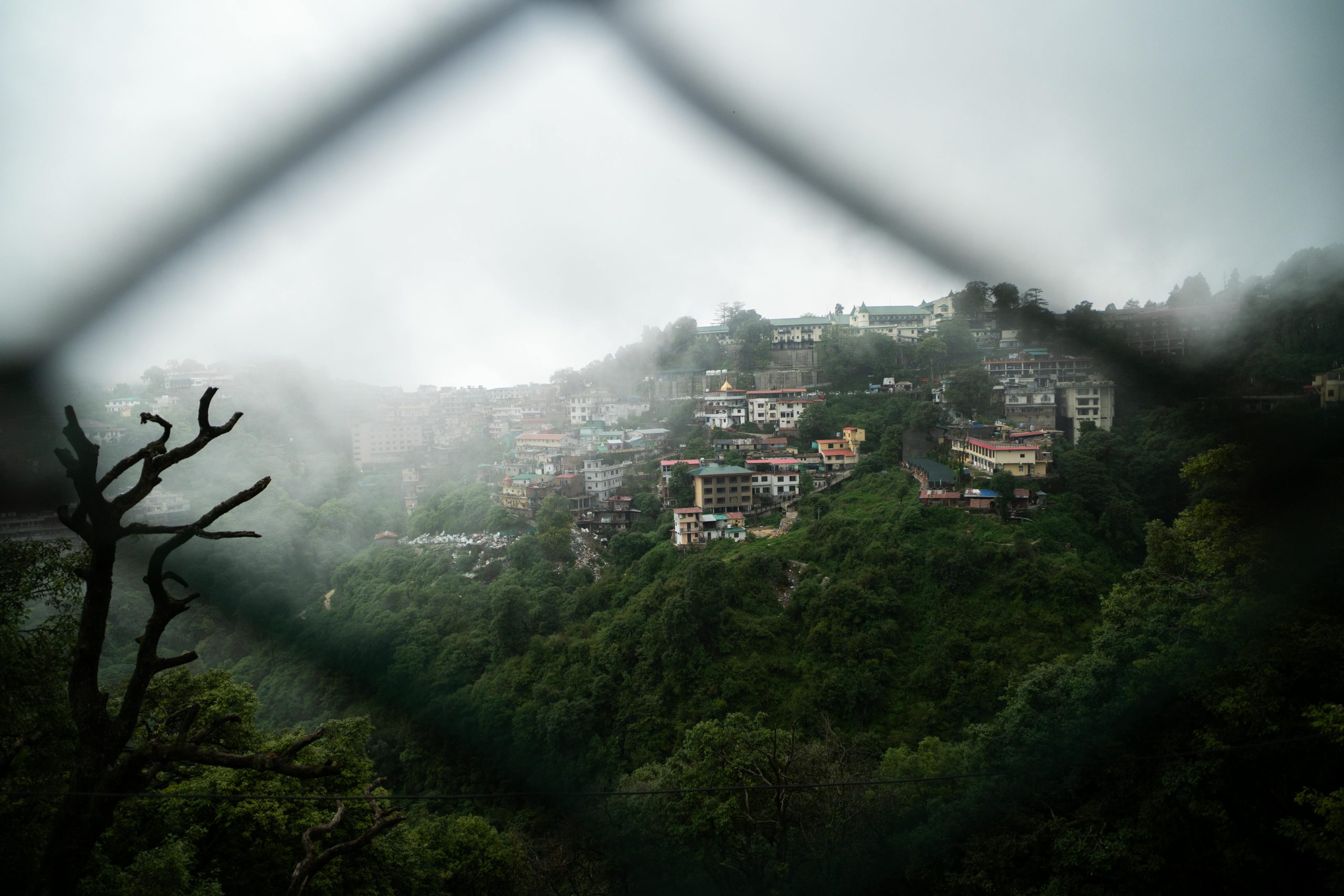
Roughly 3.5 million tourists visit Mussoorie every single year, and an estimated 60 percent of them arrive between May and June. On peak weekends in late May, the Mussoorie Municipal Council has recorded over 50,000 vehicles attempting to enter a hill town built for a fraction of that number. Traffic queues from Dehradun’s Rajpur Road to Library Chowk — a distance of 22 kilometres — can stretch to four hours or more.
This is not the Mussoorie of postcards. It is not the Mussoorie that Ruskin Bond wrote about in dozens of essays and novels set in these very hills. Yet year after year, the May-June pilgrimage continues, driven by school holidays, office leaves, and a deeply embedded belief that summer is when Mussoorie is at its best.
That belief is worth examining — because the evidence, when you look at it carefully, points in a completely different direction.
The Common Belief: Summer Equals the Best Mussoorie
The logic seems airtight on paper. The plains of North India are brutal in May — Delhi, Agra, Lucknow, and Jaipur regularly clock 44–47°C. Mussoorie, sitting at approximately 2,005 metres above sea level, offers a natural escape into 18–25°C temperatures. Add school summer holidays to the mix, and the result is a mass migration that has defined the hill station’s identity for over a century.
The British originally developed Mussoorie as a summer retreat in the 1820s, and the seasonal rhythm stuck. Generations of Indian families have inherited the same instinct — when it gets hot, head for the hills. Travel agents and hotel booking platforms reinforce this, listing May and June under “peak season” with premium pricing that signals desirability rather than warning.
The assumption, simply put, is this: if it costs more and everyone goes, it must be the best time to go.
The Crack in the Narrative: What Actually Happens in May
The temperature argument holds up. Mussoorie is indeed cooler than Delhi in May. But cooler does not mean comfortable when the experience surrounding that temperature is one of extreme congestion, noise, and inflated costs at every turn.
Mall Road — the 1.5-kilometre pedestrian promenade that is Mussoorie’s social spine — becomes so crowded during peak season that moving from Kulri Bazaar to Library Chowk can take 45 minutes on foot. Landour, the quieter cantonment area favoured by those in the know, starts receiving spillover crowds. Kempty Falls, located 13 kilometres from town, sees so many visitors that the waterfall itself is often barely visible behind the queue of people waiting for photograph spots.
Hotel quality also suffers in ways that booking photographs do not capture. Properties that maintain reasonable standards year-round often cut corners during peak season — housekeeping is stretched thin, dining staff are overworked, and the personalised service that makes a mountain stay memorable evaporates under the weight of full occupancy. Reviews on major booking platforms consistently reflect this pattern: the lowest-rated stays at otherwise well-regarded Mussoorie hotels cluster in May and June.
And there is the sky. May in Mussoorie is not reliably clear. Haze from the plains, combined with the onset of pre-monsoon cloud cover, frequently obscures the Himalayan panorama that is the entire point of being at elevation. The distant snow-capped peaks of Bandarpunch and Swargarohini — visible on clear days — disappear behind brown atmospheric haze for stretches of days at a time.
The Two Windows That Locals Actually Use
Ask any Landour resident, any Mussoorie-based writer, or any veteran hotelier when they recommend visiting, and the answer clusters around two distinct periods: late September through mid-November, and late February through late March.
The post-monsoon window — roughly October to mid-November — is arguably the finest weather window in the entire Himalayan foothills calendar. The monsoon clears the atmosphere completely, leaving visibility that can extend 150 kilometres on good days. The Himalayan panorama from Lal Tibba (Mussoorie’s highest point at 2,275 metres) in October is categorically different from the same view in May. Temperatures sit between 10°C and 20°C — cool enough for a jacket, warm enough for comfortable walking. The crowds have thinned dramatically. Hotel rates drop by 40–60 percent.
- October: Post-monsoon clarity, Himalayan views at their sharpest, oak and rhododendron forests turning colour, temperatures 10–20°C
- November: Crisp air, fewer tourists with each passing week, Diwali period sees a brief uptick but settles quickly, ideal for long walks on Camel’s Back Road
- Late February – March: Rhododendrons in full bloom across the hillsides, temperatures rising gently from 5°C to 18°C, cherry blossoms visible near Landour Bazaar, school holidays have not yet begun
The February-March window carries a different kind of magic. Mussoorie wakes up slowly from winter — some properties remain partially closed through January — but by late February, the town is functional and strikingly beautiful. The rhododendron bloom, which peaks in March, turns the hillsides around Cloud End and Benog Wildlife Sanctuary into a wash of red and pink. This is when the town belongs, for a few precious weeks, to people who sought it out rather than followed the crowd.
Planning a Mussoorie Trip Around the Right Season: Practical Details
Knowing the right months is only part of the equation. Getting the logistics right makes the difference between a trip that delivers on its promise and one that simply happened in a better month.
Getting there: Mussoorie is 35 kilometres from Dehradun, which has the Jolly Grant Airport with daily flights from Delhi (approximately ₹3,500–₹7,000 one way depending on advance booking). The Dehradun Railway Station connects to major North Indian cities, with the overnight Jan Shatabdi from Delhi running roughly ₹700–₹1,500 in second AC. During off-peak months, pre-paid taxis from Dehradun to Mussoorie run ₹600–₹900, compared to ₹1,200–₹1,500 during peak season surge pricing.
Where to eat: Kalsang Restaurant on Mall Road has served Tibetan and Chinese food since 1964 and remains genuinely good value at ₹200–₹400 per person. Char Dukan in Landour — a cluster of four shops around a small chowk — is best known for Anil’s Café’s maggi and chai, and for Sister Bazaar’s homemade jams. Both are accessible year-round but are infinitely more enjoyable when you can actually sit at an outdoor table without being jostled.
What Choosing the Right Season Actually Changes
The difference between a peak-season Mussoorie trip and an off-season one is not simply a matter of comfort or cost — though both improve dramatically. It changes what the trip fundamentally is.
In October, walking the 3-kilometre Camel’s Back Road at dusk, with the Doon Valley spread below in amber light and the Himalayan skyline turning rose-gold above, is a genuinely moving experience. In May, the same walk involves navigating around hundreds of other people, listening to loudspeakers from nearby hotels, and breathing traffic exhaust from the road below. These are not versions of the same experience. They are different experiences entirely.
Mussoorie has been a beloved destination for 200 years because it is, at its core, a beautiful place. The rhododendron forests of Benog, the colonial-era architecture around Landour Bazaar, the particular quality of the light on the Himalayan horizon — none of that goes away. But it is accessible, in any meaningful sense, only when the infrastructure of the town is not overwhelmed by the sheer volume of people trying to access it simultaneously.
The school holiday calendar is real, and its constraints are real. But for travelers with any flexibility — couples, retirees, remote workers, families with children in boards that allow some scheduling latitude — choosing October-November or late February-March over May-June is among the most impactful single decisions you can make for a Mussoorie trip. It costs less, looks better, feels calmer, and delivers the actual experience that drew you to a Himalayan hill station in the first place.