
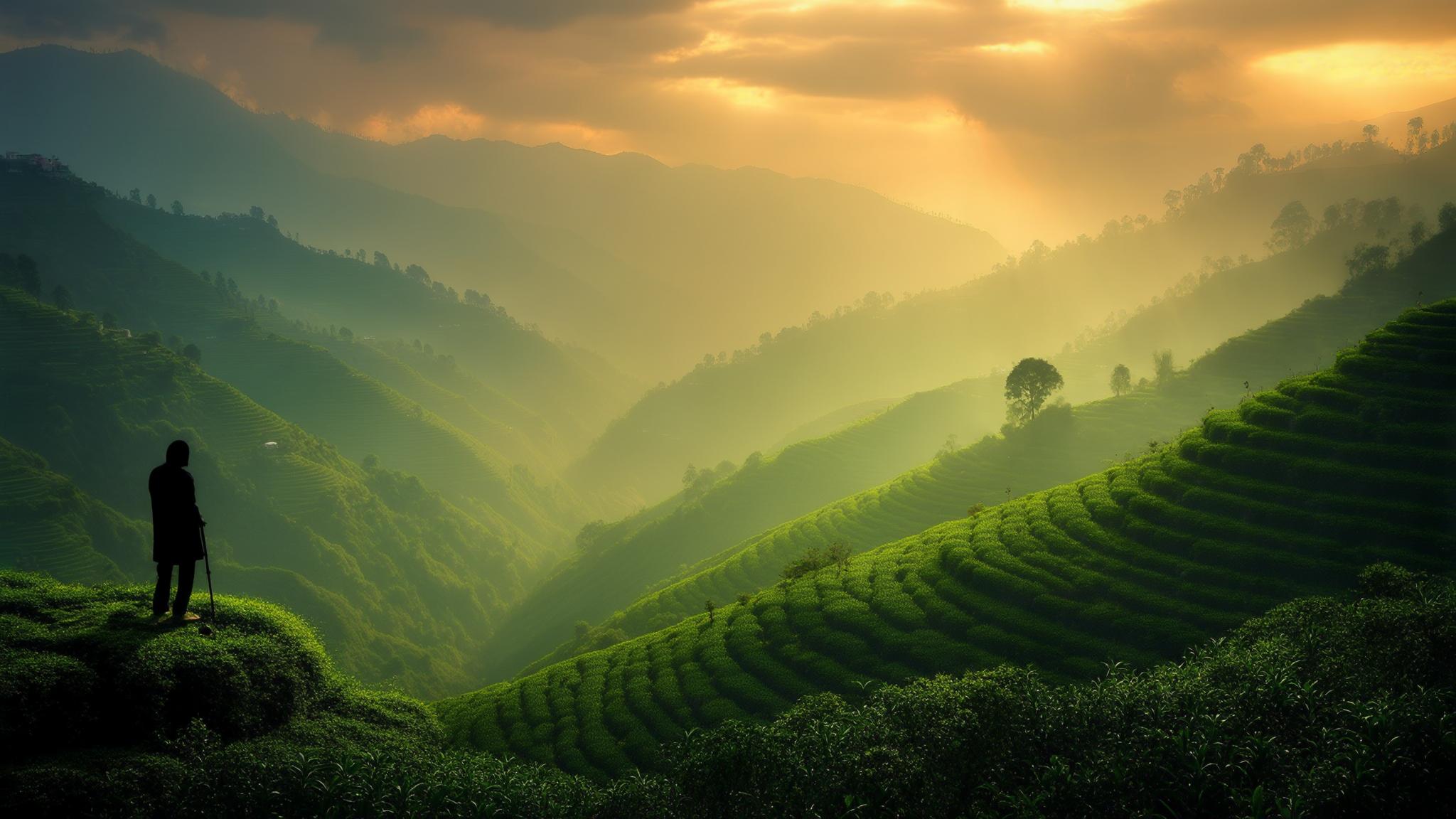
Priya and her husband booked a Mussoorie trip for their fifth anniversary in late May. They had dreamed of strolling along Mall Road in crisp mountain air, sipping chai with a view of snow-capped Himalayan peaks. What they got instead was a two-hour traffic jam at the Dehradun bypass, a hotel room that cost ₹7,500 per night (up from the ₹3,200 they’d seen in February), and a Gun Hill viewpoint so crowded they could barely see the mountains through the haze and selfie sticks. They are not alone. This story plays out for hundreds of thousands of Indian travelers every single summer.
The assumption is deeply baked in: Mussoorie is a summer hill station, therefore summer is when you go. Schools are on holiday, the plains are scorching, and the mountains are calling. But this logic — perfectly reasonable on the surface — leads to one of the most consistently disappointing travel experiences in North India. The real question is not whether to visit Mussoorie, but when.
The Common Belief: Summer Equals Hill Station Season
The idea of Mussoorie as a summer escape has roots going back to the British colonial era, when the hill station was established in 1823 as a retreat from the unbearable heat of the Gangetic plains. Landour Cantonment, the quieter ridge above Mussoorie, was a sanitarium for British soldiers. The tradition of “going to the hills” in summer became cultural shorthand for relief, luxury, and escape — and it stuck hard.
Today, travel aggregators reinforce this. Search “Mussoorie trip” on any major booking platform between March and April, and you will be flooded with packages that are almost exclusively designed around a May-June window. The Indian school calendar, with its long summer break from mid-May to late June, drives enormous family travel demand toward hill stations. Mussoorie, being just 35 kilometres from Dehradun and roughly 290 kilometres from Delhi via the expressway, sits at the geographic sweet spot of accessibility.
So the belief is rational, historically grounded, and commercially reinforced. Which is exactly why so many people get it wrong.
The Crack: What Actually Happens in May and June
The moment you arrive at the Mussoorie barrier on a Saturday in late May, the illusion begins to fracture. The 5-kilometre stretch from Library Chowk to Kulri Bazaar — normally a 15-minute walk — can take over an hour by car due to vehicle restrictions and sheer volume. The Uttarakhand government has implemented several traffic management orders over the years, including odd-even schemes and timed-entry windows, precisely because the infrastructure cannot absorb peak demand.
The temperature reality also surprises first-timers. Mussoorie in June averages between 15°C and 25°C — genuinely pleasant compared to Delhi’s 42°C. But it is not the crisp, cool mountain air most people imagine. Humidity rises sharply as the pre-monsoon moisture builds. The famous Himalayan panorama — Bandarpunch, Srikantha, and the Gangotri range — is almost entirely obscured by haze and atmospheric pollution during peak summer weeks.
Hotel pricing in this window is aggressive. A mid-range property that charges ₹2,800–₹3,500 per night in October or February routinely lists at ₹6,500–₹9,000 for the same room in the last week of May. Budget options near Gandhi Chowk fill up weeks in advance. Travellers who book late often end up in lower-quality accommodations further from the ridge, paying premium prices for the privilege.
Why the Common Belief Is Structurally Wrong
The core problem is that “summer hill station” is a nineteenth-century concept applied to a twenty-first-century crowd. When the British established Mussoorie, the population of the entire Dehradun district was a fraction of what it is today. The road infrastructure, the number of registered vehicles, the mobile connectivity driving last-minute trip decisions — none of these existed. The hill station model was designed for a trickle. It now receives a flood.
There is also a visibility issue that most travel content simply ignores. Mussoorie’s primary draw — beyond the colonial architecture and the walking paths — is its position on the outer Himalayan range. On a clear day from Lal Tibba (at 2,275 metres, the highest point in Mussoorie), you can see peaks like Bandarpunch (6,316m) and Kedarnath (3,583m) with extraordinary clarity. That view, which forms the centrepiece of every Mussoorie travel photograph, is essentially unavailable in May and June due to haze.
The monsoon, which typically arrives in Mussoorie by late June or early July, brings its own complications: landslides on the Dehradun–Mussoorie road (NH707A), disrupted power supply, and leeches on the forest trails. While the waterfalls at Kempty Falls and Bhatta Falls are at their most dramatic, the associated risks and accessibility issues make July–August a genuinely difficult travel window for most families.
The Real Truth: When Mussoorie Is Actually at Its Best
The answer, consistently reported by both long-term residents and experienced travellers, is a two-window approach. The first window is mid-September to mid-November. The monsoon has cleared, the vegetation is intensely green, the air has been washed clean, and the Himalayan panorama emerges in full, extraordinary detail. Temperatures range from 10°C to 22°C — genuinely cool without being cold. This is the window for Lal Tibba at dawn, for the Camel’s Back Road walk without crowds, and for sitting on a hotel balcony with an unobstructed mountain view.
The second window is late January to mid-March. This is when Mussoorie receives snowfall — typically one to three significant snowfall events per season, though this varies by year. The town transforms. Mall Road, ordinarily a busy commercial strip, becomes a snow-dusted promenade. Temperatures drop to 2°C–4°C at night and 10°C–14°C during the day. Hotel rates are at their annual low, and the town has a quiet, unhurried character that is completely absent in summer.
What This Means for Your Mussoorie Trip Planning
Practically speaking, shifting your Mussoorie trip out of the summer window changes almost everything about the experience — at lower cost. A three-night stay for two people in mid-October, including travel from Delhi by Volvo bus (₹600–₹900 per person each way from ISBT Kashmere Gate), a mid-range hotel near Kulri Bazaar, and daily meals at local dhabas and restaurants, can comfortably fit within ₹12,000–₹16,000 total. The same trip in late May can easily run ₹22,000–₹28,000.
For families with school-age children, the October window aligns with the Dussehra–Diwali holiday cluster, which gives a genuine school-holiday option that is less crowded than summer. The Landour Bazaar, a 30-minute walk uphill from Kulri, is at its photogenic best in October when the oak and rhododendron forests along the road are still lush from monsoon rains but the sky is clear.
For couples specifically, the February window offers something the summer crowd cannot: a quiet, atmospheric Mussoorie that feels genuinely romantic rather than theme-park busy. According to the Uttarakhand Tourism Development Board, the state government has been actively promoting shoulder-season travel to distribute tourist load more evenly across the calendar — which means more infrastructure investment and event programming in these windows going forward.
The Queen of Hills has not changed. The experience she offers has simply been overwhelmed by the calendar slot most people assume is correct. Visit in October, wake up before the sun does, walk to Lal Tibba, and you will understand why people who actually live here love this place — not because of its summer crowds, but in spite of them.