
Priya and Rohan drove up from Delhi on a Friday night, booked a hotel near the Library Chowk, and spent Saturday shuffling shoulder-to-shoulder past identical souvenir stalls. By Sunday morning, Rohan was already googling “Nainital vs Mussoorie — which is better.” They had seen Mussoorie the way most people see it: through a crowd, in a hurry, from the wrong angle.
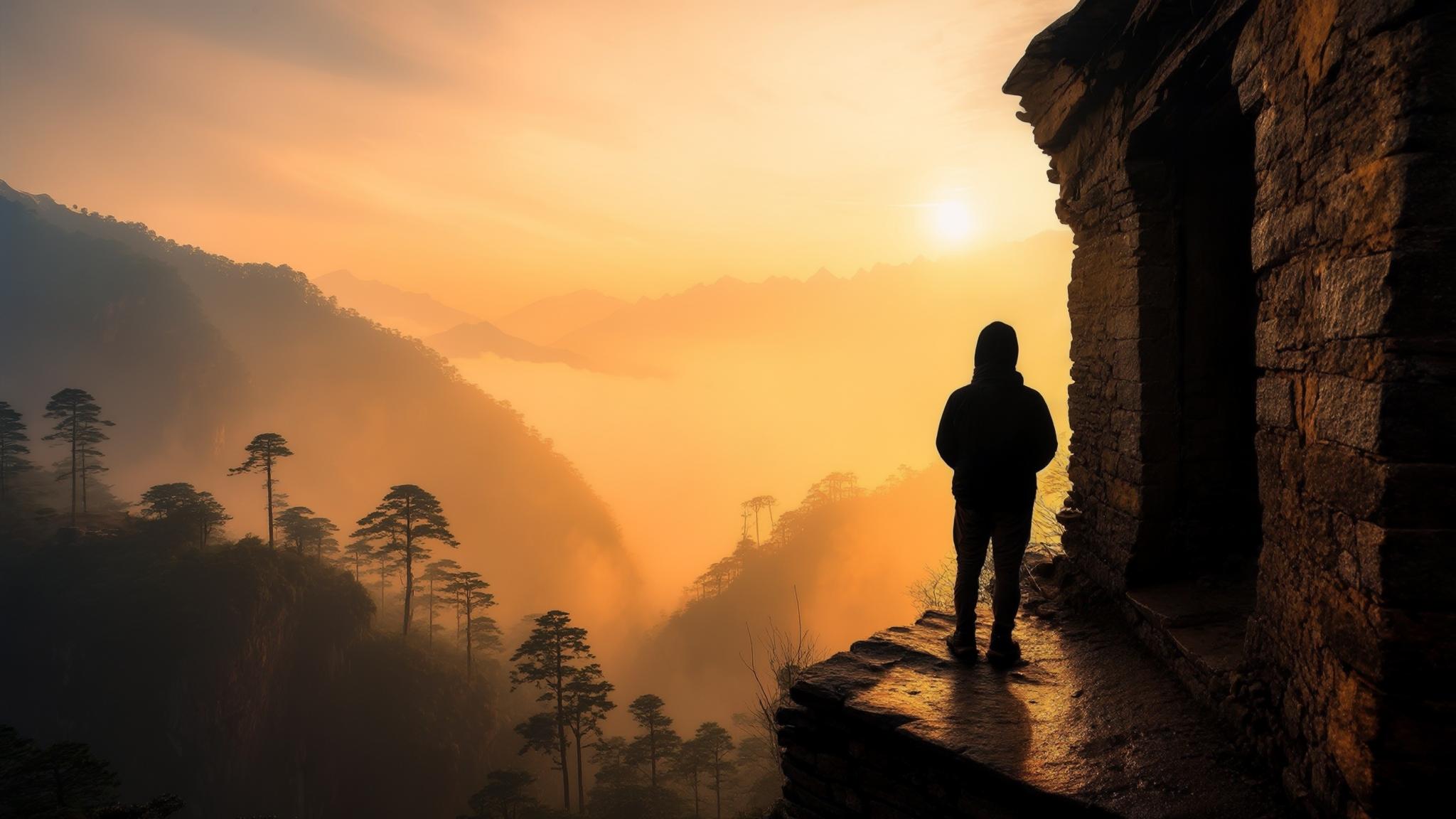
The truth is that Mussoorie is two completely different places. One is a noisy, overlit promenade stretched across 2 kilometres of ridge. The other is a 6,500-feet-high cantonment town of stone churches, deodar forests, and empty morning roads where the Gangotri range floats above the clouds at sunrise. The second version is only about a 20-minute walk from the first — and almost nobody goes there.
Why Mall Road Is Not the Problem — Your Itinerary Is
Mall Road serves a purpose. The food stalls, the toy shops, the horse rides — they exist because millions of families want exactly that, and there is nothing wrong with wanting it. The problem arises when visitors treat Mall Road as the destination rather than the starting point.
Mussoorie sits at an elevation of roughly 2,005 metres above sea level along the lower Himalayan ranges of Uttarakhand, approximately 290 km from Delhi. The ridge it occupies stretches east to west, and the eastern end — older, quieter, less developed — is where the hill station’s real character lives. Most visitors never make it past the western cluster of hotels near Kulri.
The practical fix is simple: check in on a Thursday or Sunday evening, spend Saturday morning on the touristy stretch to get it out of your system, and then give yourself one full day — ideally starting before 7 AM — to walk east toward Landour. Everything changes.
Landour: The Version of Mussoorie That Survived Commercialisation
Landour is not a separate destination — it is a cantonment area that begins where Mussoorie’s commercial buzz fades out, about 3 km east of Kulri Market. The road climbs steeply past the Char Dukan crossroads (four small shops that have been selling maggi and tea to walkers since the 1940s) and opens into a network of quiet lanes lined with colonial-era stone houses, old missionary schools, and the kind of silence that feels deliberate.
Author Ruskin Bond has lived in Landour for decades, and the area around his home on Ivy Cottage has become a gentle pilgrimage for readers. But beyond literary tourism, Landour earns its visit through atmosphere alone. The Landour Language School, established in 1906, still operates here. St. Paul’s Church dates to 1840. These are not reconstructed heritage sites — they are simply buildings that have been standing and in use for over 150 years.
The walk from Kulri to Char Dukan takes about 35–45 minutes at a comfortable pace. Auto-rickshaws cover the route for ₹100–₹150 per person. From Char Dukan, the Landour loop road is a 5 km circular walk that most fit adults complete in about 90 minutes without rushing. Carry water — there are very few shops once you leave the crossroads.
Lal Tibba: The Highest Point in Mussoorie That Delivers on Its Promise
Every hill station has a viewpoint that tourists are sent to and that rarely delivers. Lal Tibba, at approximately 2,275 metres, is the highest point in the Mussoorie area — and on a clear morning between October and March, it genuinely delivers.
From the observation tower here, you can see Bandarpunch (6,316 m), Swargarohini, Kedarnath, and on exceptional days, the Gangotri peaks. The Indian Army maintains a facility at Lal Tibba, and there is a paid telescope (₹20–₹30) that brings the snow ridges close enough to see individual features. This is not a manufactured experience — on the right morning, the view stops conversation.
The honest caveat: visibility is entirely weather-dependent. Between June and September (monsoon), clouds cover the peaks most mornings. The October–February window, particularly after a clear night, is when Lal Tibba justifies the trip up. Hire a local auto or cab for ₹200–₹300 one way, or walk the 5 km from Landour if you have the legs for it.
The George Everest Trek: 8 km of Forest Trail That Most Tourists Skip Entirely
Sir George Everest, the Surveyor General of India after whom the world’s highest peak was named, had his home and laboratory on a spur about 6 km west of Mussoorie town. The ruins of his estate — two stone buildings called Park House and the Laboratory — sit at approximately 2,000 metres and overlook both the Doon Valley to the south and the snow ranges to the north.
The trek to George Everest Peak (locally called “Company Garden to Everest Point” or simply the Hathipaon trail) covers roughly 4–5 km one way from the trailhead near Barlowganj. The path passes through oak and rhododendron forest, and in March and April the rhododendrons bloom in red and pink along the trail. The entire round trip takes 3–4 hours at a moderate pace.
A Realistic Budget for Doing Mussoorie Properly
The expensive version of Mussoorie — hotels on the Mall, resort packages, weekend premium pricing — can cost ₹8,000–₹15,000 per person for two nights. But the better version of the trip, based on walking and exploring rather than sitting in resort lobbies, can be done for significantly less.
The Mussoorie bus stand is connected to Delhi’s Kashmere Gate ISBT by regular UPSRTC and private Volvo services. Journey time is approximately 6–7 hours depending on traffic at Dehradun. According to the Uttarakhand Tourism portal, road connectivity to Mussoorie has improved significantly following bypass work on the Dehradun–Mussoorie stretch, reducing congestion during peak hours.
The nearest railway station is Dehradun, approximately 34 km from Mussoorie. From Dehradun station, shared taxis to Mussoorie cost ₹150–₹200 per seat and leave when full from outside the station. A private cab costs ₹700–₹900 for the one-way trip.
When to Go — and One Season Most Travelers Overlook
The conventional wisdom says April–June and September–November. Both are correct. April and May bring warm days, clear skies, and rhododendrons in bloom along the forest trails. October and November offer sharp visibility and the first dusting of snow on distant peaks.
The overlooked season is January–February. Mussoorie in deep winter is cold — temperatures can drop to 1–4°C at night — but hotel rates fall by 40–60% off peak prices, Mall Road is genuinely walkable, and the snowfall that occasionally blankets the town (and always covers Lal Tibba) turns the ridge into something that feels entirely different from the summer hill station crowds know.
Avoid the July–August core monsoon period unless you specifically enjoy mist, leeches on the forest trails, and the risk of road closures due to landslides on the Dehradun–Mussoorie route. The scenery is undeniably dramatic, but the practicalities are genuinely difficult for casual travelers.