
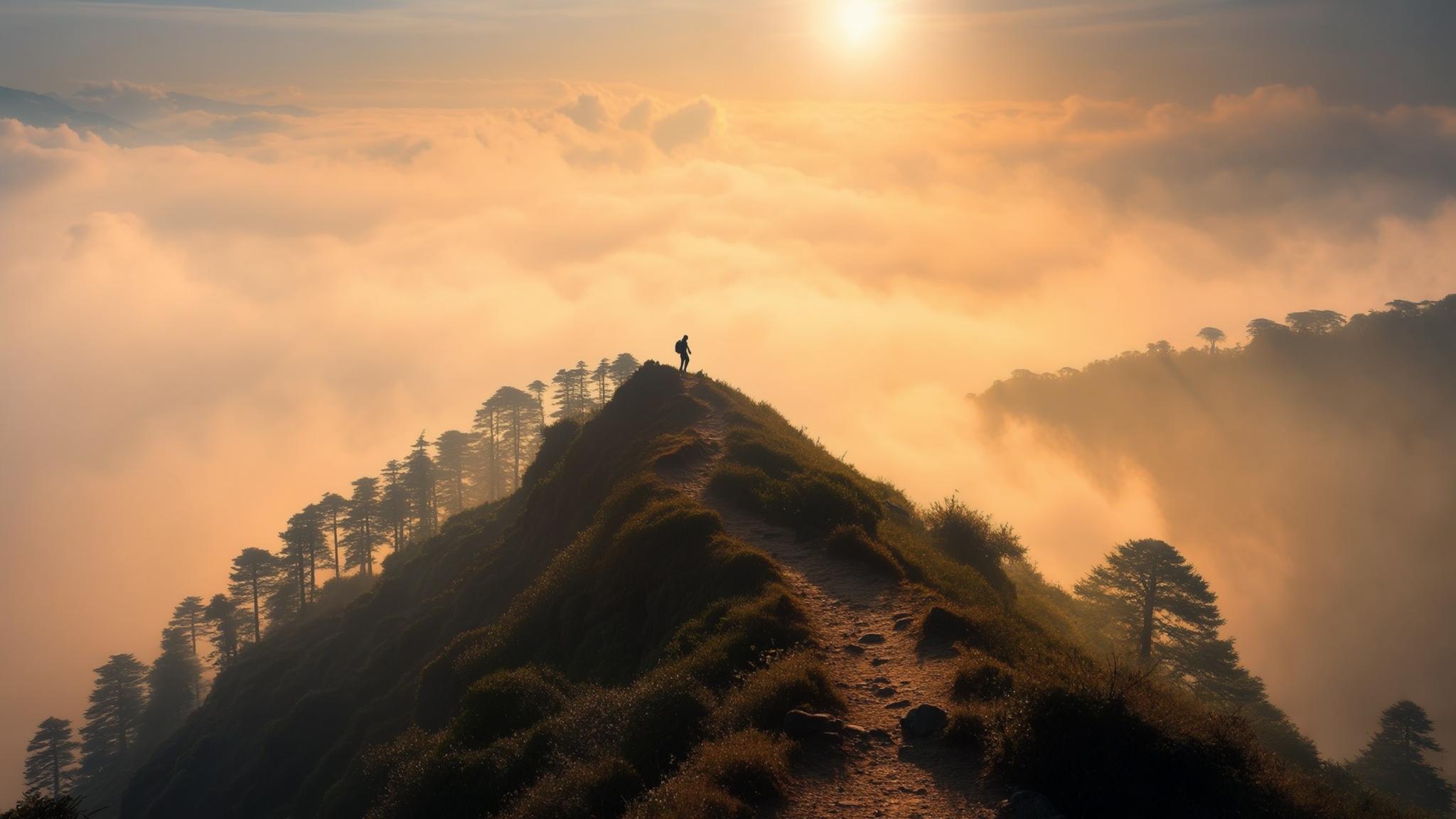
With Mussoorie’s hotel occupancy rates climbing sharply from mid-April each year, the first days of late March and early April represent a brief, underused window for travelers who want trail access without crowds. The Benog Wildlife Sanctuary, located approximately 11 km west of Mussoorie’s Library Chowk, sits at the far end of a ridge that most tourists — ferried between Kempty Falls and Gun Hill by shared taxis — never reach. Entry to the sanctuary costs ₹50 per person for Indian nationals as of the 2025–26 rate schedule issued by the Uttarakhand Forest Department.
The sanctuary covers roughly 239 hectares of temperate broadleaf forest and is administered under the Uttarakhand Forest Department’s Yamuna Forest Division. Its highest point, Benog Tibba, sits at an elevation of approximately 2,290 metres above sea level — making it the highest accessible peak on the main Mussoorie ridge. On clear mornings in late March and early April, before pre-monsoon haze builds, sightlines extend across to Bandarpunch and the Gangotri group of peaks.
What the Trail Actually Looks Like
The Benog trail is a marked forest path, not a technical climb. Gradients are moderate throughout, with a sustained ascent in the final 1.5 km to Benog Tibba. The forest canopy is predominantly oak, rhododendron, and deodar, and the trail surface is compacted earth with some exposed root sections — manageable in trail shoes, though boots are more comfortable after rain.
At the summit, a small temple dedicated to Mary’s Shrine stands at the clearing. The structure dates to the British-era hill station period and is still an active site of local worship. Views from the clearing are unobstructed to the north and northwest, with a bench and low railing installed by the forest department. The descent follows the same path and takes roughly 45 minutes less than the ascent.
- Distance: Approximately 6 km round-trip from the sanctuary gate
- Elevation gain: Roughly 350 metres from gate to summit
- Time required: 2.5 to 3.5 hours depending on pace and birding stops
- Trail surface: Compacted earth, exposed roots in sections
- Facilities: One small refreshment stall near the gate; no facilities at the summit
The Birding Case for Benog
Benog Wildlife Sanctuary holds formal protected status partly because of its documented avian biodiversity. According to records maintained by the Uttarakhand Forest Department, the sanctuary supports over 150 bird species across resident and migratory categories. Late March to early May is considered the primary breeding season for several montane species, making morning walks during this period particularly productive for birders.
Commonly reported species include the Khalij pheasant, the Himalayan griffon, the crested serpent eagle, and multiple species of laughingthrush. The white-capped water redstart and plumbeous water redstart are both reliably found near the small stream crossing at the lower section of the trail. Serious birders typically arrive by 6:00 a.m., shortly after the gate opens.
Getting There and What It Costs
The sanctuary gate is accessible from Mussoorie by two routes. The most direct is by taxi or private vehicle along the Benog Road, a roughly 20-minute drive from Library Chowk. Shared taxis covering this route are less common but can occasionally be found from the Masonic Lodge taxi stand — negotiate a fare and specify Benog Gate, not just “Benog.” Return taxis are unreliable from the gate itself; most visitors arrange a pickup time with their driver.
The alternative is a longer walk from the western end of Camel’s Back Road, which adds approximately 3 km each way but passes through pleasant residential neighbourhoods and offers its own ridge views. This option suits visitors staying in the western cluster of hotels near the Picture Palace area.
How Benog Compares to Mussoorie’s Other Main Draws
Mussoorie’s most-visited attractions — Kempty Falls, Gun Hill, and Lal Tibba — each have meaningful visitor volumes by mid-morning on weekends. According to data cited by the Uttarakhand Tourism Development Board, Mussoorie received approximately 3.2 million domestic tourists in 2024, with the bulk of that footfall concentrated on Mall Road and the three to four sites accessible by ropeway or short taxi ride.
Benog, by contrast, sees far lower footfall — partially because it requires a purposeful decision to go rather than being visible from the main road. The trade-off is meaningful: no queues at the gate, no vendors on the trail itself, and wildlife that has not been habituated to heavy human presence.
Practical Planning: The Pre-April Window
Late March and the first two weeks of April represent the most practical period for a Benog-focused trip. Temperatures at the sanctuary’s elevation range from approximately 8°C at dawn to 18°C by early afternoon during this period — warm enough for light layering, cool enough for sustained walking. The rhododendron trees along the lower section of the trail are in full bloom through mid-April, with red and pink canopies visible from the path.
By the first week of May, weekend trail traffic increases noticeably and hotel rates across Mussoorie climb to peak-season pricing, with mid-range properties on Mall Road and Landour frequently reaching ₹4,000–₹8,000 per night. Travelers who book now for the last week of March or first two weeks of April will find rates roughly 30–40 percent lower than May averages, according to pricing data aggregated by travel platforms including MakeMyTrip.
The total cost for a Benog day trip — including return taxi, entry fee, and trail snacks from the gate stall — runs to approximately ₹800–₹1,100 per person when costs are split between two travelers. For a solo traveler paying full taxi costs, the total is closer to ₹1,300–₹1,600. By any comparison with Mussoorie’s more commercial attractions, the cost-to-experience ratio is unusually favourable.
For travelers planning their first Mussoorie trip or returning visitors who have already seen the standard circuit, the western ridge offers something most of the hill station’s infrastructure is not designed to provide: a walk through functioning forest, without noise, without vendors, and with a genuine likelihood of seeing wildlife that has not learned to beg at a parking lot. That window, before summer crowds arrive, closes in a matter of weeks.