
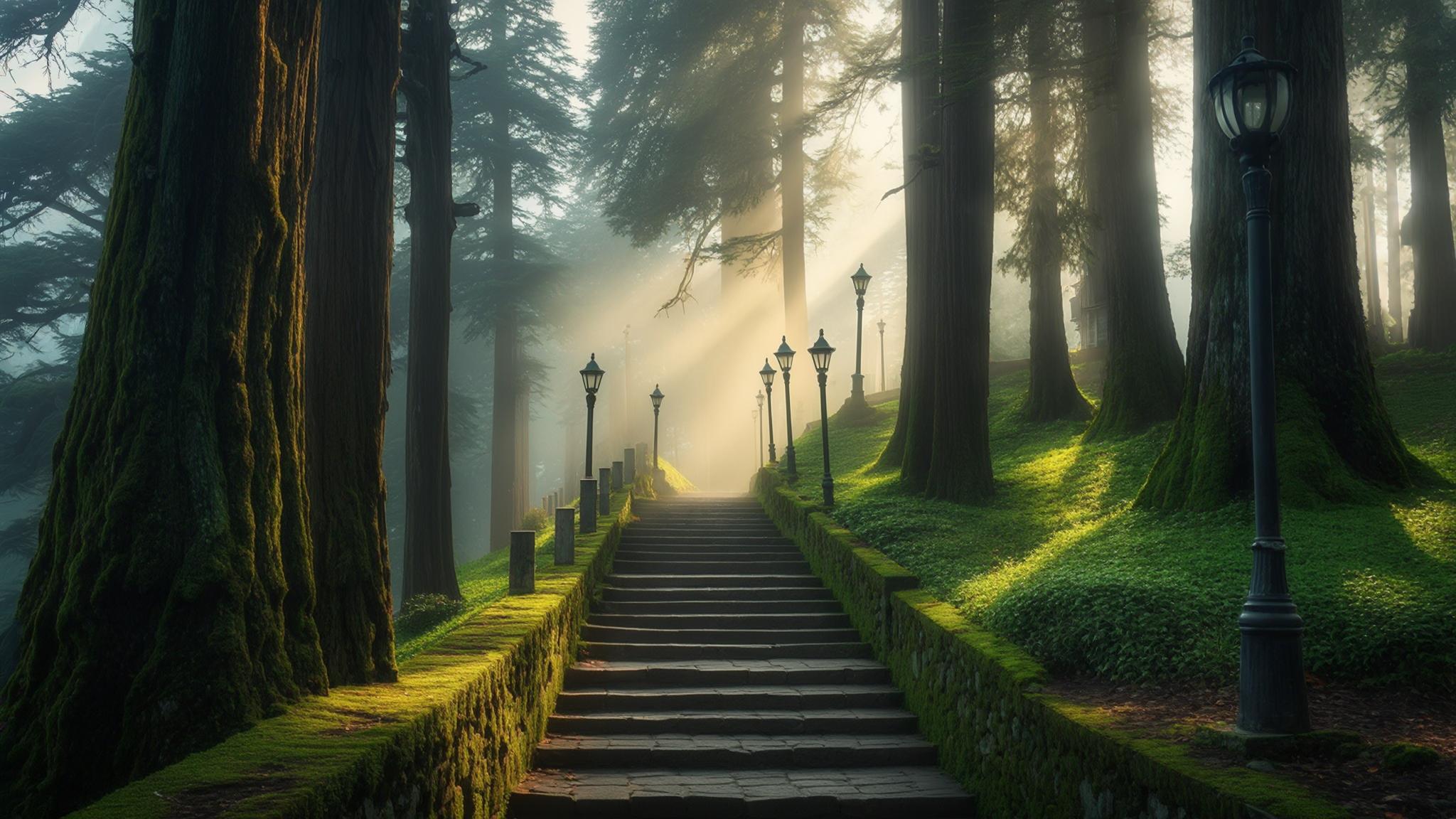
What would change about how you travel if you knew the most rewarding part of a destination was the part most people drive straight through? In Mussoorie, Uttarakhand’s most visited hill station, that question has a concrete answer — and it runs along a ridge most tourists never walk.
A roughly 4-kilometre walking route connecting Landour Clock Tower, Char Dukan, and Lal Tibba has existed for well over a century, used historically by British officers, missionaries, and later by writers including Ruskin Bond, who has lived in Landour for decades. Today, the trail remains largely absent from mainstream travel itineraries, even as Mussoorie receives an estimated 3 to 4 million visitors annually, according to the Uttarakhand Tourism Development Board.
What the Trail Actually Covers
The route begins at Landour Clock Tower, a Victorian-era structure built in the 1840s that marks the unofficial boundary between the commercial bustle of Mall Road and the quieter cantonment area of Landour. From there, the path climbs gradually through Landour Bazaar — a narrow lane of old stone shops selling everything from local honey to second-hand books — before reaching Char Dukan.
Char Dukan, which translates literally to “four shops,” is a small plateau with a cluster of eateries that has served as a social gathering point since at least the early 20th century. The area is documented in Ruskin Bond’s essays and is referenced in several accounts of Landour’s cantonment history. From Char Dukan, a further uphill walk of approximately 1.5 kilometres leads to Lal Tibba, the highest point in the Mussoorie range accessible on foot or by vehicle.
- Landour Clock Tower: Starting point, built circa 1840s, Victorian Gothic architecture
- Landour Bazaar: Approximately 600 metres of stone-paved lane with local vendors
- Char Dukan: Historic plateau eateries at roughly 2,100 metres elevation
- Lal Tibba: Highest accessible peak at 2,275 metres, views of Bandarpunch and Kedarnath ranges on clear days
When to Walk It and What Conditions to Expect
The trail is walkable year-round, but conditions vary significantly by season. The clearest mountain views from Lal Tibba occur between October and February, when post-monsoon air reduces haze. Temperatures during this window range from approximately 2°C to 15°C, according to historical weather data compiled by the India Meteorological Department.
March through June brings warmer temperatures (12°C to 25°C) and heavier tourist footfall on Mall Road, though Landour itself remains noticeably less crowded than the main town. The monsoon season, July through September, makes the stone-paved sections of Landour Bazaar slippery and reduces visibility from Lal Tibba to near zero on most days.
The Food Stops Along the Route
Char Dukan is the most documented food stop on the route. The four original establishments — which have expanded slightly over the decades but retained the collective name — serve Maggi noodles, omelettes, local bread, and tea. Prices at Char Dukan run approximately ₹50 to ₹150 per item as of March 2026, making it one of the more affordable eating spots relative to Mall Road restaurants.
Landour Bakehouse, located just off the main bazaar lane, has been referenced in multiple travel accounts as serving fresh-baked goods including banana bread and cinnamon rolls. It operates on limited hours, typically 8 a.m. to 6 p.m., and is known to sell out of popular items by early afternoon during peak season.
How to Get Here and Where to Stay
Mussoorie is approximately 35 kilometres from Dehradun, the nearest major city and railway hub. The drive takes roughly 1 to 1.5 hours by road depending on traffic. Shared taxis from Dehradun’s Mussoorie bus stand run frequently and cost approximately ₹150 to ₹200 per seat as of early 2026. Private cabs cost approximately ₹800 to ₹1,200 one way.
The Landour area itself is a cantonment zone, which means large hotels are absent. Accommodation options are concentrated in the main Mussoorie town, a 20 to 30 minute walk or short auto-rickshaw ride from the Clock Tower trailhead. Budget guesthouses in Mussoorie start at approximately ₹800 to ₹1,500 per night; mid-range hotels with mountain views range from ₹2,500 to ₹6,000 per night, according to listings on major booking platforms as of March 2026.
The Historical Context Most Visitors Miss
Landour was established as a British military sanatorium in 1827, predating Mussoorie’s development as a civilian hill station. The cantonment designation has preserved much of the original built environment — stone churches, colonial bungalows, and the ridge-top road layout — in a form largely unchanged since the 19th century. The Archaeological Survey of India lists several structures in the Landour area under protected status.
Ruskin Bond, whose home Ivy Cottage sits in the Landour cantonment, has written extensively about the area in works including “Rain in the Mountains” and “Landour Days.” His presence has made the locality a point of literary pilgrimage for readers, with visitors occasionally spotting the author at Char Dukan on weekend mornings, according to multiple published accounts and local reports.
The trail’s low profile is partly structural. Landour falls within a cantonment zone administered separately from the Mussoorie Municipal Board, which means it receives less promotional coverage in standard tourism materials. The Uttarakhand Tourism Development Board’s official Mussoorie pages focus primarily on Mall Road, Kempty Falls, and Camel’s Back Road — none of which are part of the Landour heritage route.
What Visitors Should Know Before Going
Photography is permitted throughout the route, with the exception of areas immediately adjacent to active military installations within the cantonment. Visitors are advised to stay on the marked road through Landour rather than cutting through private or restricted land. The cantonment administration has, on past occasions, restricted vehicle access during certain hours — walkers are generally unaffected, but checking current access conditions before visiting is advisable.
The total cost for a day trip covering this route from Mussoorie town — including food at Char Dukan, the telescope viewing fee at Lal Tibba, and a return auto-rickshaw — comes to approximately ₹300 to ₹500 per person, making it one of the most cost-efficient full-day experiences available in the region.