
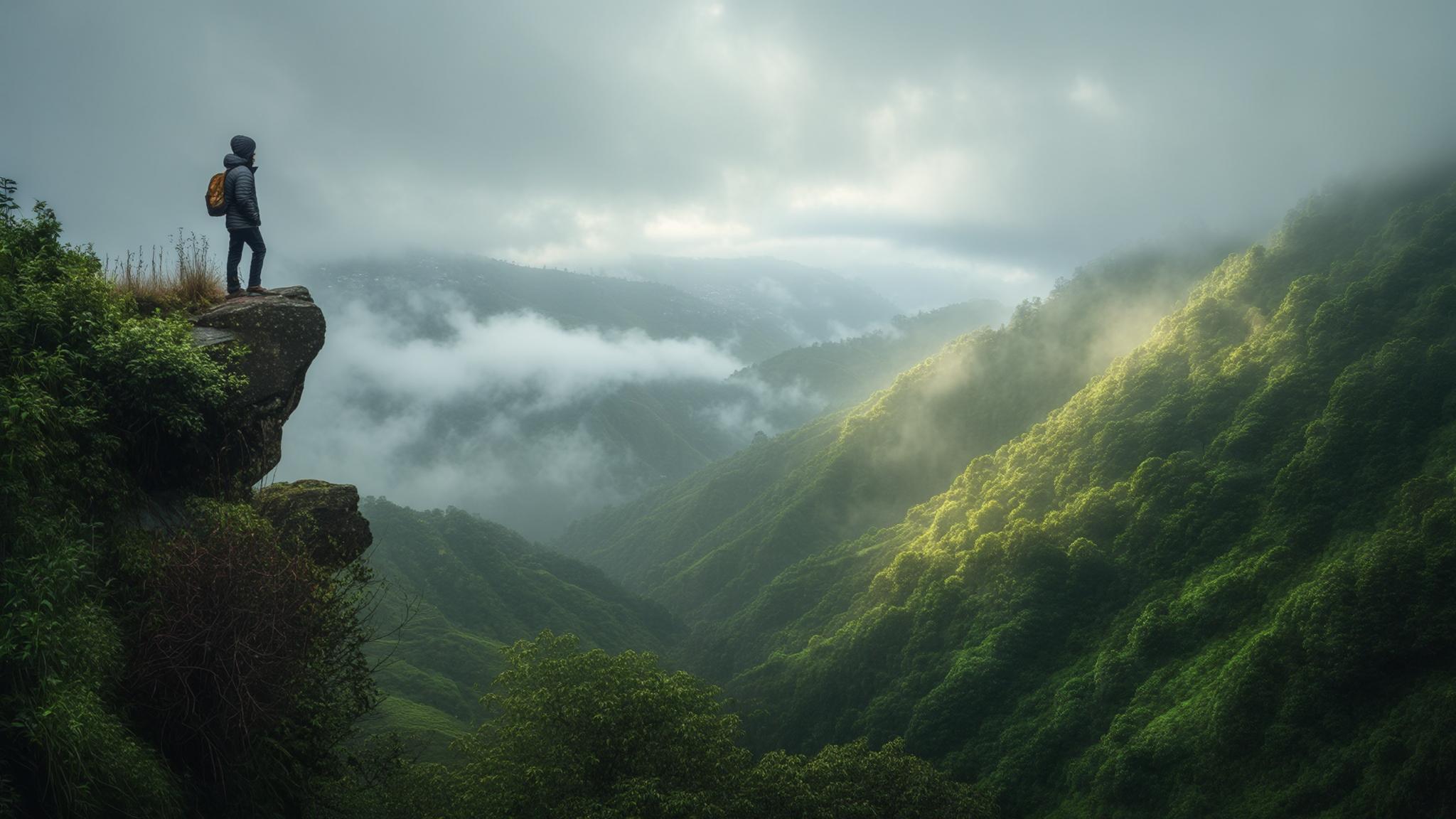
Have you ever stood on Mall Road in Mussoorie in late May, pressed shoulder-to-shoulder with thousands of other visitors, inching past overpriced corn stalls, and wondered — is this really it? If that feeling sounds familiar, you are not alone. And if you have never been to Mussoorie in the off-season, you have technically never been to Mussoorie at all.
The hill station, perched at roughly 2,005 metres above sea level in the Garhwal Himalayas, draws over 30 lakh visitors annually. The overwhelming majority of them arrive between April and July. They book the same hotels, walk the same stretch of Mall Road, and leave with the same slightly exhausted, slightly disappointed feeling. Then they tell friends it was “nice but crowded.”
The Comfortable Myth: Summer Is Mussoorie Season
The logic seems airtight. Delhi summers are brutal — temperatures touching 45°C — and Mussoorie sits about 290 kilometres away, offering relief at a manageable drive of roughly 6 to 7 hours. Schools are on break. Families are available. The hill station is green, the waterfalls are full, and the air is cool. What is not to love?
This belief is so entrenched that travel agents default to April-June packages without a second thought. Most travel content you will find online reinforces it. The phrase “best time to visit Mussoorie” on nearly every travel website points squarely at summer. It is the received wisdom, repeated so often it has stopped being examined.
But here is the crack in that comfortable story: the experience most summer visitors describe is not really of Mussoorie. It is of a traffic jam with a mountain backdrop. Mall Road becomes nearly impassable. Kempty Falls — the most visited waterfall near Mussoorie — sees such dense footfall that the water is barely visible through the crowd. Hotel check-in lines stretch past noon. The quiet, cool escape people came for simply does not exist in those months.
What the Numbers Actually Reveal
Let us be specific about what peak season costs you — not just in money, but in quality of experience. The Mussoorie municipal board has noted that the town’s infrastructure, designed for a permanent population of roughly 30,000, gets strained by single-day footfall that can exceed 80,000 visitors during long weekends in May and June.
Parking near the Library Chowk area can take 45 minutes to an hour alone. The queue for the Gun Hill ropeway — a 400-metre cable car ride that offers panoramic Himalayan views — stretches back far enough that some visitors simply give up. The famous Lal Tibba viewpoint, Mussoorie’s highest accessible point at 2,275 metres, gets so congested that the act of viewing it becomes a background activity to crowd management.
This is not a minor inconvenience. It fundamentally changes what the trip is. You are not visiting a hill station; you are visiting the idea of one, surrounded by evidence that 80,000 other people had the same idea simultaneously.
The Real Mussoorie: October to March
The locals who actually live in Mussoorie year-round will tell you, without hesitation, that October through March is when the town belongs to itself again. This is not a fringe opinion held by a few eccentrics — it is the consistent experience of anyone who has visited across multiple seasons.
October and November bring crisp, clear skies and the best visibility of the year for Himalayan views. On a clear October morning at Lal Tibba, you can see Bandarpunch, Swargarohini, and on exceptional days, portions of the Gangotri range. This is the view Mussoorie is actually famous for — and it is largely invisible in summer due to haze and cloud cover.
February and March offer something entirely different: the possibility of snow. Light snowfall occasionally dusts the higher points around Mussoorie between December and February. When it happens, the town transforms in a way that no summer visit can replicate. The rhododendrons begin blooming by late February, painting the hillsides in red and pink against backgrounds that still hold traces of white.
Where to Go and What to Do in the Off-Season
The off-season does not mean a reduced Mussoorie — it means an expanded one. With fewer people, you can actually explore places that summer visitors skip because the logistics feel too complicated.
Camel’s Back Road is a 3-kilometre walking path that follows the ridge of the hill, offering western views toward Dehradun. In the evenings of October and November, the sunsets here are extraordinary. In summer, the path is choked with visitors and vendors. In the off-season, it functions the way it was always intended — as a quiet walk with a view.
- Lal Tibba: Mussoorie’s highest point at 2,275 metres. The telescope here lets you see Badrinath and Kedarnath peaks. Best visited on clear mornings between October and January.
- Benog Wildlife Sanctuary: A forested area roughly 11 kilometres from Mall Road. Winter and autumn bring clear skies and bird activity. The oak and rhododendron forests are at their most atmospheric in February-March.
- Dhanaulti: 24 kilometres from Mussoorie toward Chamba. This village sits at 2,250 metres and is significantly quieter than Mussoorie itself. In January-February, it often has snow when Mussoorie town does not.
- George Everest’s House: A heritage site about 6 kilometres from Mall Road, this was the home of Sir George Everest, the Surveyor General after whom Everest is named. The walk there through forest is best done in October when the light is sharp and the trail is dry.
Planning Your Off-Season Trip: The Practical Details
Shifting your Mussoorie trip to the off-season requires almost no extra planning — but a few adjustments make the difference between a good trip and an excellent one.
The train option is worth noting for budget travelers: the Nanda Devi Express from Delhi to Dehradun covers the journey overnight, and from Dehradun’s railway station, Mussoorie is a 35-kilometre taxi or bus ride of approximately 1 hour 15 minutes. A shared Vikram (local taxi) costs around ₹150–₹200 per person. Private taxis from Dehradun station to Mussoorie run approximately ₹800–₹1,200 depending on negotiation and season.
What This Means for How You Plan
The revelation here is not that summer Mussoorie is terrible — it is that the received wisdom about “peak season” has quietly been working against the very experience travelers are trying to have. The crowds, the prices, the degraded views, the impossible parking: these are not unfortunate side effects of the best season. They are the defining features of it.
The off-season offers lower costs, better visibility, quieter spaces, and a version of the town that actually matches the photos people have saved to their travel boards. The trade-off is colder temperatures and, in January, the occasional icy morning. For most travelers who pack appropriately, this is not a trade-off at all — it is an upgrade.
Mussoorie has been drawing visitors since the British colonial era, when it served as a retreat for administrators escaping the plains. The town’s architecture, its ridge walks, its colonial-era hotels, and its Himalayan backdrop have not changed. What has changed is the density of people accessing them. Going in the off-season is simply the act of returning to what the town actually has to offer — which turns out to be considerable.