
Have you ever stood on Mall Road in Mussoorie in late May, shoulder-to-shoulder with thousands of tourists, waiting 45 minutes for a plate of Maggi at a roadside stall, and thought — this is not what I imagined? If so, you are not alone, and you are asking exactly the right question.
The summer peak season in Mussoorie — roughly mid-April through mid-July — has been treated as gospel for decades. Travel agents recommend it. Family WhatsApp groups confirm it. And so hundreds of thousands of visitors book the same weeks, pay the highest hotel rates of the year, and experience a hill station so overwhelmed it barely resembles one.
The uncomfortable truth is that this consensus is built more on habit than on evidence. Mussoorie in the monsoon, and especially in winter, offers experiences that the summer crowd never gets to see — and at a fraction of the cost.
The Common Belief: Summer Is the Only Window Worth Booking
The logic behind visiting Mussoorie in summer seems airtight on the surface. Schools are on holiday. The weather in the plains is punishing — Delhi and Dehradun routinely touch 42°C in May. And Mussoorie, sitting at approximately 2,005 metres above sea level, offers a genuine reprieve at around 15–25°C. That coolness is real, and it matters.
This belief has been reinforced for generations. Colonial-era British officers retreated to Mussoorie in summer. Post-independence, it became the go-to hill station for UP and Delhi families. The infrastructure — the cable car to Gun Hill, the toy-town atmosphere of Mall Road, the rowboat rides at Kempty Falls — was built for and marketed around peak summer traffic.
Travel portals compound this by showing “best time to visit” as March through June almost universally. When every authoritative source repeats the same window, the belief calcifies into fact.
The First Crack: What the Crowd Numbers Actually Show
The Uttarakhand Tourism Development Board tracks visitor footfall across major destinations. Mussoorie consistently receives over 30 lakh (3 million) tourists annually, with a disproportionate concentration in a six-to-eight-week window around May and June. This is not a feature of summer Mussoorie — it is a structural problem.
When 40 percent of annual visitors arrive in 15 percent of the year’s weeks, the town cannot function as intended. Parking lots overflow onto highways. Kempty Falls — already a heavily managed commercial site — becomes so crowded that the waterfall itself is barely visible through the crowds. Mall Road, which is only about 2.5 kilometres long, moves at a walking pace that makes Delhi’s Connaught Place feel spacious.
Local guesthouse owners along Camel’s Back Road — a quieter, more scenic alternative to Mall Road — report that their off-season guests consistently rate their experience higher. The reviews mention the same things: silence, space, unhurried meals, and views that summer haze and crowds obscure.
Why the Off-Peak Seasons Are Genuinely Superior — With Evidence
Let us take each alternative season seriously, because they are not interchangeable substitutes for summer — they are distinct experiences with specific, concrete advantages.
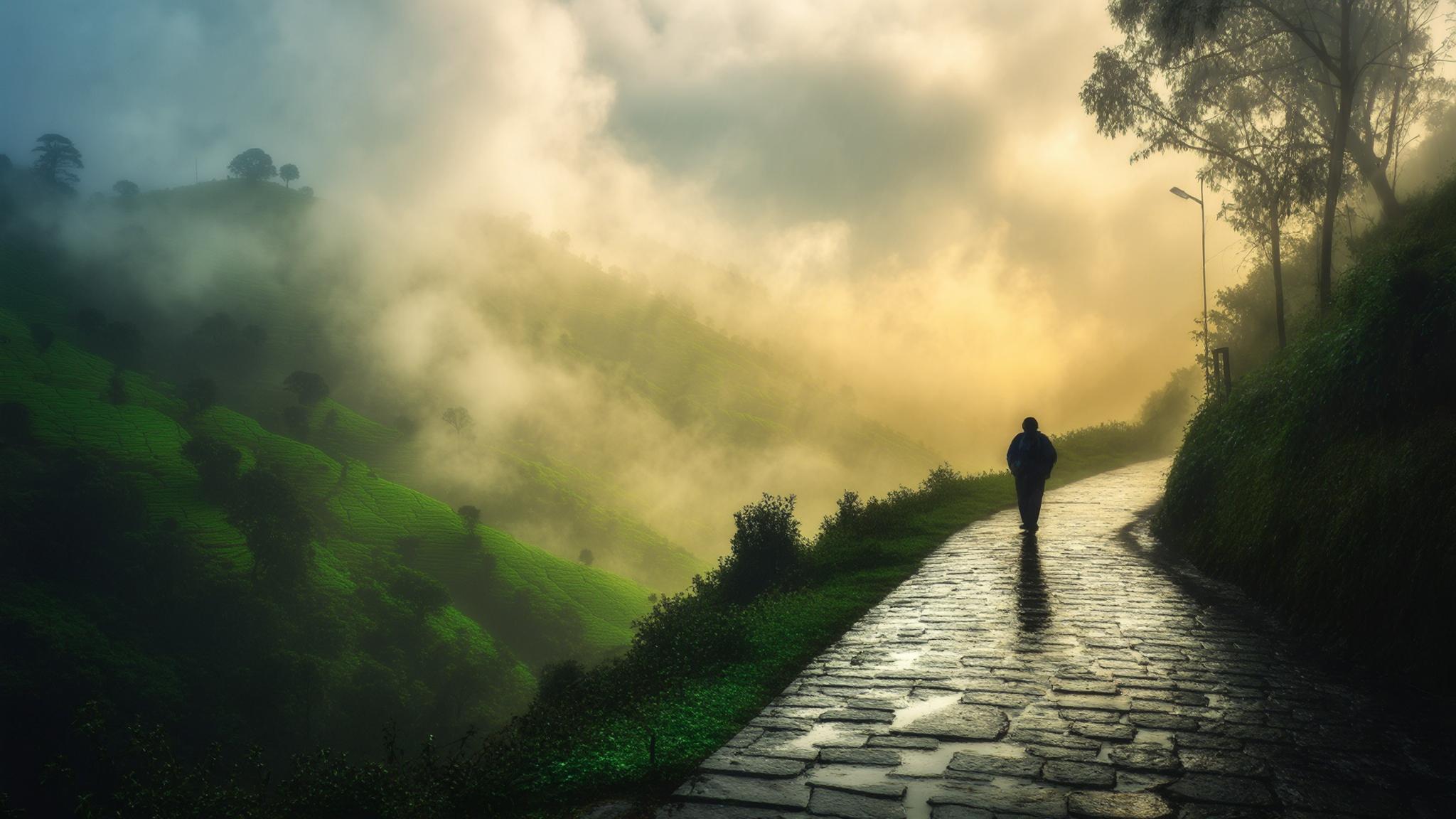
Monsoon (July–September): This is Mussoorie’s most misunderstood season. Yes, it rains — sometimes heavily — particularly in July and early August. But what the rain does to the Garhwal landscape is extraordinary. The Doon Valley below transforms into a patchwork of deep greens. Kempty Falls, which is a modest trickle in summer when glacial melt is over, runs full and thunderous. The air is so clean that the Himalayan peaks — usually invisible through summer haze — appear sharply on clear mornings. Landslide risk on mountain roads is real and should be monitored through Uttarakhand government alerts, but most major routes remain open and passable.
Winter (November–February): This is perhaps the most unjustly abandoned season. Temperatures at night drop to 1–5°C, and snowfall — when it comes — transforms the town entirely. The George Everest Estate, a heritage property about 6 kilometres from Library Chowk that most summer visitors never bother reaching, becomes a genuinely magical destination under snow. Hotels drop prices aggressively. Restaurants that are overcrowded in summer become personal dining rooms. The journey itself, through pine forests dusted with frost, is a different Mussoorie entirely.
- Camel’s Back Road in winter — the 3-km walking loop offers unobstructed Himalayan views that summer haze and crowd noise destroy
- Lal Tibba in monsoon — at 2,275 metres, the highest point in Mussoorie, it clears dramatically after rain showers for panoramic views toward Kedarnath and Badrinath ranges
- Cloud’s End in shoulder season — the far western tip of Mussoorie, around 6 km from Mall Road, is virtually deserted outside summer and offers forest walks without a crowd in sight
- Mossy Falls (off Barlowganj) — best visited in September–October when water flow peaks post-monsoon and tourist traffic has already declined
The Real Truth: Mussoorie Has Three Different Personalities
Treating Mussoorie as a single, seasonally fixed destination misses the point entirely. The hill station does not have a best season in an absolute sense — it has different characters across the year, and which one suits you depends entirely on what you are actually after.
If you have children on school break and want the full carnival experience — cable car rides, horse rides near Picture Palace, crowds and chai stalls — then May is fine. Go in, understand what it is, and enjoy it for what it offers. But do not mistake that experience for all of what Mussoorie can be.
The practical logistics of off-peak travel are also better in nearly every measurable way. The Dehradun–Mussoorie road (approximately 35 kilometres via Rajpur Road) takes 45–60 minutes in off-peak periods versus 2–4 hours on a summer weekend. Parking near Library Chowk and Picture Palace — a genuine ordeal in peak season — is straightforward. Restaurant staff have time to actually talk to you, and the food quality, without the pressure of serving 300 covers a day, tends to improve noticeably.
What This Means for Your Next Mussoorie Trip
The revelation here is not simply that off-peak seasons exist — it is that the travel industry’s calendar around Mussoorie has been optimized for volume, not experience. Booking platforms surface summer dates because that is when inventory moves fastest. Hotels quote rack rates in summer because demand supports them. None of this is designed with your specific experience in mind.
Recalibrating means asking a different question before booking. Instead of asking when can I go?, ask what experience do I want and which season actually delivers that? Uttarakhand Tourism’s official resources at uttarakhandtourism.gov.in include seasonal guides that are more honest about this than most commercial travel portals.
The crowded summer Mussoorie will always exist, and it serves a real purpose for millions of families. But the quieter, greener, snowier, more affordable versions of the same town are not second-best alternatives — for many travelers, they are the superior choice. The only reason more people do not take them is because no one told them this clearly enough, early enough, before they booked the same weeks as everyone else.
That changes now.