
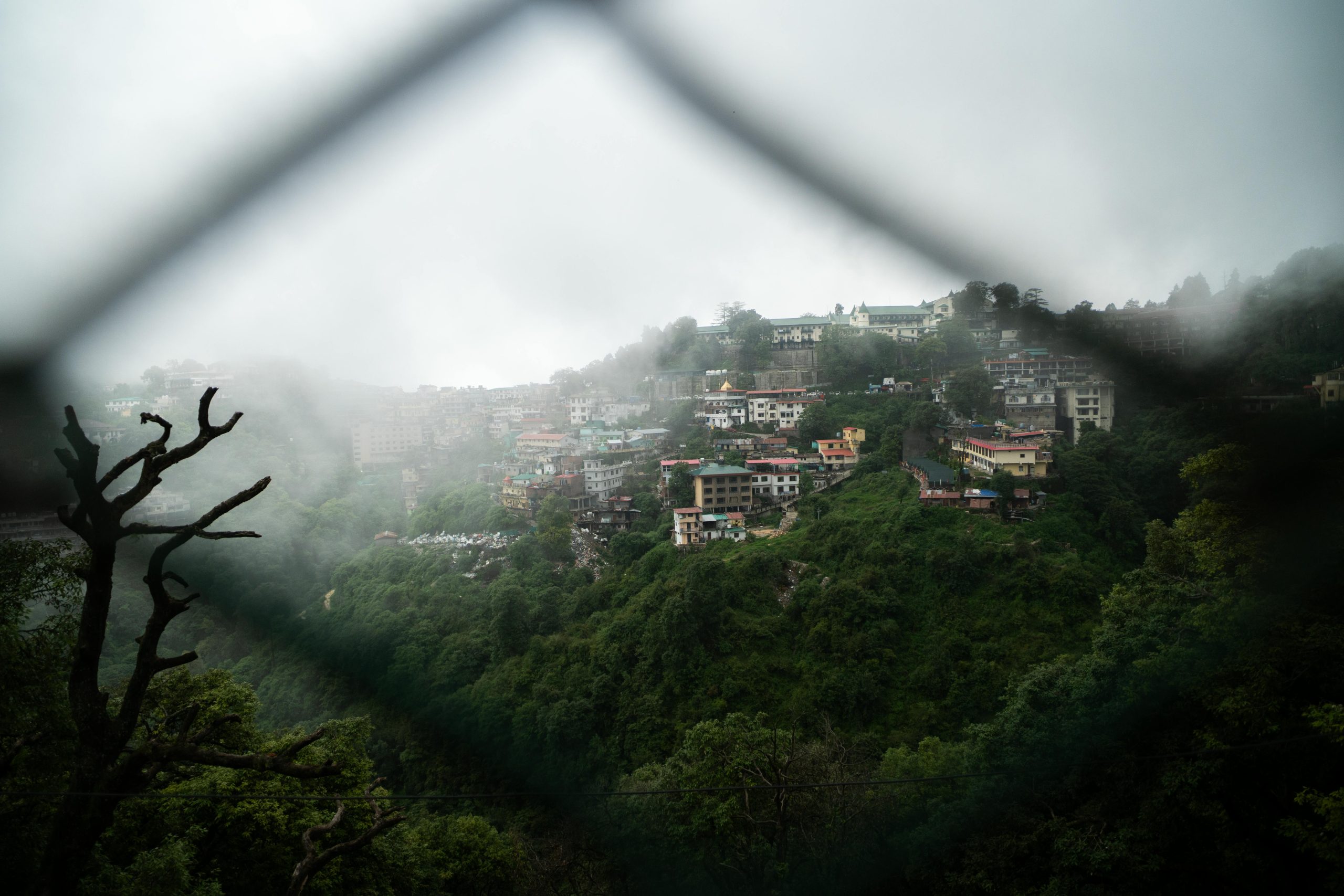
What does it mean to actually experience a hill station, rather than simply pass through one? That question has quietly driven a shift in how a growing number of travellers approach Mussoorie, pushing them uphill — past the cable cars, past the buzzing Mall Road stalls — toward the cantonment of Landour, a separate administrative zone that sits at approximately 2,100 metres above sea level and operates on a pace entirely its own.
Landour is not new. The British Army established it as a convalescence depot in 1827, four years before Mussoorie itself was formally recognised as a hill station. What is new is the attention. Travel communities on social media platforms have flagged the area with increasing frequency through 2024 and into 2026, citing its heritage architecture, walkable lanes, and the presence of author Ruskin Bond — who has lived and written in Landour for decades — as draws that Mussoorie’s main strip simply cannot replicate.
What Landour Actually Is — and Why the Distinction Matters
Landour is administratively separate from Mussoorie Municipal Board. It falls under the Landour Cantonment Board, which means different rules govern construction, vehicle access, and commercial activity. That bureaucratic separation has, largely by accident, preserved the area’s architectural character in ways that Mussoorie’s commercial zones have not.
The lanes — locally called the Chukkar — wind around the ridge in a rough loop of approximately five kilometres. Walking the full Chukkar takes between 90 minutes and two hours at a relaxed pace, passing colonial-era bungalows, stone churches, and dense oak and rhododendron forest. Several sections offer unobstructed views toward the Doon Valley on one side and the Garhwal Himalaya — including Bandarpunch and, on clear winter mornings, Swargarohini — on the other.
Vehicle access beyond certain points is restricted to cantonment permit holders, which means the upper lanes are effectively pedestrian by default. For travellers accustomed to Mussoorie’s traffic-heavy Mall Road, the contrast is considerable.
Char Dukan: Four Shops That Built a Reputation
At the top of the Landour bazaar lane sits a small cluster of four establishments collectively known as Char Dukan — Hindi for “four shops.” The grouping includes Anil’s Café, Prakash Stores, a small general merchant, and Tip Top Tea Shop. By most objective measures, these are modest operations. By the standards of travellers who have made the climb to reach them, they carry a significance disproportionate to their size.
Maggi noodles, omelettes, and chai served on wooden benches with a valley view have been the core offering at Char Dukan for decades. Prices in early 2026 remain accessible: a plate of Maggi runs approximately ₹60–₹80, a masala omelette around ₹70, and tea between ₹20 and ₹30. The combination of altitude, view, and simplicity is what travel writers and repeat visitors consistently cite.
Ruskin Bond’s presence in Landour is frequently mentioned in coverage of the area. Bond has written extensively about the lanes, the Chukkar, and the tea shops in works including Landour Days and various essay collections. He has, according to multiple published accounts and local shopkeeper testimony, maintained a routine of visiting Char Dukan for years, which has contributed significantly to the area’s literary reputation. Visitors occasionally encounter him during these visits, though local shopkeepers caution that this is not guaranteed and that Bond’s privacy should be respected.
Heritage Bakeries and Provisions: Prakash Stores and Landour Bakehouse
Two food establishments in Landour carry particular weight among visitors seeking more than a meal. Prakash Stores, located at Char Dukan, has been supplying tinned goods, local honey, homemade jams, and basic provisions to Landour residents since the mid-twentieth century. It is not a tourist shop in presentation — the shelves are functional rather than curated — but it stocks several items, including locally prepared fruit preserves and Garhwali honey, that travellers consistently purchase as provisions or gifts.
Landour Bakehouse, located slightly below the main Char Dukan cluster, operates as a sit-down café and bakery. It offers sourdough bread, quiches, brownies, and freshly brewed filter coffee, targeting a traveller demographic willing to pay slightly more for quality. A full breakfast at Landour Bakehouse runs approximately ₹350–₹550 per person in 2026, positioning it above Char Dukan’s price point but still well within the range most leisure travellers to Mussoorie budget for food.
When to Go, How to Get There, and What a Realistic Trip Costs
Landour is accessible year-round, but each season presents different conditions. The post-monsoon window from mid-September through November is widely considered the best period: skies clear after the rains, Himalayan views are sharpest, and the oak forest turns amber. March through May offers pleasant temperatures and rhododendron bloom along the Chukkar but increasingly crowded weekends as Mussoorie’s summer tourist season ramps up. January and February bring the possibility of snow on the upper ridge, which transforms the walk but makes the road from Dehradun occasionally unreliable.
From Dehradun’s ISBT bus stand, shared Vikram tempo-taxisand buses to Mussoorie Library Bus Stand depart frequently and cost approximately ₹50–₹80 per seat. From Library Bus Stand, a shared auto-rickshaw or taxi to Landour Bazaar costs roughly ₹100–₹200 depending on negotiation. The total journey from Dehradun city centre to Char Dukan on foot takes approximately two to two-and-a-half hours including travel and the uphill walk from Landour Bazaar, which rises steeply for about 20–25 minutes.
For travellers spending a full day in Landour rather than treating it as a half-day addition to Mussoorie, a realistic per-person cost breaks down as follows: transport from Mussoorie and back (₹300–₹400), food across two meals and tea (₹400–₹700 depending on choice of establishment), and purchases from Prakash Stores or Landour Bakehouse (optional, ₹200–₹500). A full day in Landour can be completed comfortably for ₹900–₹1,600 per person, excluding accommodation.
Accommodation within the cantonment itself is limited. A small number of homestays and heritage guesthouses operate in the area, with tariffs ranging from approximately ₹2,500 to ₹6,000 per night for a double room in 2026. Booking through platforms such as Airbnb India or direct inquiry with Landour-based properties is the most reliable approach, as several homestays do not list on mainstream OTA platforms. Most Mussoorie visitors, however, stay on Mall Road or Camel’s Back Road and visit Landour as a day excursion.
What Landour Is Not — Managing Expectations
The growing social media profile of Landour has created a small but measurable expectation problem. Some visitors arrive anticipating a pristine, crowd-free environment at all times. The reality in 2026 is more nuanced. Char Dukan on weekend afternoons, particularly between March and June, draws significant foot traffic. The benches fill. Queues form at the more popular stalls. The atmosphere is still quieter than Mussoorie’s Mall Road, but calling it deserted would be inaccurate.
Weekday mornings — particularly Tuesday through Thursday before noon — remain the window when Landour most resembles the unhurried place that travel writing has described. Travellers with flexibility in their schedule who prioritise solitude on the Chukkar walk should plan accordingly. According to local guesthouse operators contacted for this report, February and early March before the school holiday season also remain among the least crowded periods, with clear Himalayan views and manageable temperatures on the ridge.
Landour does not offer the amusement attractions, shopping variety, or nightlife that Mussoorie’s main tourist infrastructure provides. For travellers whose primary interest is activity-dense tourism, the cantonment will feel limited. For those seeking a walk through intact colonial architecture, ridge-line views, and a working literary geography, it functions as something Mussoorie’s main strip cannot replicate: a place where the reason to be there is the place itself.