
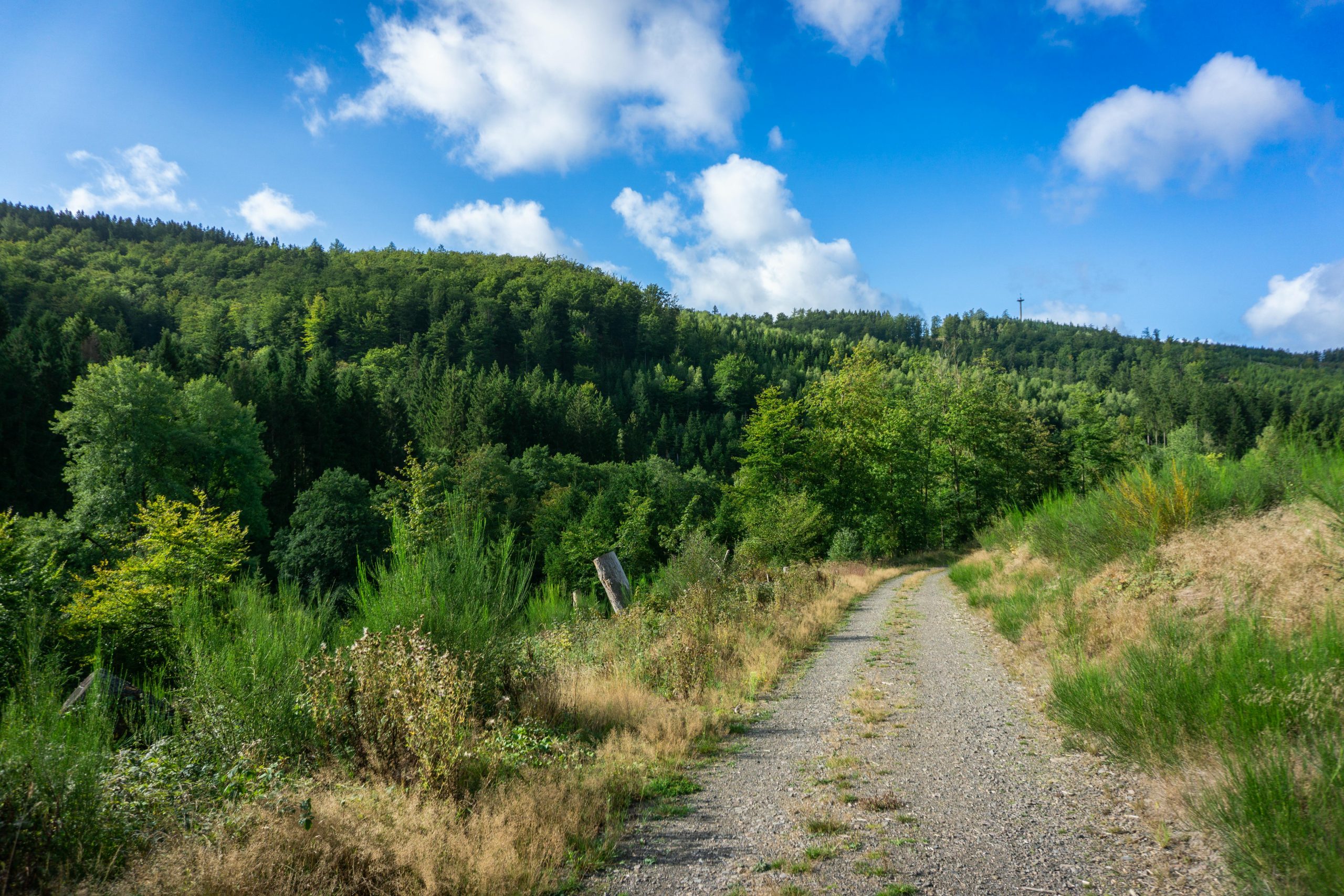
A family from Dehradun arrived at Cloud’s End last Sunday morning expecting a short stroll. They found themselves two hours deep into a oak-canopied ridge, watching a pair of kalij pheasants cross the path, with the Aglar Valley spreading below them in the early mist. They had booked a hotel on Mall Road. Nobody at the hotel had mentioned this trail existed.
Cloud’s End sits at the western terminus of Mussoorie’s main ridge, approximately 8 km from Library Chowk by road, at an elevation of roughly 2,050 metres above sea level. The area takes its name from the historic Cloud’s End Heritage Hotel, a colonial-era property that has stood on the forested promontory since 1838. Beyond the hotel grounds, a marked forest trail continues into a Garhwal Mandal Vikas Nigam (GMVN)-managed reserve that most tourists in Mussoorie never visit.
What Cloud’s End Actually Looks Like on the Trail
The trail is real forest — not a manicured garden path. Dense banj oak, rhododendron, and Himalayan horse chestnut close overhead within the first 500 metres of leaving the hotel vicinity. The path is largely unpaved, marked with occasional GMVN signage, and crosses two small seasonal streams that run strongly through April and May.
The primary viewpoint, reached after roughly 45–60 minutes of moderate walking, faces northwest toward the Bandarpunch massif on a clear day. On hazy days — common through March — the view drops into the forested Aglar Valley instead, which experienced walkers often describe as equally compelling in a different way.
Wildlife sightings reported by guides working the area include barking deer, Himalayan goral on the rocky outcrops below the ridge, and a consistent population of red-billed blue magpies. The Uttarakhand Forest Department has listed the Cloud’s End reserve as part of the broader Benog Wildlife Sanctuary corridor, which extends southwest toward the Benog Tibba peak at 2,480 metres.
Getting There From Mussoorie’s Main Areas
From Mall Road or Library Chowk, Cloud’s End is not walkable for most visitors — the road is steep and winding. Shared taxis run from Library Chowk taxi stand to Cloud’s End and charge between ₹150 and ₹200 per seat. A private cab for the same route runs ₹400–₹600 one-way depending on vehicle type and negotiation.
Hiring a vehicle for a return trip with waiting time — typically one to two hours while walkers complete the trail — costs approximately ₹800–₹1,200 as of early 2026, according to the Library Chowk Taxi Union rate card. This makes Cloud’s End one of the more affordable half-day activities available out of Mussoorie.
How Cloud’s End Compares to Other Mussoorie Trails
Mussoorie has several marked walking routes, but most cluster around the eastern ridge — Lal Tibba, Gun Hill via ropeway, and the Camel’s Back Road loop. These routes see thousands of visitors daily during peak season. Cloud’s End sees a fraction of that traffic, making it meaningfully different in character.
The Benog Wildlife Sanctuary, which Cloud’s End borders, covers approximately 239 hectares according to the Uttarakhand Forest Department. Unlike Rajaji National Park to the south, it does not charge a separate entry fee for the forest walking trails accessed from the Cloud’s End side, though visitors are advised to register at the forest checkpoint near the trail head when the gate is staffed.
The Best Window to Visit in 2026
Late March through June is widely considered the most reliable window for Cloud’s End walking. By late March, the rhododendrons along the lower trail are in full bloom — dense stands of the state tree of Uttarakhand, with crimson flowers visible from the road below. April and May add warmth without the heavy monsoon moisture that arrives in late June.
Post-monsoon — September through early November — is the second recommended window. Views are sharpest after the rains clear, and the Bandarpunch and Kedarnath ranges become visible on good mornings. Winter months bring snow above 2,200 metres, making the upper sections of the trail toward Benog Tibba inaccessible without proper gear from December through February.
What Local Guides and the Heritage Hotel Say
Guides operating out of Mussoorie’s Taxi Stand and Picture Palace area acknowledge that Cloud’s End rarely appears on standard tourist itineraries sold at the bus stand or through travel agents on Mall Road. Most packaged day tours prioritize Kempty Falls and Company Garden, which generate higher commission for operators, according to two independent guides spoken to in March 2026.
The Cloud’s End Heritage Hotel itself, which traces its origins to 1838 and has operated under various ownership structures since independence, does not restrict public access to the forest trail beyond its property boundary. The hotel’s management confirmed in March 2026 that day visitors are welcome to use the hotel’s parking area and cafe facilities on a commercial basis, with no separate trail fee charged.
According to the GMVN official site, the Benog Wildlife Sanctuary zone near Cloud’s End is classified as a protected area under the Uttarakhand Wildlife Protection rules, meaning camping and open fires are prohibited. Day walking is permitted on designated paths.
Planning Around Cloud’s End for a Broader Mussoorie Trip
Cloud’s End pairs well with a visit to Lal Tibba on the same day — both sit at the western and upper-eastern ends of Mussoorie’s ridge respectively, and a morning at Cloud’s End followed by an afternoon at Lal Tibba covers roughly 13 km of the ridge’s length without significant backtracking. Lal Tibba, at 2,275 metres, is Mussoorie’s highest point and offers telescope views of peaks including Nanda Devi on clear winter and post-monsoon days.
For visitors with children or elderly companions, the lower forest loop at Cloud’s End — approximately 2 km round trip on relatively flat terrain — is manageable without trekking experience. The more demanding Benog Tibba extension adds another 5–6 km of elevation gain and should be attempted only with a guide, proper footwear, and an early start.
Mussoorie’s overall tourist season for 2026 is expected to begin in earnest from the last week of March, according to the Uttarakhand Tourism Development Board, with hotel occupancy historically rising sharply through April ahead of school summer holidays. Visitors planning a Cloud’s End walk during peak April–June season are advised to confirm taxi availability the night before through their accommodation.