
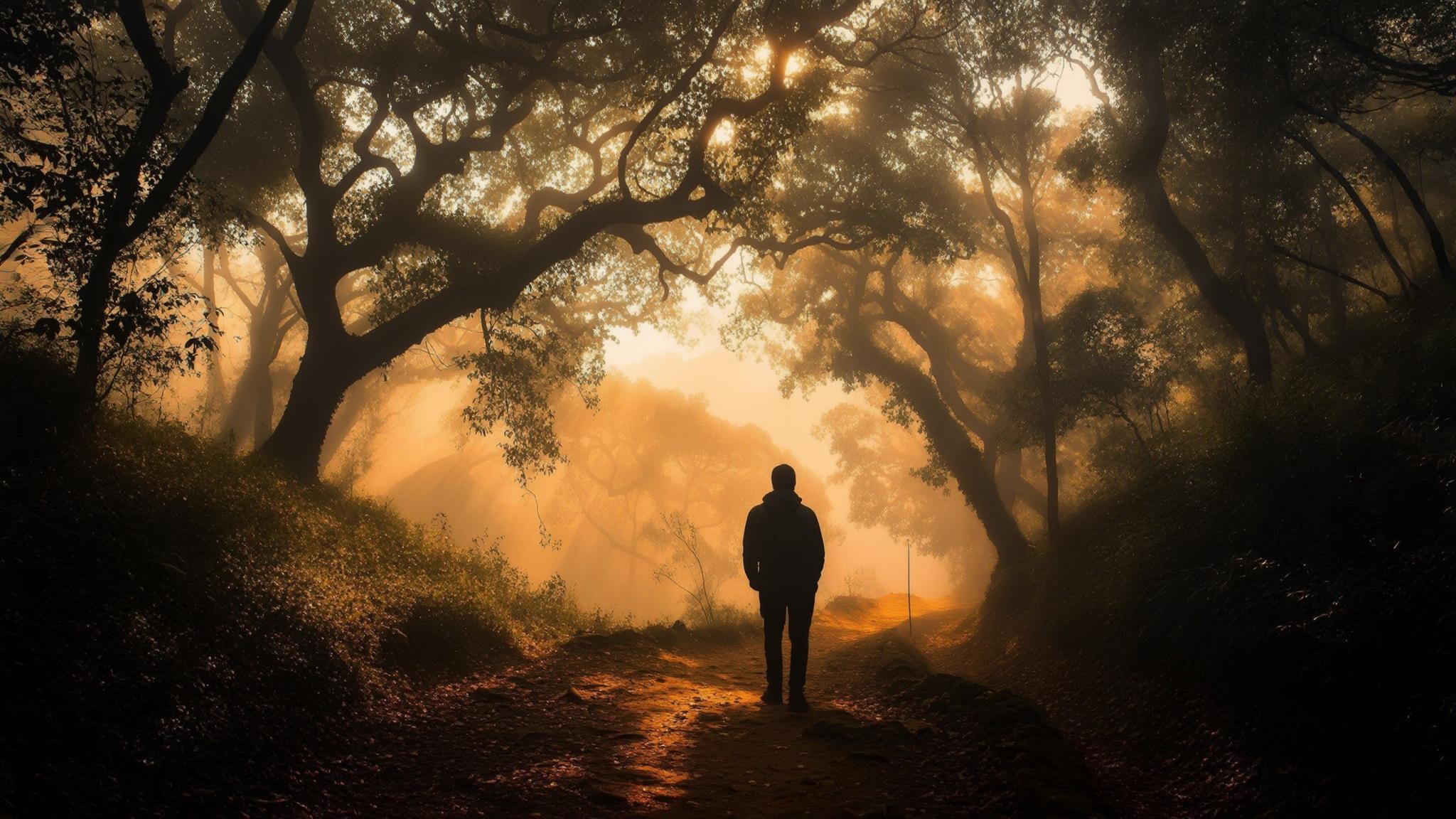
The dominant assumption in Mussoorie tourism — that the Mall Road, Kempty Falls, and Gun Hill constitute a complete visit — is quietly wrong. According to longtime Landour residents and independent trekking guides operating in the Garhwal foothills, the most scenic and culturally rich terrain in the greater Mussoorie area sits less than two kilometers above the popular Char Dukan roundabout, on a ridge trail that most visitors never hear about.
The route, locally referred to as the Cloud Valley loop by English-speaking guides and as Badal Ghati ka Rasta by older Garhwali residents, connects Landour’s upper cantonment to a series of deodar cedar stands, a colonial-era water cistern, and an exposed ridgeline with direct sightlines to Bandarpunch and Swargarohini peaks on clear winter mornings. No signage marks the trailhead. No ticketing booth collects an entry fee. It remains, as of April 2026, free and open.
What the Trail Actually Looks Like — And Who Uses It
The path begins modestly: a flagstone staircase dropping off the main Landour road, partially obscured by a stone wall and a cedar that has grown into the steps over roughly forty years. Within the first 300 meters, the trail widens onto a compacted dirt track used regularly by cantonment maintenance workers, local schoolchildren from the Wynberg-Allen area, and a small number of returning visitors who learned about it on a previous trip.
Rajesh Negi, a Mussoorie-based trekking guide who has led groups through the area since 2011, described the trail’s character in an interview conducted in March 2026. He noted that the first kilometer follows an old British-era mule path that once served the Landour Language School and several private estates, most of which are now either government property or slowly being reclaimed by vegetation.
The trail passes a functioning spring with a stone spout at approximately the 1.8 km mark — locals fill bottles here and consider the water clean, though independent testing has not been publicly documented. At the 3 km point, the path crests the ridge at roughly 2,290 meters elevation, approximately 150 meters above Lal Tibba’s official viewpoint at 2,275 meters, which charges ₹30 per person for a telescope view.
How to Get There From Mussoorie Town — Distances and Costs in 2026
Getting to the Landour trailhead from the Library Bus Stand in Mussoorie is straightforward but requires either a shared auto-rickshaw (approximately ₹30–₹50 per person to Char Dukan) or a private taxi (₹250–₹350 one-way depending on negotiation). The Landour road is narrow and auto-rickshaws do not run after approximately 7:30 PM.
From Dehradun’s ISBT, buses to Mussoorie run frequently and cost between ₹80 and ₹120 depending on the service. Shared taxis from Dehradun’s Gandhi Road taxi stand charge approximately ₹200 per seat. According to the Uttarakhand Tourism Development Board, Mussoorie receives upward of 3.5 million visitors annually, the majority of whom concentrate on a four-kilometer stretch of Mall Road and the Kempty Falls corridor on NH-707A.
The Landour area, by contrast, falls under cantonment jurisdiction, which has historically limited commercial development and kept the neighborhood’s character largely intact. Char Dukan — literally “four shops” — is a row of tea and maggi stalls at the roundabout above the cantonment gate that has served as a social meeting point for Landour residents for several generations.
Best Season to Walk the Route — And What Changes Month to Month
The trail is walkable year-round, but each season offers a materially different experience. Winter — November through February — delivers the clearest Himalayan views and the sharpest morning light, but temperatures on the exposed ridge can drop below freezing before 9 AM. Snowfall between December and January occasionally makes the upper section slippery without microspikes.
Priya Srivastava, a travel writer who documented the Landour area in a widely circulated 2024 piece for an independent hiking publication, noted that October specifically offers what she described as “post-monsoon transparency” — air scrubbed clean by four months of rain, no haze, and temperatures warm enough to walk without winter gear. She recommended starting the loop no later than 7 AM to catch morning alpenglow on Bandarpunch, which faces east-northeast from the ridge.
The Char Dukan Stop — What to Eat and What It Costs
No account of the Landour ridge experience is complete without accounting for Char Dukan, the cluster of tea shops at the roundabout that has become as associated with Landour as the trail itself. The stalls serve standard Pahadi maggi (₹60–₹80), chai (₹20–₹30), and boiled eggs (₹20 each). One stall — unnamed, run by a family that has operated there for over two decades according to regular visitors — serves a mustard-heavy aloo paratha that multiple sources interviewed for this report cited as a reason in itself to make the trip.
Author and longtime Landour resident Ruskin Bond has written about Char Dukan in several essays, describing it as one of the few places in the hills where the ritual of sitting with tea and watching the valley below has remained genuinely unchanged over decades. According to Penguin India’s catalogue, Bond’s collected Mussoorie essays remain among the most-read regional literature in Uttarakhand, and his descriptions of Landour have directly influenced how the neighborhood is perceived by domestic literary travelers.
What This Means for How Mussoorie Is Marketed — And What Visitors Are Missing
The concentration of Mussoorie’s tourism infrastructure around Kempty Falls and Mall Road is not accidental. According to figures cited by the Uttarakhand Tourism Development Board, these corridors generate the majority of the region’s direct visitor spending through paid attractions, restaurants, and retail. Trails like the Cloud Valley loop generate no revenue for operators and require no coordination with hotels or tour desks, which makes them structurally invisible in packaged travel products.
Negi, the trekking guide, said he books approximately 15 to 20 groups per season specifically for the Landour ridge walk, mostly through word-of-mouth referrals from past clients. He charges ₹800 per person for a guided half-day walk including the Char Dukan stop, though he emphasizes the trail requires no guide for anyone comfortable reading a ridge path. His contact is available through the Mussoorie Local Guides Association, which maintains an informal directory at the Library Bazaar taxi stand.
The broader implication is straightforward: a significant portion of Mussoorie’s landscape — the quieter, higher, older terrain above the commercial strip — remains accessible, free, and largely unused by the millions of visitors who pass through each year. The infrastructure needed to experience it is minimal: a pair of shoes with grip, an early start, and directions that no travel app currently provides by default.