
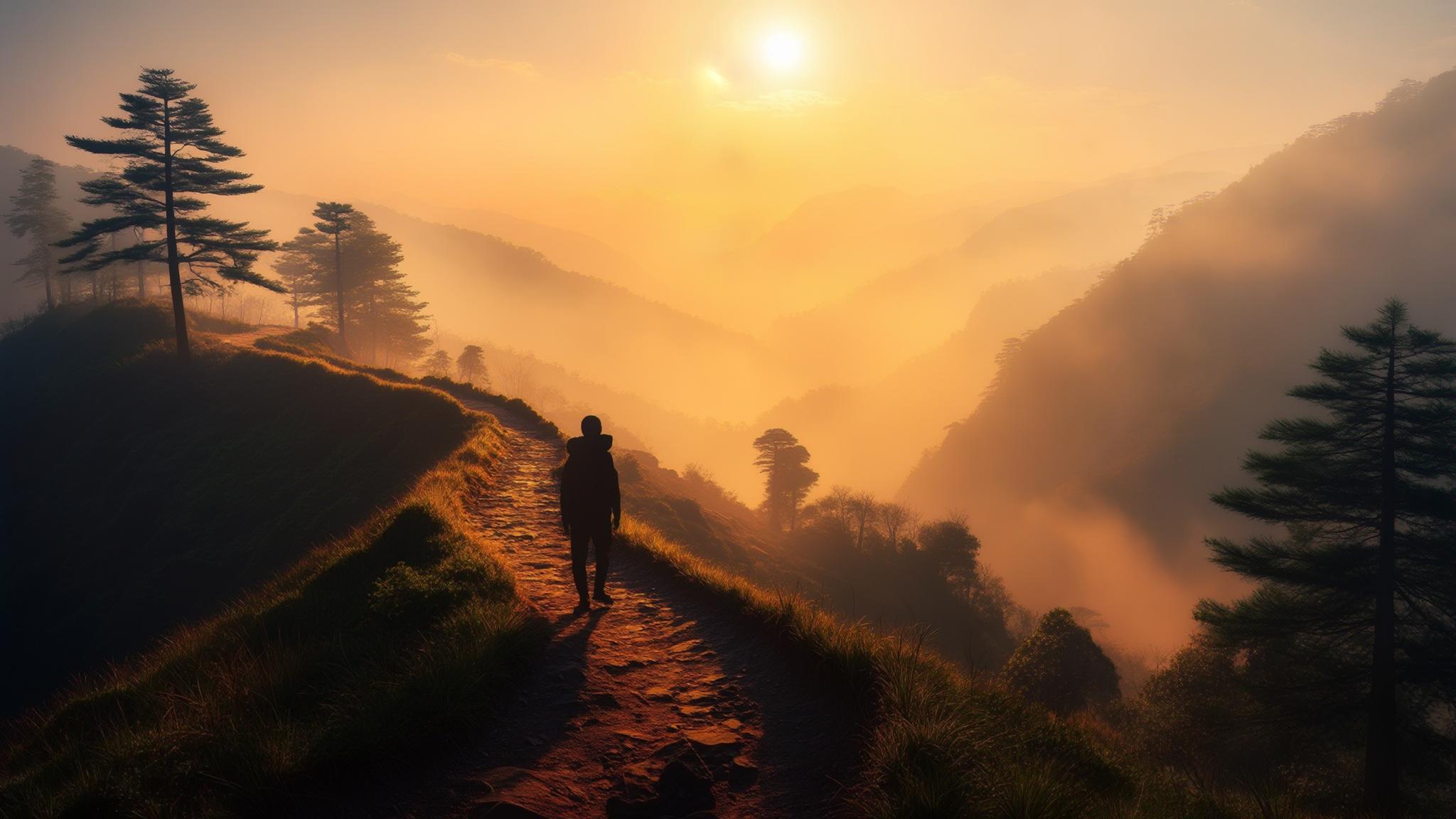
When did you last slow down enough to notice what was around you — not through a car window, not on a phone screen, but on foot, with the cold mountain air against your face? For most visitors to Mussoorie, that question goes unanswered because they spend the hill station’s best hours in shared cabs moving from one viewpoint to another. Camel’s Back Road, one of the oldest promenades in the Garhwal Himalayas, is the correction to that habit.
The road runs roughly 3 kilometres along the western ridge of Mussoorie, connecting Kulri to the area near the Municipal Garden. Named for a natural rock formation that resembles a camel’s hump, the route was originally laid out during British colonial administration as a morning and evening walking track for residents and officers stationed in the hill station. That original purpose — walking, not driving — is what most 21st-century tourists forget.
What the Route Actually Looks Like on the Ground
The walk itself is direct. Most locals recommend starting from the Kulri end, near the Clock Tower area, and walking westward toward the Camel’s Back Rock viewpoint. The road is paved, moderately wide, and largely free of the commercial congestion that defines Mall Road a few hundred metres below.
The surface elevation sits at approximately 2,000 metres above sea level throughout, which means the air is noticeably thinner than at the valley floor. First-time visitors from plains cities like Delhi or Lucknow sometimes find the first fifteen minutes of the walk mildly breathless. That passes quickly. After the first curve past the Savoy Hotel stretch, the northern face opens up and the Himalayan snowline becomes visible on cloudless afternoons.
The Camel’s Back Rock itself — the geological feature the road is named for — sits roughly midway along the route. A short unpaved trail branches off the main road toward the rock, and from that vantage point the Doon Valley drops away to the south with Dehradun visible on clear mornings. Multiple vendors set up chai and Maggi stalls along this stretch, typically charging between ₹20 and ₹40 per cup of tea as of early 2026.
When Locals Walk It and When Tourists Should
Timing changes everything on Camel’s Back Road. Local residents — particularly older Mussoorie families — use the route for morning walks between 6:00 AM and 8:30 AM. During this window, the road carries very little vehicle traffic, the light is flat and clean, and the Himalayan peaks are most likely to be visible before afternoon cloud build-up.
Sunset, between 5:30 PM and 6:45 PM depending on the month, draws the largest crowds but offers the most dramatic skies. The western orientation of the ridge means the road catches the last direct sunlight of the day, and the rock face of Camel’s Back turns a distinct amber colour in the final thirty minutes before dusk. According to Uttarakhand Tourism, Mussoorie receives peak domestic tourist volume between May and July, and shoulder season months — March, April, September and October — offer the walk with significantly fewer crowds.
Monsoon season — July through mid-September — brings a different version of the walk. The road is frequently slick with moss and light rain, and fog rolls in from the valley without warning. Several local guides interviewed for this report say visibility can drop to under 20 metres within minutes during monsoon afternoons. The walk is still done by regulars during this period, but tourists unfamiliar with mountain weather patterns should check conditions at their hotel before heading out.
What Mussoorie Residents Say About the Road’s Change Over Two Decades
Long-term Mussoorie residents describe a road that has shifted from a quiet neighbourhood promenade to an increasingly commercialised attraction — though not to the degree Mall Road has changed.
The vendor presence along the route has grown alongside tourist numbers. As of 2026, approximately eight to twelve informal food and souvenir stalls operate along the 3-kilometre stretch during peak season, compared to two or three documented in local municipal records from the early 2000s. The Mussoorie Municipal Board has periodically issued notices about unlicensed stalls on the promenade, though enforcement has been inconsistent, according to local news coverage by Dehradun Live.
The road’s surface has been resurfaced at least twice in the past decade, and concrete retaining walls have replaced older stone sections in two stretches near the midpoint. Heritage conservation groups based in Dehradun have raised concerns about the visual character of these repairs, arguing they are inconsistent with the colonial-era aesthetic that draws visitors in the first place.
Practical Information for Planning the Walk
Getting to the starting point at Kulri from Library Bus Stand — the main bus terminus for arrivals from Dehradun — takes approximately 15 minutes on foot along Mall Road, or 5 minutes by shared auto-rickshaw for roughly ₹15 to ₹20 per person. The walk is accessible to most fitness levels, though the road has a gentle gradient throughout and a short steeper section near the rock viewpoint that may require a slower pace for elderly visitors or young children.
Parking near the Kulri end of the road is limited and frequently congested during peak season. Visitors driving to Mussoorie are advised by the Uttarakhand Tourism Development Board to use the designated parking areas near Library Chowk and walk or take a shared auto to the promenade rather than attempting to drive directly to the road’s entrance.
How Camel’s Back Road Compares to Mall Road as a Visitor Experience
The two roads are often conflated by first-time visitors but function as almost opposite experiences. Mall Road is commercial, vehicle-heavy during off-hours, and oriented toward retail and dining. Camel’s Back Road is quieter, free of major shops, and oriented entirely toward the landscape and the walk itself.
For visitors with only one full day in Mussoorie, combining both roads — Mall Road for lunch and afternoon shopping, Camel’s Back Road for the sunset walk — covers the hill station’s essential walking experience without requiring transport between the two, as they are connected at the Kulri end by a short linking lane.
Camel’s Back Road does not offer the highest viewpoint in Mussoorie — that distinction belongs to Lal Tibba at roughly 2,275 metres — but it offers the most accessible combination of elevation, open sightlines, and walkable terrain that the hill station has. For a destination that increasingly functions as a weekend escape from Delhi NCR’s congestion, a road that asks nothing of you except that you walk it slowly remains, in April 2026, one of Mussoorie’s more reliable pleasures.