
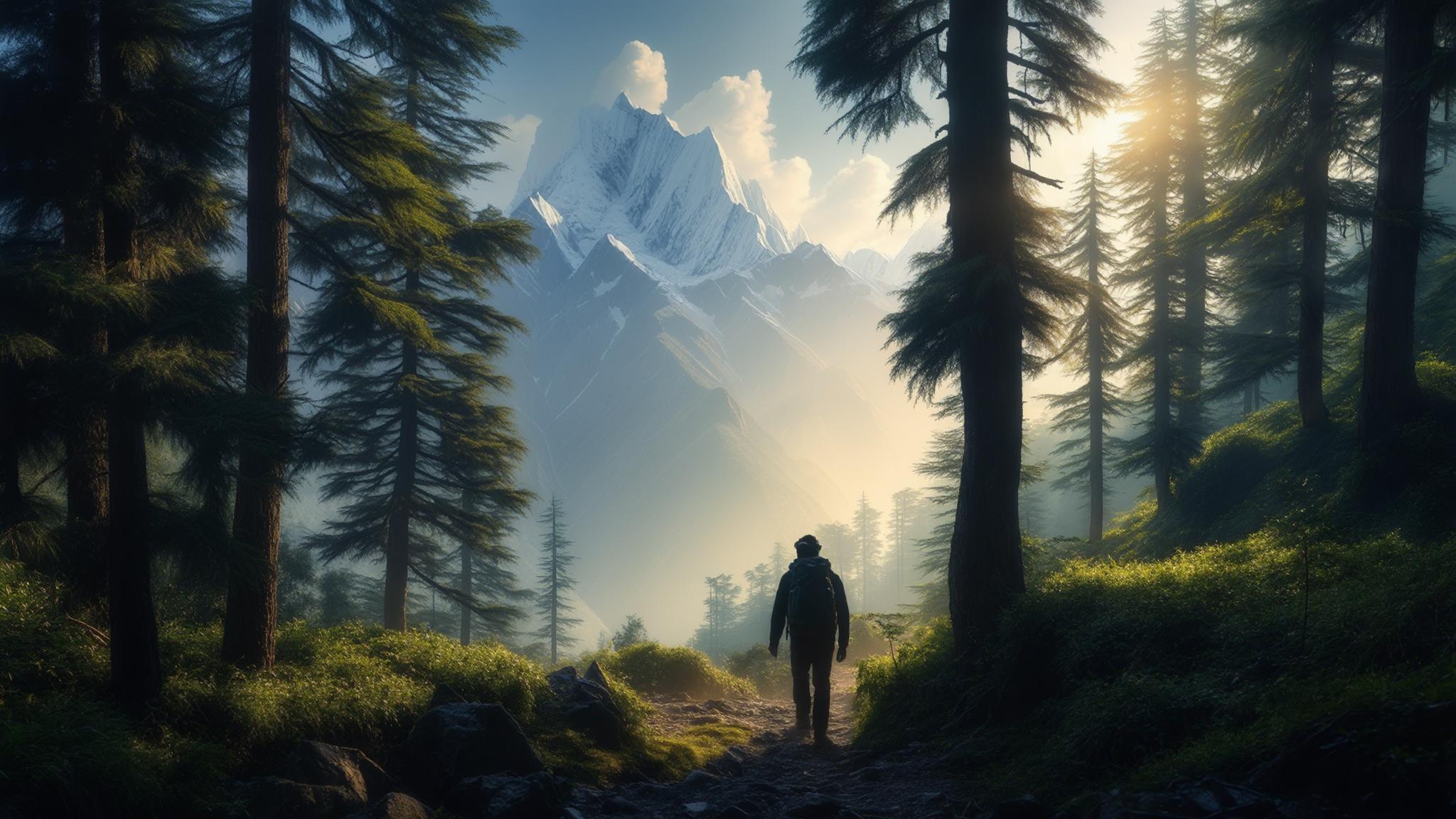
With the spring trekking window opening across Uttarakhand this week, a growing number of visitors are bypassing Mussoorie’s congested central corridors in favour of Benog Wildlife Sanctuary — an 11-kilometre drive west of Mall Road that offers dense forest cover, documented Himalayan bird species, and clear sightlines toward Bandarpunch and Swargarohini peaks. The sanctuary’s peak accessibility period runs from late March through early June, according to the Uttarakhand Forest Department.
The forest department classifies Benog as a protected area under the Wildlife Protection Act, 1972. Entry is managed through a ticketed checkpoint near the Clouds End road junction, and visitor numbers are informally capped to protect the ecosystem. No overnight camping is permitted inside sanctuary boundaries.
What the Benog Trail Actually Looks Like on the Ground
The route begins near Clouds End, a colonial-era property that marks the western boundary of Mussoorie town. From the forest entry gate, a single well-maintained dirt path climbs through mixed oak and rhododendron forest before opening onto the Benog hilltop, where a small Hindu temple dedicated to the goddess Benog Mata stands. The total elevation gain from the gate to the summit is approximately 300 metres.
Rhododendron trees along this trail typically bloom between late February and mid-April, producing the deep red flowers the region is known for. The Uttarakhand Forest Department’s 2025 biodiversity audit recorded over 150 bird species in the sanctuary, including the rare White-capped Water Redstart and multiple species of laughingthrush. Serious birders typically arrive before 7:00 a.m. for optimal sightings.
The path surface is largely compacted earth with tree root sections. Trail shoes with ankle support are recommended. The forest department station at the gate rents basic bamboo walking sticks for ₹20 per stick, though stock is limited on weekends.
How to Reach Benog From Mussoorie Town
From Library Chowk — the main taxi stand in Mussoorie — shared jeeps to Clouds End depart roughly every 45 minutes during daylight hours. The fare is approximately ₹30 to ₹40 per seat for the 11-kilometre journey, which takes about 25 minutes depending on traffic on the narrow hill road. Private taxis charge between ₹400 and ₹600 for the same route, with drivers typically willing to wait up to three hours for a return fare.
Visitors arriving by private vehicle from Dehradun via the Mussoorie bypass should navigate to Clouds End directly rather than entering via Mall Road. The Clouds End road branches left from the Library junction and is signposted. Parking near the forest gate is limited to approximately 20 vehicles.
Seasonal Conditions and the Best Window in 2026
Uttarakhand’s pre-monsoon spring season, running from late March to early June, consistently offers the clearest atmospheric conditions for Himalayan views from the Benog summit. Temperatures at the hilltop range between 8°C and 18°C during this window, according to data from the India Meteorological Department’s Dehradun station. Morning visits before 10:00 a.m. carry the best chance of unobstructed sightlines before valley haze builds.
Post-monsoon October and November also produce good visibility, though rhododendron blooms are absent. Winters from December through February bring frost and occasional snowfall that makes the trail slippery without proper footwear. The forest department advises against solo trekking in winter months.
What a Full-Day Benog Visit Costs in 2026
A solo visitor travelling from Mussoorie town centre can complete the Benog day-trip for under ₹500 all-in, making it one of the most cost-effective excursions available from any major Uttarakhand hill station. The cost breakdown below is based on shared transport and self-guided trekking without hiring a local guide.
No food stalls operate inside the sanctuary itself. Visitors are advised to carry water — at least one litre per person — and packed food. A dhaba near the Clouds End road junction serves basic Garhwali meals for approximately ₹80 to ₹120 per plate, including rajma chawal and aloo parathas.
Practical Checklist Before You Go
The Uttarakhand Forest Department recommends that visitors register at the entry gate with a valid government-issued photo ID. Foreign nationals must carry their passport. Photography is permitted throughout the sanctuary for personal use; commercial drone flights require a separate permit from the district forest office in Dehradun, which typically takes five to seven working days to process.
- Carry a valid photo ID for gate registration
- Arrive before 9:00 a.m. for birding and clear summit views
- Minimum one litre of water per person — no vendors inside
- Trail shoes with grip recommended; sandals inadequate on root sections
- Plastic carry-in is prohibited; forest department staff check bags at entry
- Mobile network is unreliable beyond the first 500 metres of trail
- Exit before 5:00 p.m. gate closing — no exceptions enforced
The nearest medical facility is Landour Community Hospital, approximately 13 kilometres from the forest gate via Mussoorie town, reachable in roughly 30 minutes by taxi. The hospital’s contact number is listed at the forest entry gate. According to the Uttarakhand Tourism Department, Mussoorie and its surrounding forest areas receive peak visitor loads between April 15 and June 15 each year, meaning early-season visits in late March offer both better trail conditions and lower crowd density.