
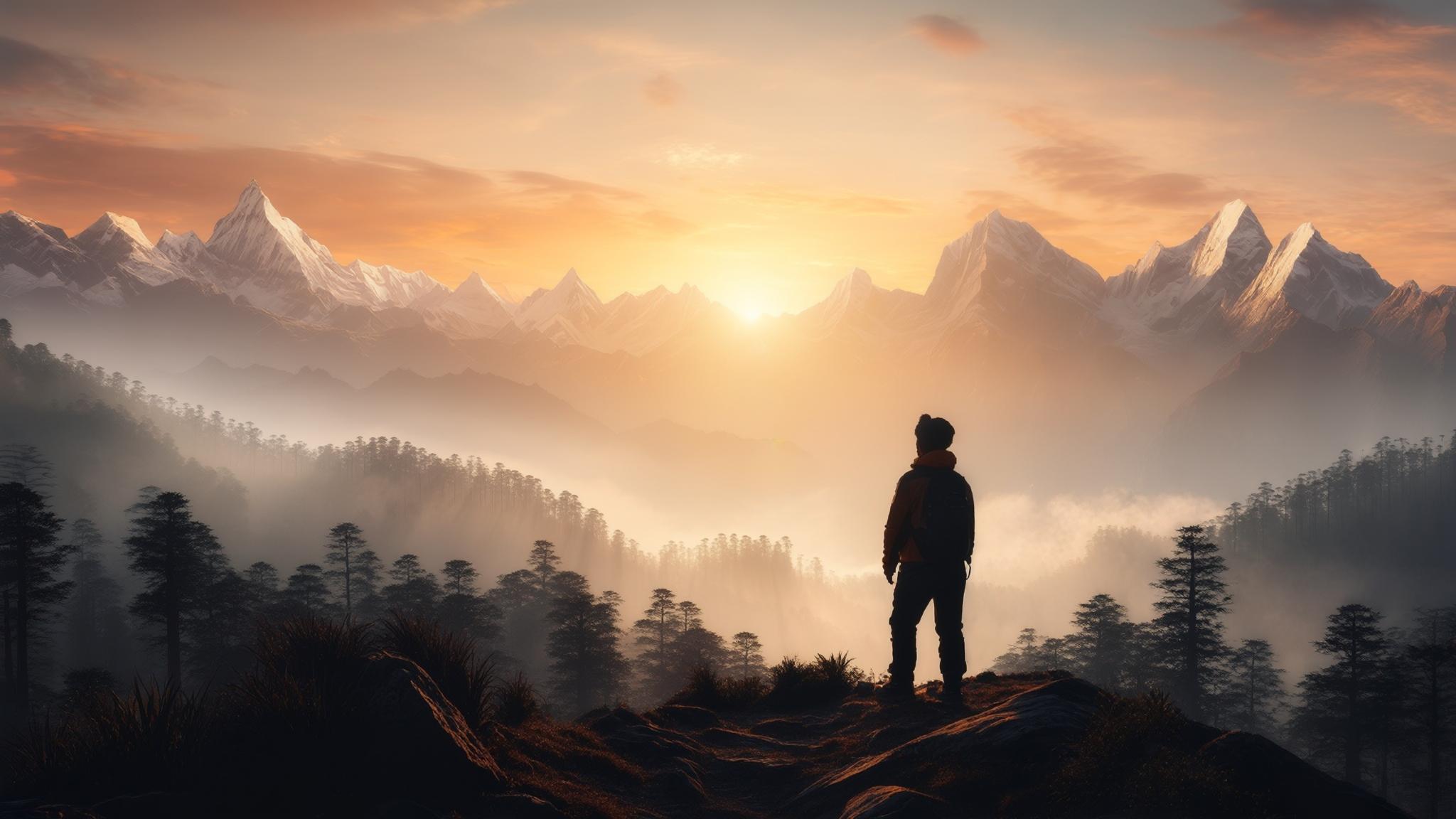
At 6:15 a.m. on a Tuesday in late March, a retired schoolteacher from Dehradun stood at the Benog Hill trig point — elevation 2,240 metres — and watched the first light catch the snow line on Bandarpunch. She had taken a shared taxi from Library Bazaar for ₹60, walked the forest trail for under two hours, and paid ₹200 at the Forest Department gate. The Mall Road crowd that would fill Mussoorie by 10 a.m. had not yet stirred. She had the ridge almost entirely to herself.
That experience — low cost, low footfall, genuinely wild landscape — is what distinguishes Benog Hill from Mussoorie’s more commercialised attractions. According to the Uttarakhand Forest Department, Benog Wildlife Sanctuary covers approximately 239 hectares of reserved forest on the western spur of the Mussoorie ridge, making it one of the smallest but most accessible wildlife corridors in the state.
How to Reach Benog Hill From Mussoorie Town
The most direct route is straightforward. From Library Bazaar or the Picture Palace bus stand, shared taxis run toward Clouds End Hotel — a heritage property that marks the western boundary of the main tourist zone — and continue a short distance to the sanctuary gate. The shared fare typically runs ₹50–80 per seat depending on the season; private cabs charge ₹350–500 for the one-way trip.
Walkers can also cover the distance on foot along the Camel’s Back Road and then the forest road, a route that adds roughly 45 minutes to the journey but passes the Camel’s Back viewpoint along the way. The road is surfaced and not technically demanding, though it does gain steady elevation.
What the Trail Actually Looks Like
The trail inside the sanctuary follows a defined forest path maintained by the Uttarakhand Forest Department. From the entry gate, the main route climbs steadily through oak, rhododendron, and Himalayan pine for approximately 2.5 kilometres before reaching the open ridgeline near the Mary Budden Estate ruins and the trig point.
The forest cover is dense enough that the trail remains cooler than Mall Road even on warm afternoons, but the canopy opens frequently to give views north toward the higher Garhwal ranges. On winter mornings and through April, rhododendron trees along this stretch bloom red and pink — a detail that local guides cite as a primary reason to time the visit for late February through mid-April.
Wildlife and Birdlife: What Visitors Have Reported
Benog Wildlife Sanctuary was designated primarily to protect a corridor for leopard, barking deer, and Himalayan black bear, according to the Uttarakhand Forest Department’s published sanctuary data. Leopard sightings on the trail itself are rare, though pugmarks are occasionally observed near the upper section of the path.
Birdwatchers regard Benog Hill as one of the more productive sites within a two-hour drive of Dehradun. Species recorded in the sanctuary include the Himalayan griffon vulture, Kalij pheasant, scarlet minivet, and the white-throated laughingthrush. The Global Biodiversity Information Facility lists multiple confirmed observation records from the Benog ridge for over 80 avian species.
- Himalayan griffon vulture — frequently spotted riding thermals above the ridge between 8 a.m. and noon
- Kalij pheasant — most often heard rather than seen; vocally active at dawn
- Scarlet minivet — visible in the rhododendron canopy during the spring bloom
- Barking deer — occasionally seen at the forest edge near the upper trail at dusk
Best Time to Visit and Season-by-Season Breakdown
Timing matters significantly at Benog Hill. The sanctuary is accessible year-round, but the quality of the visit varies sharply by season. Late February through May offers the strongest combination of clear visibility, rhododendron bloom, and comfortable trail temperatures. According to the India Meteorological Department, Mussoorie’s average March daytime temperature sits around 12–18°C, making early morning trekking practical without heavy gear.
Monsoon season (July through September) is technically possible but not recommended. The trail becomes muddy, leeches are active throughout the forest, and cloud cover eliminates the primary draw of the ridgeline panorama. October through January brings the clearest post-monsoon skies but requires warm layering; temperatures on the ridge can drop to 2–4°C before sunrise.
Practical Planning: Costs, Permits, and What to Carry
The total out-of-pocket cost for a solo visitor from Mussoorie town is modest. A shared taxi both ways runs approximately ₹120–160; the Forest Department entry fee is approximately ₹200 per adult. Carrying packed breakfast from any of the bakeries on Landour’s Sisters Bazaar — roughly ₹80–120 for bread and eggs — keeps the morning self-sufficient. Total spend: under ₹500 per person for the full experience.
Photography is permitted inside the sanctuary for personal use without a special permit. Commercial or drone photography requires prior clearance from the Uttarakhand Forest Department’s Dehradun divisional office, according to rules published under the Wildlife Protection Act, 1972. Visitors planning drone flights should confirm current clearance requirements with the department before arrival, as regulations have tightened across Uttarakhand’s protected areas since 2024.
The sanctuary does not have a formal guide requirement, though several licensed nature guides operating out of Landour and Library Bazaar offer half-day Benog treks for ₹800–1,200 per group. For first-time visitors or serious birdwatchers, a local guide adds practical value in locating species along the less-obvious side paths off the main trail.