
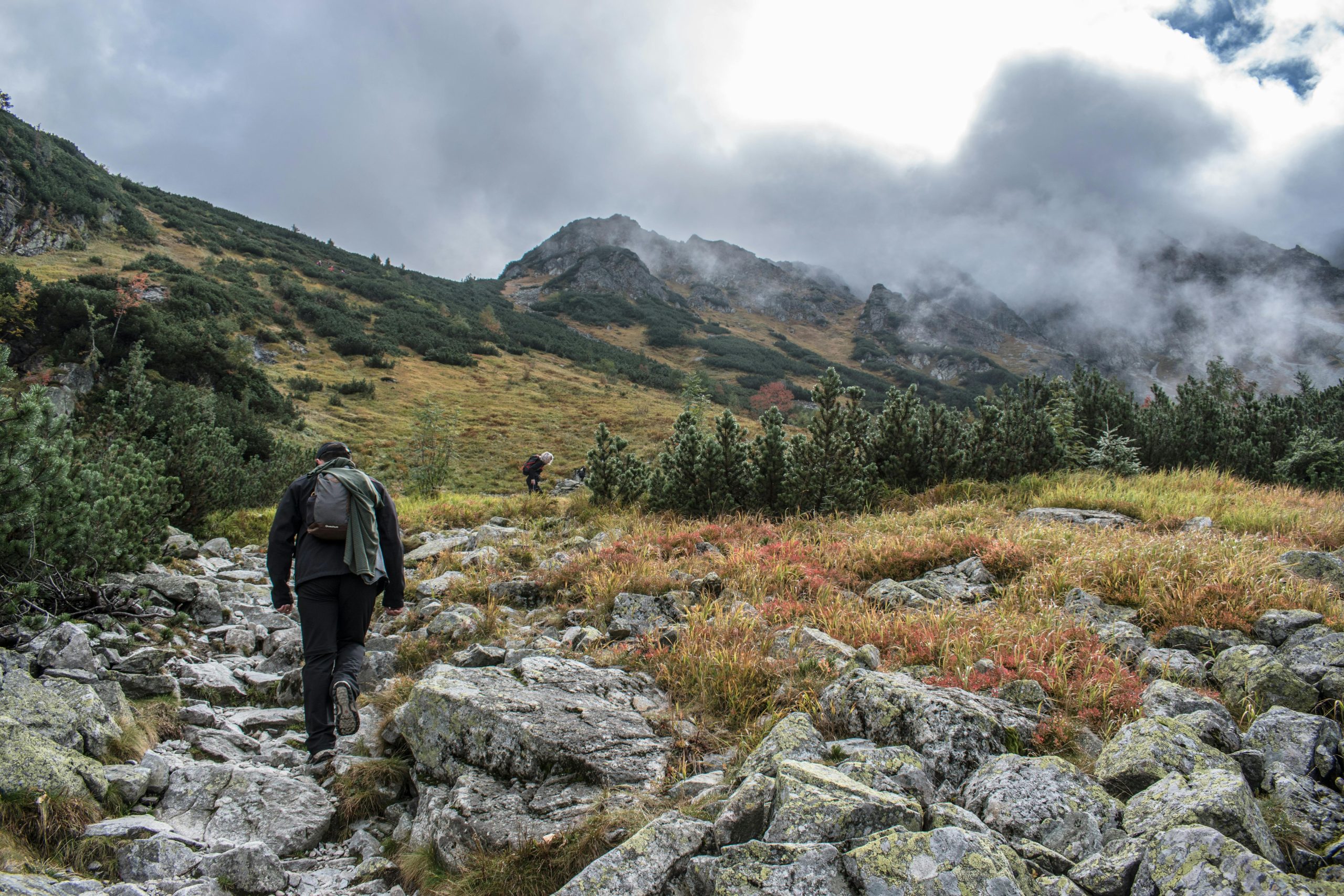
With April temperatures in Mussoorie hovering between 10°C and 22°C and the post-Holi tourist rush still weeks from its peak, the trail to George Everest Peak is, right now, as close to empty as it ever gets. Locals say the window between the first week of April and mid-May is the single best stretch of the year to attempt the walk — the skies are clear, the rhododendrons along the ridge are still in bloom, and the snowline on the Bandarpunch massif is visible without a cloud intervening. The hike begins roughly 6 kilometres west of Mussoorie’s Library Bus Stand, at a point most Dehradun-bound cabs will reach in under 20 minutes.
Sir George Everest served as Surveyor General of India from 1830 to 1843, and the ridge above Mussoorie was where he built his working laboratory and personal residence — a complex the Survey of India called Park Estate. The mountain named in his honour, measured and triangulated during the Great Trigonometrical Survey of India, is visible on clear days from the very hilltop where he worked. That geographic coincidence alone draws a small but steady stream of trekkers who know to look beyond the town’s main circuit.
What the Trail Actually Looks Like on the Ground
The trek is straightforward, though calling it a manicured path would be misleading. The trail begins at a small parking area at the end of a metalled road that branches off near Hathipaon, a quieter residential neighbourhood west of Mussoorie’s Landour cantonment. From the drop-off, a dirt and stone path climbs steadily through oak and rhododendron forest for approximately 2km before opening onto the ridge where Everest’s estate once stood.
The ruins themselves — a roofless stone building used as a laboratory and an adjacent residential structure — are maintained in a state of controlled preservation by the Archaeological Survey of India. Neither structure can be entered, but the surrounding grounds are open, and the viewpoint platform built at the edge of the ridge offers what local trekking operators describe as a 270-degree panorama taking in the Doon Valley to the south and the Garhwal Himalaya to the north and east.
According to trekking guides based out of Landour Bazaar who operate in the area, the last kilometre of the climb includes two short, steep sections where the path is loose underfoot. Basic trekking shoes or sturdy sneakers are sufficient; specialist hiking boots are not required for most adults in reasonable physical condition.
Costs and Logistics for April 2026 Visitors
This is where the George Everest trek separates itself sharply from Mussoorie’s more commercial attractions. The total out-of-pocket cost for a solo traveller doing the walk independently is, by most estimates, under ₹600 for the day — including the cab ride from Mall Road and back.
Local guides are available at the trailhead and charge approximately ₹300 to ₹400 per person for the round trip, which includes narrative context about Everest’s survey work and the colonial history of Landour. Several operators in Landour Bazaar now offer pre-booked guided walks that include breakfast at a café and a historical briefing, with packaged rates running between ₹800 and ₹1,200 per person.
The Mussoorie Tourist Information Centre, located near the Library Chowk, maintains a list of registered guide operators for the Hathipaon and George Everest trail areas. Visitors are advised to use registered guides rather than informal touts who occasionally approach tourists near the Landour clock tower.
What the Surrounding Area Adds to the Experience
The Hathipaon neighbourhood that serves as the approach to the trek is itself worth time. Unlike the commercial stretch of Mall Road, Hathipaon retains a character defined by old colonial bungalows, steep lanes, and a relative absence of souvenir stalls. Several heritage cottages in the area operate as homestays, with rates for April 2026 ranging from approximately ₹2,500 to ₹4,500 per night for a double room based on listings reviewed by this publication.
Landour Bazaar, approximately 2km east of the Hathipaon drop-off by road, functions as a secondary base for the trek. The bazaar is home to Char Dukan — a cluster of four small tea stalls and eateries that has operated on the same ridge for decades and is frequently cited by travellers as among the most atmospheric stops in the greater Mussoorie area. A standard breakfast of aloo paratha with tea costs between ₹80 and ₹120 per person here as of early 2026.
How the George Everest Trek Compares to Other Mussoorie Day Hikes
Mussoorie has several walking circuits that go beyond the Mall Road promenade, but they vary significantly in difficulty, crowd levels, and payoff. The comparison below, drawn from local trekking operator data and visitor accounts, gives first-time trekkers a frame of reference.
For visitors whose primary interest is Himalayan views rather than historical context, Lal Tibba — Mussoorie’s highest accessible point at approximately 2,275 metres — remains a strong alternative. However, guides and long-term Mussoorie residents consistently describe the George Everest viewpoint as offering a wider northward sightline, particularly for the Bandarpunch and Swargarohini ranges.
Practical Planning for the Trek in April 2026
Departing from Mussoorie by 7:30am gives trekkers the clearest sky conditions before midday haze builds over the valley. According to local weather patterns documented by the India Meteorological Department, April mornings in the Mussoorie-Landour belt are typically cloud-free until approximately 11am, after which valley haze frequently reduces long-distance visibility.
Visitors are advised to carry at least one litre of water per person, as there are no vendors on the trail itself. A small medical kit and sun protection are standard recommendations from local operators for any ridge walk in the area. Overnight stays are not possible at the viewpoint; the area closes to visitors by approximately 5:30pm according to municipal guidelines currently in effect.
With summer school holidays beginning in most Indian states by late April and hotel rates in Mussoorie rising sharply through May, the early April window represents, by most practical measures, the most cost-efficient and crowd-light entry point into this particular experience. The George Everest Peak trek asks little in the way of physical preparation, budget, or prior planning — and returns, on a clear April morning, one of the more undisturbed views the Garhwal Himalaya has to offer from any accessible ridge above the Doon Valley.