
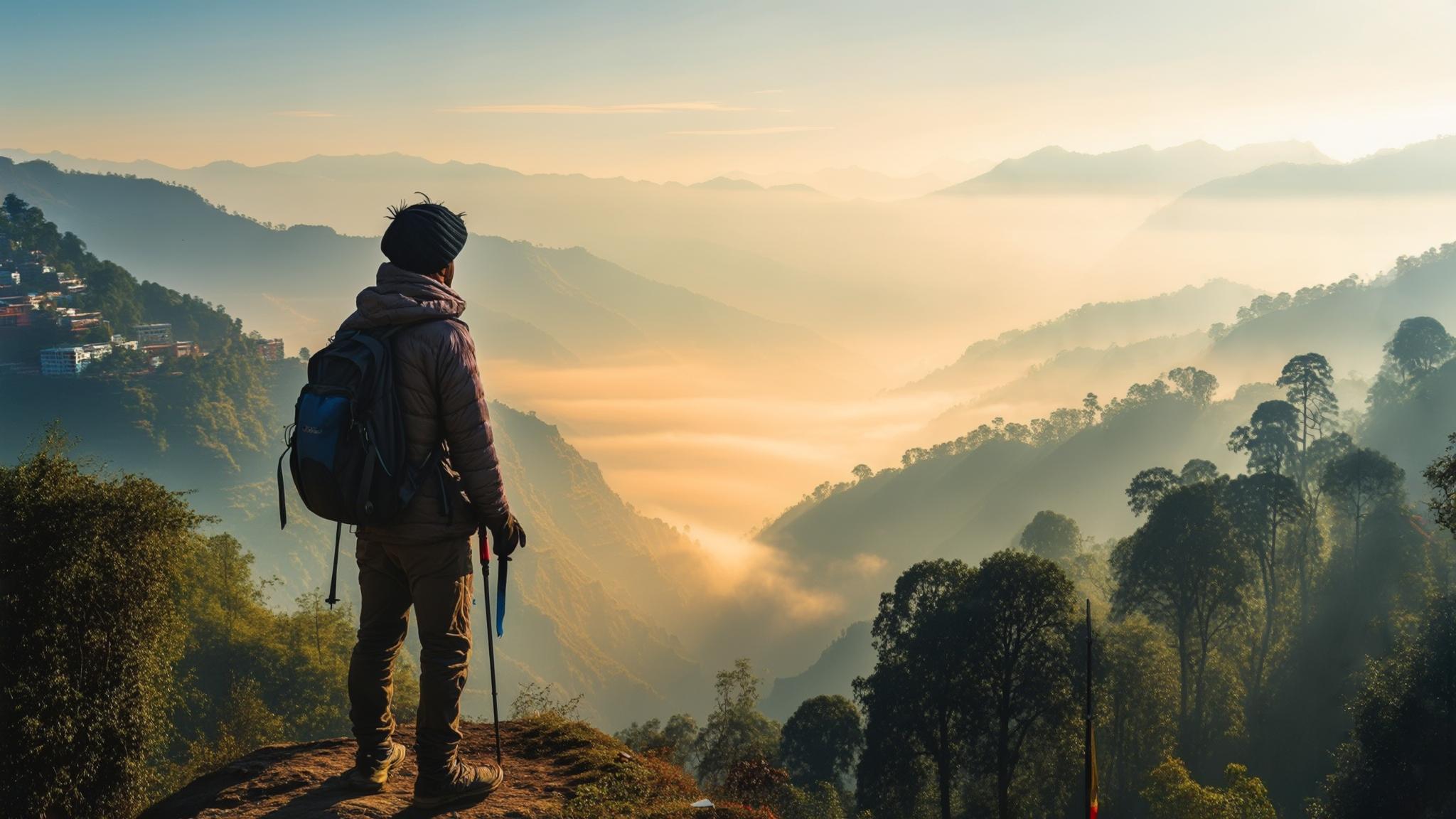
What if the version of Mussoorie most travellers experience — the gridlocked Mall Road, the overcrowded Kempty Falls parking lot, the ₹12,000 hotel room on a peak-season weekend — is not the only version available? A growing number of budget-conscious visitors are returning from the hill station with receipts totalling under ₹5,000 for three full days, and their itineraries look nothing like the standard tourist circuit.
According to data published by the Uttarakhand Tourism Development Board, Mussoorie recorded approximately 2.3 million visitors in 2024, with footfall concentrated between May and July. The March–April window, by contrast, sees roughly 30 to 40 percent lower visitor density — meaning shorter queues, lower hotel rack rates, and a hill station that is, by most measures, more itself.
The Real Cost Breakdown: Where Your Rupees Actually Go
The honest answer is that Mussoorie is not expensive — peak-season pricing is. Strip out the holiday surcharges and the per-person cost drops sharply. The following figures are based on March 2026 quoted rates gathered from guesthouses on Camel’s Back Road and the Landour bazaar area, confirmed via direct inquiry.
Accommodation is the single largest variable. Guesthouses on Camel’s Back Road and in the Landour cantonment area consistently quote ₹600–₹900 per night for a clean double room with attached bathroom in the off-season — a figure that can triple during the May–June rush. Booking platforms like MakeMyTrip and direct phone calls to properties both yield similar rates in March, though calling ahead occasionally unlocks a small additional discount.
Food costs are highly controllable. The cluster of dhabas near the Landour bazaar serves rajma-chawal, Maggi variations, and fresh chai at prices unchanged from 2023. A full day of meals — breakfast, lunch, and dinner — rarely exceeds ₹450 per person when eating at these establishments rather than the Mall Road restaurants, which carry a premium of 40 to 60 percent for equivalent food.
Getting There Without Paying Tourist-Taxi Prices
Transport to Mussoorie is one area where a little research produces outsized savings. The nearest major railhead is Dehradun, approximately 34 kilometres from Mussoorie’s Library Chowk. Shared Vikram tempo and shared cab services operate from Dehradun’s Mussoorie Bus Stand (also called the Parade Ground bus stand) throughout the day, with per-seat fares ranging from ₹60 to ₹90 depending on demand and time of day.
Within Mussoorie, the town is largely walkable if accommodation is chosen centrally. The stretch from Library Chowk to Picture Palace — roughly 2 kilometres — covers the majority of Mall Road attractions on foot. Camel’s Back Road, a 3-kilometre carriageway popular with morning walkers, is entirely free to use and offers some of the clearest Himalayan views available without a cable car ticket.
For destinations beyond walking distance — Gun Hill, Kempty Falls, Benog Wildlife Sanctuary — shared cabs and local buses operate from Gandhi Chowk. Fares to Kempty Falls by shared cab run approximately ₹80–₹100 per seat one-way as of March 2026.
The Attractions Worth Paying For — and the Ones That Are Free
Not every Mussoorie attraction justifies its entry or cable car fee at the same ratio of experience to rupee. The following comparison reflects current 2026 pricing gathered from attraction operators directly.
Benog Wildlife Sanctuary, located approximately 11 kilometres west of the town centre, is frequently overlooked on standard itineraries. The sanctuary covers roughly 239 hectares of oak and rhododendron forest and is home to Himalayan barking deer, leopard, and over 200 bird species according to the Uttarakhand Forest Department. Entry for Indian nationals is ₹150, and the main trail to the Mary Budden Estate viewpoint takes approximately 90 minutes at an easy pace.
A Day-by-Day Framework That Keeps Costs Controlled
The structure below is not a rigid schedule but a cost-tested sequence that front-loads the free and low-cost activities while reserving paid attractions for moments when weather and energy align.
The framework leaves approximately ₹1,300 in buffer for a third night of accommodation, any personal shopping at Landour’s small bookshops and bakeries, or incidental costs. Notably, it excludes chartered taxi services entirely — a single private cab day-trip can cost ₹2,000–₹2,500 and would blow the budget in isolation.
What Changes in 2026 That Visitors Should Know
Two infrastructure changes are relevant for 2026 visitors. The Mussoorie-Dehradun elevated road project, ongoing since 2022, has altered traffic patterns on the approach road — travellers arriving by private vehicle should factor in additional time through the Rajpur Road stretch, particularly on weekends. Shared cabs use routes less affected by this congestion.
Additionally, the Uttarakhand government announced in early 2026 a phased increase in entry fees at several state-managed natural attractions, including Benog Wildlife Sanctuary. The current ₹150 rate for Indian nationals may be revised upward later in the year, though no specific date has been confirmed as of this report’s publication. According to the Uttarakhand Tourism Development Board’s official portal, updated fee schedules will be published on the site when finalised.
For travellers planning visits between now and June, booking accommodation at least seven to ten days in advance is advisable — not because March is crowded, but because the specific guesthouses in Landour that offer the best value at the ₹700–₹900 price point are small operations with limited inventory. The window between late March and mid-April, before school holidays begin, remains the least pressured entry point of the year.