
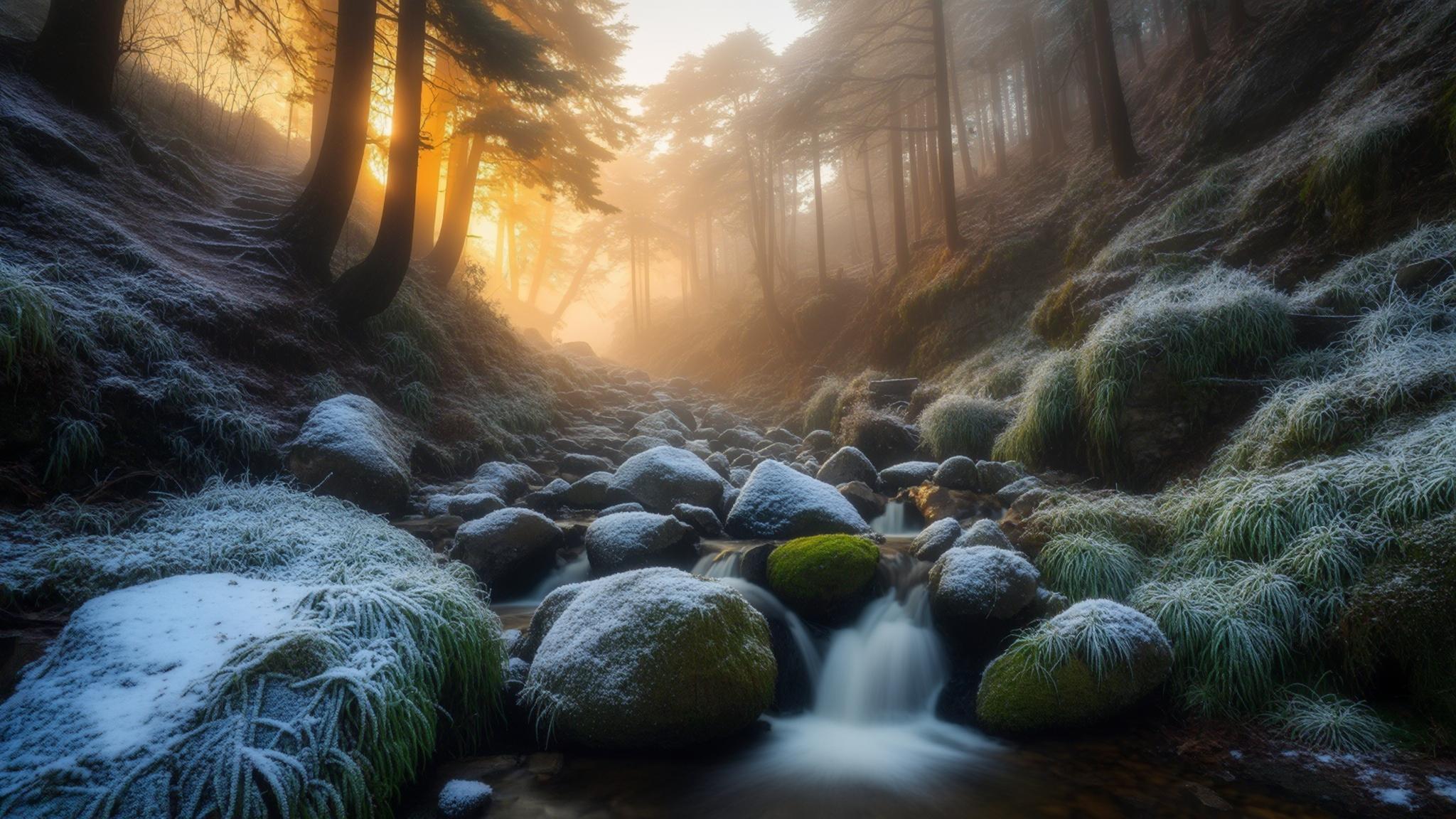
A family from Noida books a cab at 5 a.m. on a Friday in late January, thermoses of chai packed and snow boots strapped to the roof carrier. By 10 a.m. they are standing at Lal Tibba, the highest point in Mussoorie, watching clouds drift below them across the Doon Valley. By afternoon, the children are ankle-deep in a pool below Kempty Falls. This is a standard Mussoorie weekend — and yet, first-time visitors still routinely miss half of what makes it worth the drive.
Mussoorie, located approximately 290 kilometres north of New Delhi in Uttarakhand, sits at an elevation of roughly 2,005 metres above sea level. According to CNBC TV18’s Mussoorie travel coverage, the hill station is among India’s most popular tourist destinations throughout the calendar year — not only in the peak summer months when Delhi temperatures climb past 45°C.
What Mussoorie Actually Looks Like in January and February
Winter in Mussoorie — spanning December through February — is not simply cold weather with fewer tourists. It is a different landscape. Snowfall transforms Mall Road into a pedestrian corridor of slush and boot prints, and Lal Tibba’s observation deck frames views of Bandarpunch and Kedarnath peaks with startling clarity on clear mornings.
According to The Quint’s North India winters feature, Mussoorie regularly features alongside Shimla as one of the best places to experience white winters in the region. Temperatures in January typically drop to between 1°C and 7°C at night. Roads to upper viewpoints can ice over by early morning, so most experienced visitors plan Lal Tibba visits for mid-morning rather than at dawn.
Snow activities are a significant draw. CNBC TV18 lists a guided snow trek to Nag Tibba — a peak approximately 65 kilometres from Mussoorie town — as a January highlight. Nag Tibba, at 3,022 metres, offers an overnight trek option with campsites and, on clear nights, an unobstructed sky above the tree line.
The Key Attractions — and How Long Each Actually Takes
Most visitors underestimate how much ground Mussoorie covers. The town stretches roughly 15 kilometres along a ridge, meaning attractions at the eastern Landour end sit a significant distance from those near Kempty Falls to the west. Planning time allocations honestly changes how much a trip delivers.
Kempty Falls, located approximately 15 kilometres from Mussoorie town on the Chakrata Road, is described by local tour operators as the most famous waterfall in the area. Bhatta Falls and Jharipani Falls are quieter alternatives within roughly 7–10 kilometres of Mall Road. Jharipani, in particular, sees significantly fewer visitors on weekdays and offers a short forest trail approach.
Company Garden — locally called Company Bagh — sits closer to the town center and functions as a well-maintained park with boating, small amusement rides for children, and flower beds maintained by the Mussoorie Municipal Council. It is a practical stop for families who need a lower-intensity mid-trip break.
A Realistic Budget for a 3-Day Mussoorie Trip in 2026
Budget transparency is rarely offered in standard travel coverage of Mussoorie. Costs vary sharply by season: a hotel room that costs ₹1,800 per night in February may climb to ₹5,500 or more during peak summer. The figures below reflect late-January 2026 mid-range travel for two adults.
A mid-range hotel on Mall Road or in Landour typically costs between ₹1,500 and ₹3,000 per night in the January off-peak window. Food costs average ₹400–₹700 per day per person when eating at local dhabas and mid-tier restaurants. Attraction entry fees across three days total approximately ₹600–₹800 for two adults covering all major sites.
Cab hire from Dehradun railway station to Mussoorie runs approximately ₹600–₹900 one way. Travelers arriving by train to Dehradun Junction (the nearest major railhead, roughly 34 kilometres from Mussoorie) find this the most economical approach versus driving from Delhi.
The Republic Day 2026 Crowd Factor — and How to Work Around It
The three-day window created by Republic Day 2026 falling on a Monday is drawing significant attention from Delhi-NCR travelers. According to Economic Times’ Republic Day weekend travel roundup, Mussoorie appears alongside Manali and Auli as a top long-weekend pick from the region.
The practical consequence is that hotels on and near Mall Road book out two to three weeks in advance for this particular weekend. Properties in Landour — the quieter cantonment area approximately 2 kilometres uphill from Mall Road — retain availability longer and often offer lower rates. Landour also provides calmer walking routes and access to the Camel’s Back Road, a 3-kilometre walking circuit with valley views.
Travelers who set out from Delhi after midnight on Friday and arrive in Mussoorie before 7 a.m. on Saturday consistently report better road conditions and no queuing at Dehradun’s entry checkpoints. The return journey on Republic Day afternoon, however, sees sustained congestion between Dehradun and Haridwar — a stretch of roughly 50 kilometres that can take three hours or more on a holiday Monday evening.
What First-Time Visitors Consistently Underplan
The George Everest House, located approximately 6 kilometres west of Mall Road, is the former residence of Sir George Everest — the British surveyor for whom Mount Everest was named. The site sits at the edge of a cliff with a 270-degree view across both the Doon Valley and the Aglar River gorge. Admission is minimal, visitor numbers are low compared to main attractions, and the 20-minute walk from the nearest parking area passes through forest cover.
The Happy Valley monastery — a Tibetan settlement near the Library area — is a functioning religious site with open visiting hours. According to local guide services, it is one of the few places in Mussoorie where visitors can observe traditional butter-lamp ceremonies during morning hours without a guide or fee requirement.
SOHAM Himalayan Centre, listed by travel aggregators among Mussoorie’s must-see attractions, offers nature and wildlife-focused experiences including birdwatching walks. The Mussoorie-Landour ridge sits within the outer Himalayan range and records sightings of Himalayan bulbuls, hill mynas, and several raptor species throughout winter months.
For travelers focused on outdoor activity, the CNBC TV18 Mussoorie snow guide notes that skiing near Kempty Falls is occasionally listed in older itineraries but is not a currently active commercial operation at that location. The nearest functioning ski facility with consistent infrastructure is Auli, approximately 250 kilometres northeast of Mussoorie near Joshimath.