
Rajan and Priya booked their Mussoorie honeymoon for the first week of June. They’d seen the Instagram reels, heard their colleagues rave about it, and paid ₹8,500 per night for a hotel on Camel’s Back Road. What they got was a three-hour traffic jam before Dehradun, a Mall Road so packed they couldn’t stop walking, and a sky so hazy the famous Himalayan panorama was a rumor. They came home saying Mussoorie was “okay.” They weren’t wrong about Mussoorie. They were wrong about when to go.
This is the most repeated mistake Indian travelers make with Mussoorie. The hill station has been marketed as a summer escape since the British built it that way in the 1820s — a retreat from the plains heat. But that logic made sense when the alternative was sweltering Calcutta. Today, it sends lakhs of tourists into the same narrow window, paying premium prices for a diminished experience.
The Common Belief: Summer Is Mussoorie Season
Ask any travel agent in Delhi or Mumbai when to visit Mussoorie and you’ll hear the same answer: April to June, before the monsoon hits. The logic seems airtight. The weather is mild compared to the plains. Schools are on holiday. The roads are open. The entire Indian family travel calendar has been built around this window for decades.
Mussoorie’s reputation as a summer destination is so entrenched that the town’s own hospitality industry prepares for it like a harvest season. Hotels hire extra staff, restaurants jack up menus, and the Uttarakhand Tourism Development Board pushes summer packages hard. Roughly 15 lakh tourists visit Mussoorie annually, and the majority squeeze into a ten-week window between late April and the end of June.
The belief isn’t irrational — it’s just outdated. It was shaped by infrastructure that no longer exists (limited mountain roads), by school calendars that haven’t changed, and by a travel culture that mistakes crowded for popular and popular for good.
The First Crack: What Summer in Mussoorie Actually Looks Like
The haze problem is real and rarely discussed in promotional content. Mussoorie sits at approximately 2,005 metres above sea level, and during April through June, the hot air rising from the Doon Valley creates a persistent atmospheric haze that blankets the lower Himalayas. The panoramic Himalayan views — including the Bandarpunch and Swargarohini ranges — that feature in every Mussoorie brochure are largely invisible during this period.
Local guesthouse owners on Landour’s upper reaches will tell you candidly that guests who come in May asking “where are the mountains” leave disappointed. The views exist in photographs taken in December and January. Summer tourists are, in effect, paying peak prices to see a postcard location without its main attraction.
The traffic situation compounds the problem. Weekend tourists from Delhi — a 290 km drive — often spend more time on the Mussoorie bypass road than they do at Kempty Falls or Gun Hill. The town’s road network, designed for a small colonial hill station, has not scaled with tourist volumes. The result is that summer visitors often experience Mussoorie primarily through a car window.
Why the Evidence Points to October–February
The case for the cooler months isn’t just about avoiding crowds — it’s about accessing a fundamentally different and better version of the destination. October marks the end of monsoon and the beginning of what locals call the “crystal period.” The rains have washed the atmosphere clean, the haze has lifted, and on clear mornings the snow-capped Garhwal Himalaya appears so close and sharp it seems impossible it’s 150 kilometres away.
Snowfall is the other major draw. Mussoorie receives snowfall most years between late December and mid-February, with December 25 through January 15 being the most reliable window. The town transforms completely — Mall Road under snow is the image tourists actually want, and it’s available at roughly one-third the peak-season hotel rate. Couples planning a winter trip with a chance of snow should target the Christmas–New Year window, booking at least six weeks in advance since this brief period does see elevated demand.
The post-monsoon October–November window is ideal for families and first-time visitors. Temperatures range from 8°C to 18°C, trails like the Benog Wildlife Sanctuary walk and the Lal Tibba viewpoint are uncrowded, and Landour Bazaar — the old British-era market above Mussoorie that most summer tourists never reach — is fully accessible without the press of the crowd.
What the Winter Mussoorie Experience Actually Includes
Visiting between October and February opens up a different itinerary than the standard summer checklist. Kempty Falls — overcrowded in summer to the point of being unpleasant — is accessible and genuinely beautiful in October and November before temperatures drop too far. The 15-km drive to Kempty from Mall Road takes 25 minutes in winter versus 90 minutes on a summer weekend afternoon.
Lal Tibba, the highest point in Mussoorie at 2,275 metres, has a telescope installed that lets you see Badrinath, Kedarnath, and Bandarpunch on clear winter days. In summer, the telescope operator will tell you the view is “a little cloudy today” — the standard answer given from April to September. In January, the view is transformative.
Landour deserves its own paragraph because most summer tourists never find it. Located 500 metres above Mall Road, this former British cantonment area is where author Ruskin Bond has lived for decades. The narrow lanes, old stone buildings, and the famous Char Dukan eatery cluster are all within a 2-km walking loop. In winter, you might be one of ten tourists there rather than one of ten thousand.
What This Means for Your Mussoorie Planning
The practical implication is straightforward: if you have flexibility in your travel calendar, avoid Mussoorie between late April and the end of June entirely. The exception is if you are traveling with young children who need the school holiday window — in that case, go on weekdays only, book well in advance (6–8 weeks minimum), and stay at least two nights so you’re not doing the trip as a day-tripper adding to the traffic.
For couples, the December 20 to January 10 window offers the best combination of snow possibility, clear views, festive atmosphere, and manageable crowds. Book hotels that face the valley — the Himalayan panorama from a warm room at sunrise is worth paying a slight premium for. Properties on the Library end of Mall Road and those in Landour generally offer better views than those on the Kempty Falls side.
For families traveling with older children or teenagers, October and November are ideal. The Benog Wildlife Sanctuary trail (8 km round trip from Mussoorie) is manageable for most children above 10 and passes through oak and rhododendron forest where Himalayan birds including the Koklass pheasant are commonly spotted. This trail is too congested to enjoy properly in summer.
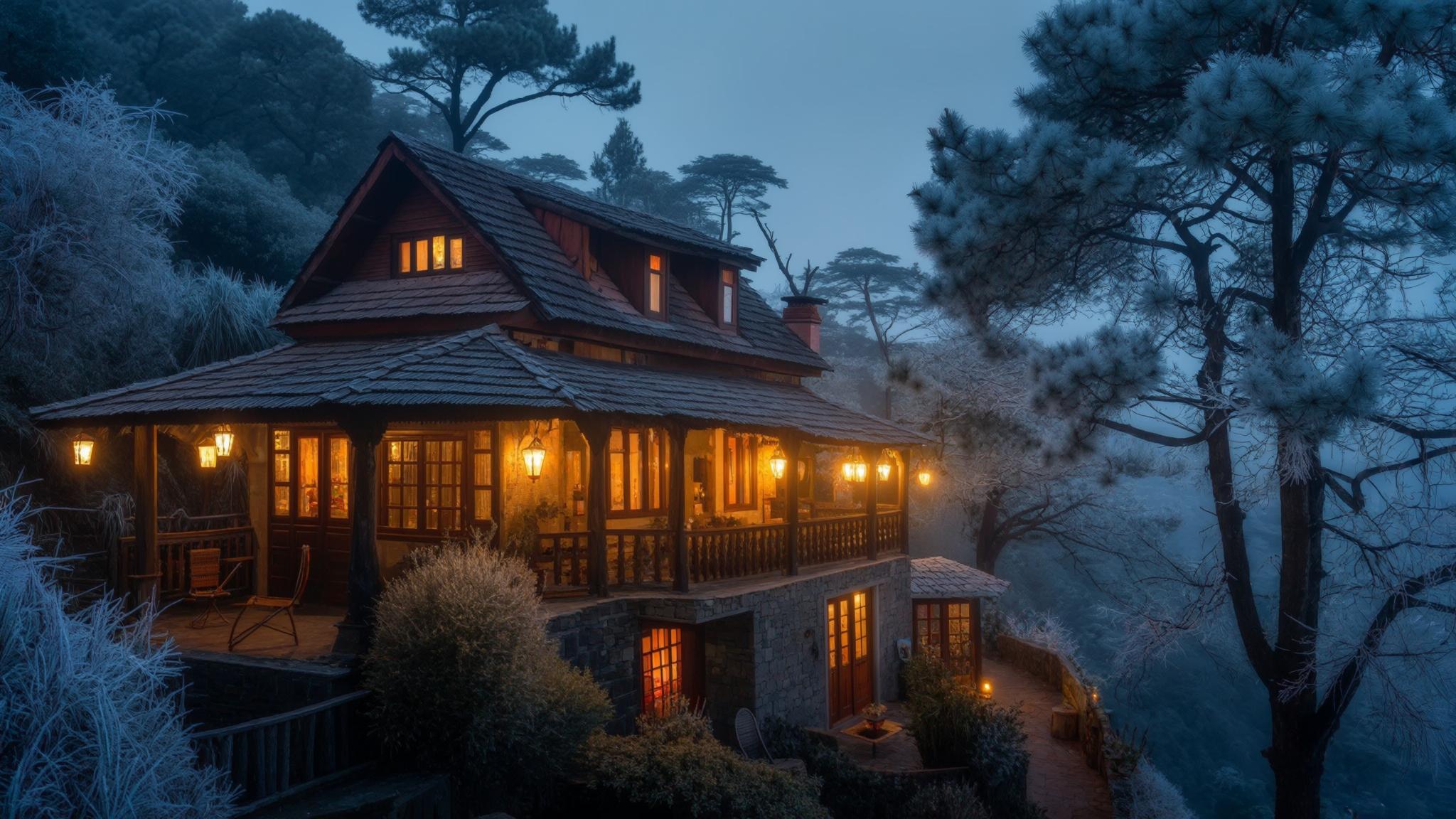
The hill station that Rajan and Priya experienced — traffic-choked, hazy, overpriced — is a real version of Mussoorie. But it isn’t the only one. The version with frost on the deodars, empty walking paths, a Himalayan panorama that stops conversation, and a hot bowl of Garhwali kafuli served in a warm restaurant with no wait — that version exists from October through February, and it costs significantly less to reach it.