
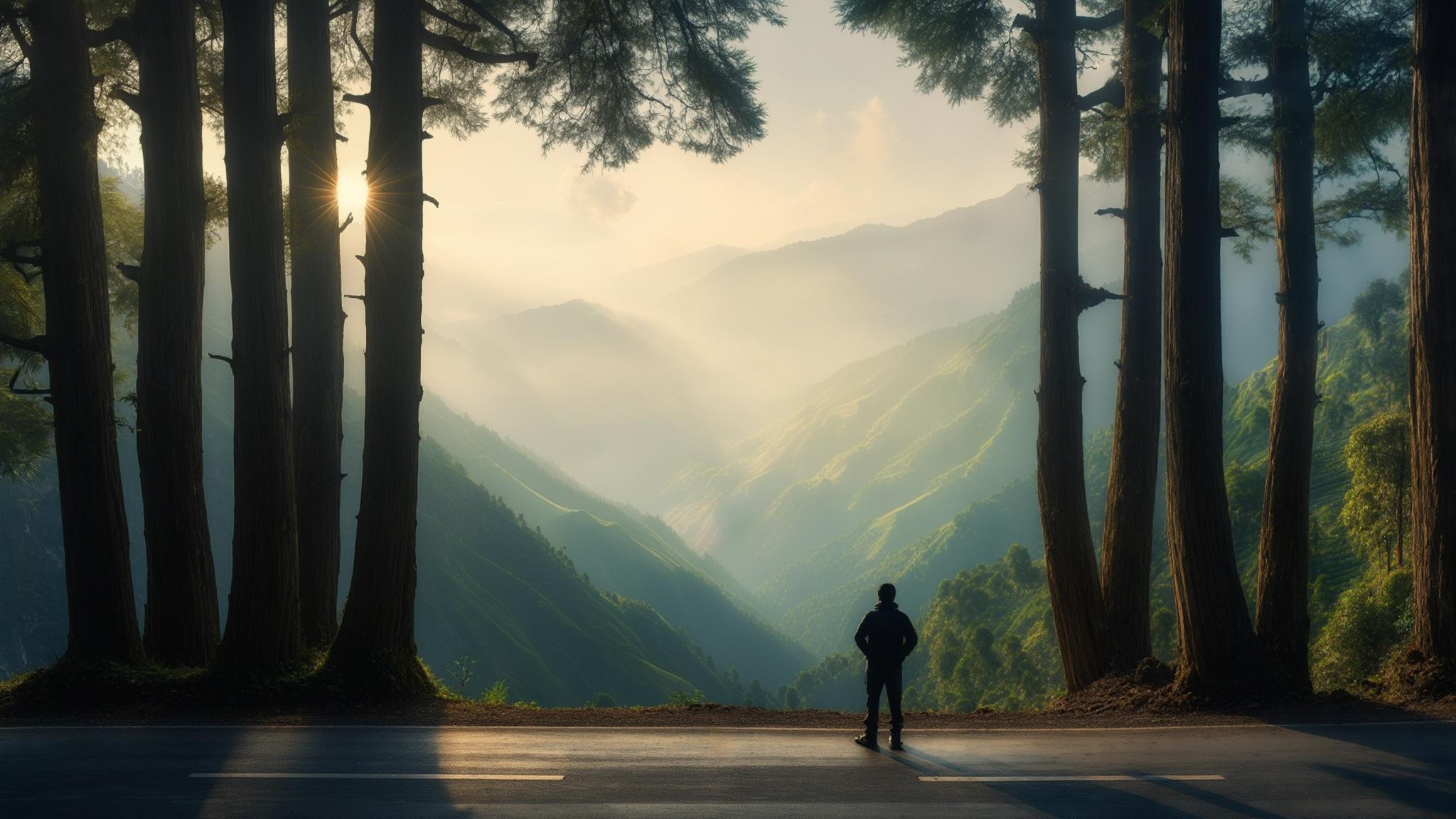
Roughly 3.5 million tourists visit Mussoorie every year — and nearly 40% of them arrive within a 10-week window between late April and June. They book the same hotels, walk the same stretch of Mall Road, and wait 45 minutes for a table at the same three restaurants. Many leave underwhelmed, wondering what the fuss was about.
The Queen of Hills deserves better than that — and so do you. The story of when and how to visit Mussoorie is one of the most consistently misunderstood travel decisions Indian domestic tourists make, year after year.
The Common Belief: Summer Is Mussoorie Season
The logic seems sound on the surface. Mussoorie sits at approximately 2,005 metres above sea level in the Garhwal Himalayas, and when the plains of North India — Delhi, Agra, Lucknow — are baking at 42°C in May, a hill station at 2,000 metres feels like salvation. Temperatures in Mussoorie during May hover between 12°C and 25°C. That’s genuinely pleasant compared to the inferno below.
This belief has been reinforced for generations. School summer holidays align perfectly with this window. Bollywood has filmed here in summer light. Travel agents and OTA platforms flood their homepages with Mussoorie promotions the moment April begins. The self-reinforcing cycle draws millions annually into the same bottleneck.
The assumption built into all of this is straightforward: go when the weather is comfortable, go when everyone else goes, and you’ll have the classic Mussoorie experience. That assumption is worth examining closely.
The Crack in the Logic: What Peak Season Actually Looks Like on the Ground
Anyone who has driven up to Mussoorie on a May weekend knows the first sign something is off: the traffic jam starts not in Mussoorie, but in Dehradun, sometimes 20 kilometres from the base of the hill. The winding 35-kilometre road from Dehradun to Mussoorie — which takes 55 minutes on a quiet day — can stretch to three hours or more on peak weekends.
Once you arrive, the famous Mall Road is so congested during peak hours that the Mussoorie-Dehradun Development Authority periodically imposes odd-even vehicle restrictions. Kempty Falls, the most-visited waterfall in the region, receives such volume in summer that the water itself is barely visible through the crowd on the steps. Photographs from weekends in June look less like a Himalayan retreat and more like a metro railway platform.
There’s also the pricing reality. Hotels operate on dynamic pricing, and peak season at Mussoorie is among the most aggressive pricing windows in Uttarakhand tourism. Properties that would be excellent value in autumn become difficult to justify in May. Budget travellers are pushed to Dehradun or to genuinely substandard accommodation.
The Evidence: What the Seasons Actually Deliver
A clearer picture of Mussoorie emerges when you look at what each season actually offers, stripped of marketing language.
The autumn window — October through mid-November — stands out as the most striking alternative. The monsoon has washed the atmosphere clean. The Himalayan panorama from Lal Tibba, Mussoorie’s highest point at 2,275 metres, extends all the way to peaks over 200 kilometres away on a clear October morning. This is when you actually see what the fuss is about.
The Real Truth: Off-Season Mussoorie Is a Different Place
Visiting Mussoorie outside peak season isn’t about settling for less. It’s about accessing a version of the destination that peak-season tourists simply cannot buy at any price. The difference is experiential, not just financial.
In October and November, Camel’s Back Road — a 3-kilometre walking path carved along the ridge — is quiet enough to hear your own footsteps and the wind in the oak trees. In May, it’s a slow-moving queue. The Landour neighbourhood, the older British-era cantonment area above Mall Road, with its clock tower and bakeries and winding lanes, is genuinely walkable and peaceful in autumn. Writers and artists have lived here year-round — Uttarakhand Tourism has documented Landour’s literary heritage extensively — precisely because it offers this quality of quiet that vanishes in summer.
Winter — December through February — brings a different proposition. Snowfall at Mussoorie is not guaranteed but occurs roughly every two to three winters with enough accumulation to cover Mall Road. When it does snow, the town transforms entirely. Hotels drop to their lowest rates of the year. The experience of sitting by a fireplace in a heritage property while snow falls outside, paying ₹1,500 for a room that costs ₹6,000 in June, is something peak-season visitors will never encounter.
Monsoon season (July–September) is the most nuanced choice. Road conditions can be unpredictable due to landslides on the Dehradun–Mussoorie highway, and some travellers find the persistent mist limiting. But for others, the drama of clouds moving through the valleys below, the vivid green of the saturated forest, and the near-empty town make it deeply rewarding. Kempty Falls is at peak flow. Prices are at their lowest. The risk is manageable if you check road conditions before departure and avoid travelling during heavy rain alerts.
Planning a Smarter Mussoorie Trip: Practical Framework
Shifting your travel window is the single highest-impact decision, but a few other choices compound the advantage significantly.
Food costs remain relatively stable across seasons. A sit-down meal for two at a mid-range restaurant on Mall Road averages ₹400–₹700. The famous Kalsang restaurant in Landour serves Tibetan and Chinese food at prices that haven’t changed dramatically in years. Local dhabas near Library Chowk offer decent thalis for ₹120–₹180. Budget roughly ₹500–₹800 per day for food for two, regardless of season.
The total off-season trip cost for two people — bus from Delhi, two nights in a decent hotel, food, local transport, entry fees — sits comfortably between ₹3,500 and ₹5,500. The identical trip in peak May costs ₹9,000–₹14,000 minimum. According to Uttarakhand Tourism’s official portal, the state actively promotes shoulder and off-season travel precisely because infrastructure is under serious strain during peak months.
The Queen of Hills has been receiving visitors since the 1820s, when British administrators built summer cottages here. She has seen enough crowds. Visit her in autumn, when the air is clean, the peaks are visible, and the town can actually breathe. That’s the Mussoorie worth the journey.