
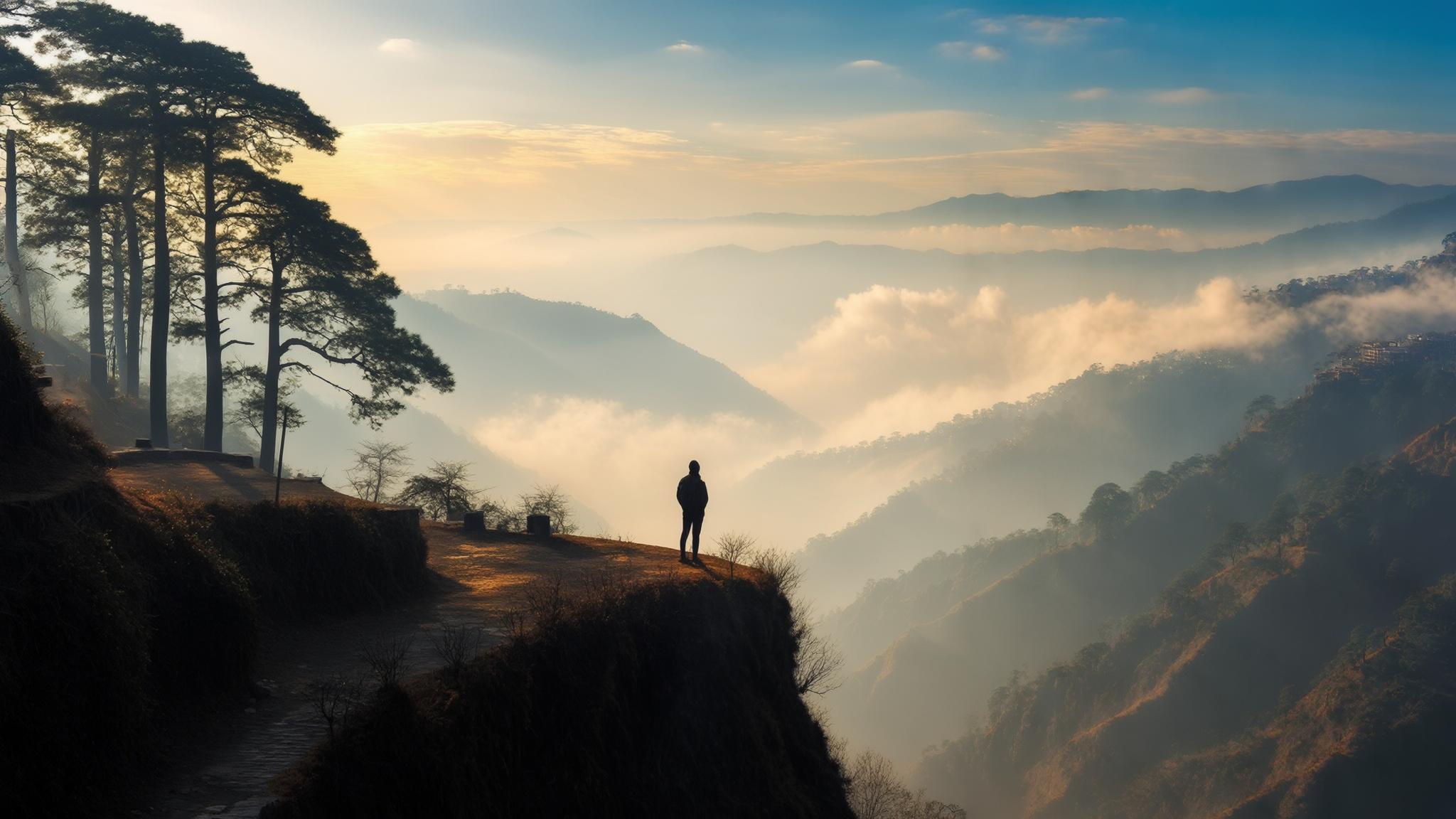
Conventional wisdom says Mussoorie is best in summer (April–June) or worst in monsoon (July–September). March, by that logic, is a throwaway month — too late for snow, too early for warmth, too unpredictable for planning. That conventional wisdom is wrong.
March 2026 is shaping up to be one of the most compelling windows to visit Mussoorie in years. The rhododendrons along Camel’s Back Road are in full bloom, hotel rates sit roughly 30–40% below their April peak, and the Mall Road crowds that define a summer weekend are still manageable. The catch? You need to understand what March actually delivers — not what the brochures promise.
What March Actually Looks Like in Mussoorie — The Conditions on the Ground
March in Mussoorie is a month of two halves, and conflating them is the single biggest planning mistake travelers make. The first two weeks carry a genuine winter hangover — mornings can be biting cold, cloud cover is frequent, and Lal Tibba (at 2,275 metres, the highest point accessible by road) may still have frost on the ground before 8 AM.
By the third week, the shift is noticeable. Afternoons open up, the Doon Valley below turns a vivid green, and the Himalayas — Bandarpunch, Swargarohini, Kedarnath — become sharply visible on clear mornings before the haze builds. This is the visibility window that photographers specifically travel for, and it closes by late April when summer haze thickens.
Rainfall in March is light but not absent — western disturbances can bring brief showers or even a late flurry of snow above 2,000 metres. These events typically last 12–24 hours and are followed by the clearest skies of the season. If you get caught in one, you have not been unlucky. You have stumbled into the best photography conditions Mussoorie offers.
The roads from Dehradun (32 km via Rajpur Road, approximately 1.5 hours by car) are in good condition post-winter. The Mussoorie–Kempty Falls road (15 km west) is fully open, and the route to Dhanaulti (25 km east) — one of the most underused day trips from Mussoorie — is clear and driveable.
Where to Stay in March — Real Costs and What You Actually Get
Mussoorie’s accommodation market is sharply tiered, and March is one of the few months where mid-range travelers can access properties that would otherwise stretch their budgets. The off-peak pricing window closes fast once schools break for summer, typically around the second week of April.
Landour — the quieter cantonment area above Mussoorie, best known as Ruskin Bond’s home — deserves special mention. Its handful of homestays and small guesthouses book out even in March on weekends, because word has spread. If you want a room in Landour, book at least three weeks ahead regardless of season.
What to Do in March — Beyond the Mall Road Circuit
The Mall Road–Gun Hill–Kempty Falls triangle is what 80% of first-time visitors do in Mussoorie. It is fine. It is also not the trip. March specifically unlocks experiences that are either impossible or uncomfortable in other seasons.
Camel’s Back Road in bloom: This 3-km walking track along the western ridge is lined with rhododendron trees that peak in red and pink through late February into March. The walk takes about 45 minutes at a relaxed pace and costs nothing. Go before 9 AM for the Himalayan views and the light.
Dhanaulti day trip: At 2,286 metres, Dhanaulti sits 25 km east of Mussoorie on a road that most tourists ignore. The Eco Park here (maintained by the Uttarakhand Forest Department) has cedar and rhododendron forest, minimal crowds in March, and a stillness that Mussoorie’s main bazaar cannot offer. Entry is ₹50 per person. A return cab from Mussoorie costs approximately ₹1,200–₹1,500.
- Lal Tibba: The highest accessible point in Mussoorie (2,275 m). On clear late-March mornings, the telescope at the top gives views of Badrinath and Kedarnath peaks. Entry is nominal (approximately ₹30). Go before 10 AM before haze builds.
- Landour Bazaar: A 10-minute walk uphill from Mussoorie’s Landour Chowk, this small market has colonial-era architecture, a famous bakery (Landour Bakehouse), and Char Dukan — four old shops that serve maggi and chai at 2,000+ metres. Budget ₹200–₹400 for a full Char Dukan afternoon.
- Clouds End: 6 km west of the Library, this is where the road ends and the forest begins. The property here is also a heritage hotel, but non-guests can walk the forest trails. In March, the birdlife is exceptional — this is a known birding corridor.
- George Everest’s House: A 6-km walk or short drive from the Library, the ruins of the home of Sir George Everest (the surveyor after whom the mountain is named) sit on a ridge with 270-degree valley views. Completely free, almost always uncrowded.
The Real Budget Breakdown — A 3-Night Mussoorie Trip in March 2026
Travel budgets for Mussoorie online are almost universally outdated or vague. Here is a realistic breakdown for two people traveling from Delhi, spending three nights in Mussoorie in late March 2026.
What Changes After March — and Why That Should Influence Your Decision
April brings the school holiday rush. By the last week of April, Mall Road becomes genuinely congested on weekends, parking near the Library fills before 11 AM, and the same mid-range hotel room that costs ₹3,000 in March will quote ₹6,500. This is not speculation — it is the consistent pattern Mussoorie has followed for years.
The Himalayan views that define late March photography degrade through April as the pre-monsoon haze thickens. By May, clear Himalayan sightlines from Lal Tibba or Gun Hill are the exception rather than the rule. Travelers who come specifically for mountain views and come in May are frequently disappointed.
If you are traveling with young children or elderly family members who are sensitive to cold, target the March 20–31 window specifically. By that point, daytime temperatures are reliably comfortable and the risk of a cold snap is significantly reduced.
One practical note on driving: if you are bringing your own vehicle from Delhi, the NH-334 via Haridwar and Rishikesh (approximately 310 km, 6–7 hours) is the most scenic route and avoids the Meerut expressway congestion. The Mussoorie bypass road from Dehradun is the quickest final approach and is well-maintained in March.
The Verdict — Who Should Come in March and Who Should Wait
March suits couples on a budget, photographers chasing Himalayan views, solo travelers who want Mussoorie without the summer noise, and families who can handle a light jacket. It does not suit travelers who specifically want snow — that window has largely closed by early March — or those whose trip depends on predictable warm weather every single day.
The hill station does not transform in March. It does not become a different place. What it does is become more itself — quieter, more local, more affordable, and more visually rewarding than the crowded summer version most people know. That is not a minor distinction. For the right traveler, it is the entire reason to go.