
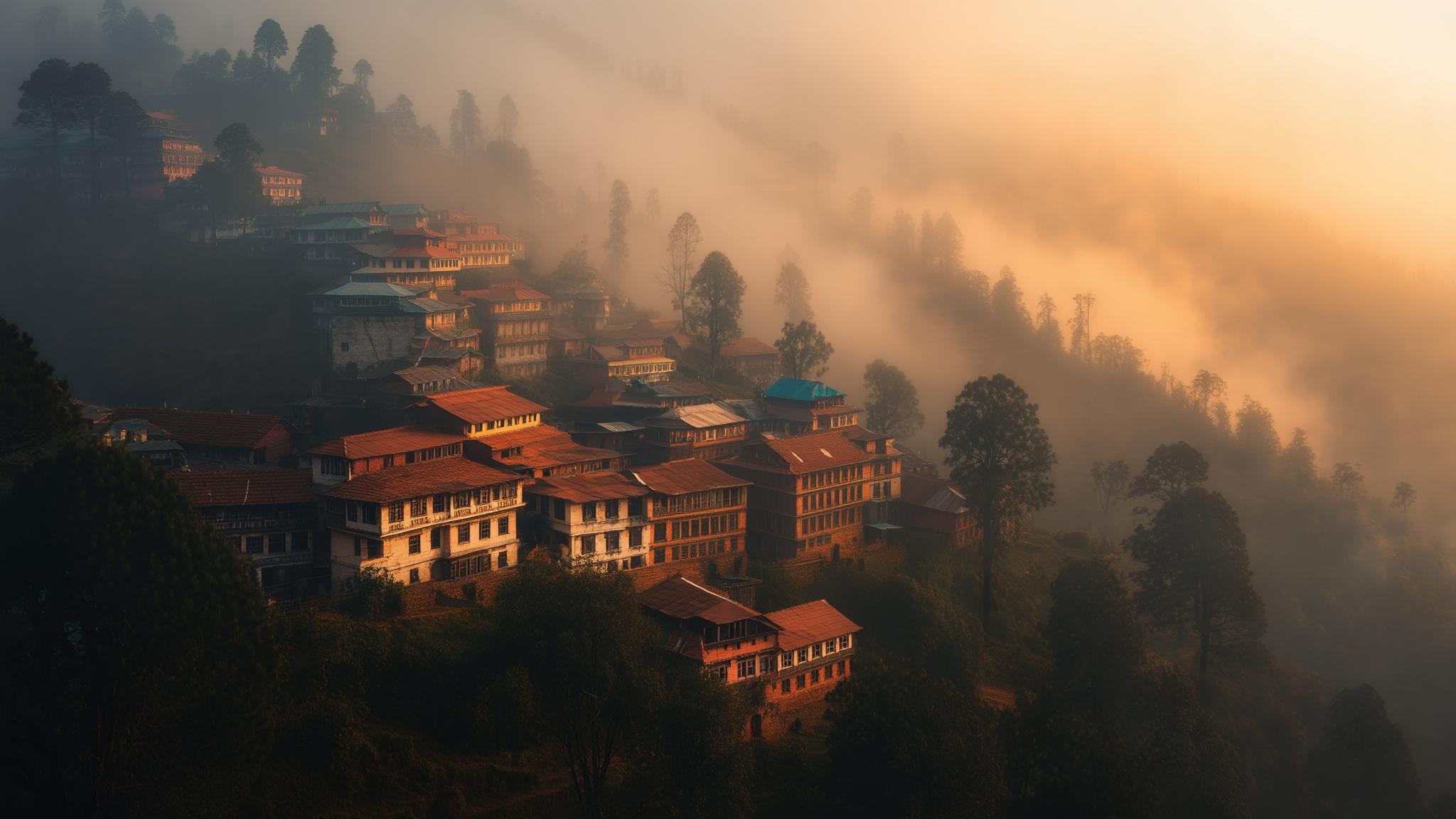
Summer bookings for Mussoorie hotels are already filling up faster than usual this year. Travel data from the Uttarakhand Tourism Development Board suggests peak-season occupancy in the Mussoorie–Landour corridor regularly crosses 90% by mid-April — and 2026 is tracking ahead of that curve. If you are planning a trip, the window for easy availability is closing right now.
That urgency aside, there is a bigger problem with most Mussoorie trips: they follow the same loop. Mall Road, Kempty Falls, Cable Car to Gun Hill, back to the hotel. It is a perfectly pleasant 36 hours, but it barely scratches the surface of what this 6,500-ft ridge in the Garhwal Himalayas actually holds.
This article is for first-timers who want to do it right, repeat visitors who feel like they missed something, couples scoping out a honeymoon destination, and families trying to stretch a ₹15,000–₹25,000 budget across two or three days. According to Times of India’s Mussoorie feature, the town earns its “Queen of Hills” title not just through altitude but through a combination of colonial architecture, Himalayan panoramas, and a cultural density that newer hill stations simply have not built yet.
The Attractions That Actually Justify the Trip
The honest answer is that Mussoorie’s top draw is not a single landmark — it is the cumulative effect of moving through the place on foot. That said, certain stops are non-negotiable, and others are best left to those with extra time.
Lal Tibba is where you go first if the weather is cooperating. It is the highest point in the main Mussoorie area and home to an old British telescope that, on clear days, gives you a framed view of distant Himalayan peaks. Go at dawn. By 9 AM, the haze from valley traffic softens the visibility considerably.
Gun Hill is the second-highest point and easier to reach via a cable car from Mall Road (approximately ₹150–₹200 per person for the ropeway). The views are wide rather than focused, making it better for photography. The cable car itself is a 15-minute experience that children genuinely enjoy.
Kempty Falls is the most famous waterfall in the region and roughly 15 km from the main bazaar. It is beautiful, yes, but it is also the most crowded spot in the Mussoorie circuit. If you go, aim for a weekday before 10 AM. Alternatively, Bhatta Falls and Jharipani Falls offer a similar experience with a fraction of the footfall.
- Mussoorie Lake — A quieter boating destination, good for families, located about 6 km from Mall Road
- Company Garden — A maintained botanical garden, entry approximately ₹50, popular with families and photographers
- Happy Valley Monastery — A Tibetan Buddhist monastery that sees far fewer visitors than it deserves
- Camel’s Back Road — A 3-km walking path named for a rock formation, ideal for an early morning walk with Himalayan views
Landour: The Part of Mussoorie That Most People Miss
Landour is technically a separate cantonment town, sitting about 5 km above Mussoorie’s main bazaar area, and it operates on a completely different frequency. The lanes are quieter, the colonial-era bungalows are better preserved, and the crowd is a mix of long-term residents, writers, and travelers who already know what they are doing.
According to a detailed Landour guide, the area exudes old-world charm that is increasingly rare in the more commercial parts of Mussoorie. The famous Char Dukan — literally “four shops” — is a cluster of old-style tea and snack stalls at Landour’s Chowk that has been feeding visitors for decades. Maggi, chai, and omelettes with a Himalayan backdrop: it costs under ₹200 per person and is one of the more memorable meals you will have in the hills.
Lal Tibba is also accessed through Landour, which makes it efficient to combine both in a single half-day. Walk up through Landour’s lanes, hit Lal Tibba at dawn, stop at Char Dukan for breakfast on the way back. That is a morning well spent.
Adventure Sports, Trekking, and What the Brochures Underplay
Mussoorie’s adventure credentials are stronger than its reputation suggests. Most visitors associate the town with leisurely walks and mountain views, but the surrounding region supports a full menu of physical activity. As noted by TripSavvy’s Mussoorie guide, options include bungee jumping, mountain biking, trekking, paragliding, skiing (seasonal), fishing, kayaking, and canoeing.
Trekking routes around Mussoorie range from easy half-day walks — like the path to George Everest’s House (roughly 6 km round-trip from Landour) — to multi-day hikes into the Garhwal interior. The Nag Tibba trek, approximately 65 km from Mussoorie, is a popular 2-day route with clear views of Bandarpunch and is suitable for first-time trekkers. Base camp costs vary but expect roughly ₹2,500–₹4,000 per person for an organised group trek including a guide.
Trout angling is available in the Aglar and Yamuna rivers near the town. Permits are required and are typically arranged through local guides or the forest department. It is a niche activity but one that adds a very different texture to a Mussoorie trip, especially for those who want to slow down.
Planning the Trip: Costs, Logistics, and What to Book First
Getting to Mussoorie is straightforward from most North Indian cities. The nearest airport is Jolly Grant in Dehradun (approximately 60 km away), and the nearest railway station is Dehradun, from where shared taxis and private cabs run to Mussoorie regularly. A shared taxi from Dehradun to Mussoorie costs roughly ₹100–₹150 per seat; a private cab runs ₹600–₹900 depending on the vehicle.
The JW Marriott Mussoorie Walnut Grove deserves a specific mention in the premium tier. According to Vogue India’s Mussoorie guide, this property offers immersive regional cultural experiences that are genuinely difficult to find elsewhere in the town — think curated Garhwali cooking sessions and guided heritage walks rather than generic hotel packages.
For couples, Travel and Tour World’s Uttarakhand honeymoon guide lists Mussoorie among the top winter retreat destinations for newlyweds, citing the combination of snow-dusted landscapes, cozy hotel fireplaces, and the relatively manageable scale of the town as key factors. The Mall Road promenade at night, with Dehradun’s lights visible in the valley below, is consistently described as one of the more romantic free experiences in any Indian hill station.
What’s Next for Mussoorie in 2026
The SOHAM Himalayan Centre near Mussoorie has been drawing increasing attention from travelers interested in wellness, meditation, and a more contemplative form of mountain tourism. It represents a broader shift in how the town is positioning itself — not just as a sightseeing destination but as a place to slow down for two or three days with purpose.
Infrastructure upgrades on the Dehradun–Mussoorie road have been ongoing, and the drive, which previously involved significant bottlenecks near Rajpur, has improved noticeably. The Mussoorie–Yamunotri highway project, once complete, will also open up better day-trip access to the Yamuna valley for visitors based in Mussoorie.
Landour, in particular, is seeing a quiet renaissance. A new generation of small guesthouses, bakeries, and artisan shops has opened in the cantonment area over the past two years, adding accommodation options that did not exist on the Mussoorie map five years ago. These are not luxury properties — most run ₹2,500–₹5,000 per night — but they offer a quality of atmosphere that no Mall Road hotel can replicate.
The Practical Bottom Line
Mussoorie rewards visitors who build in more time than they think they need. Two nights is the minimum; three nights lets you do Landour properly, attempt one short trek, and still have an unhurried evening on Mall Road. Four nights is the right call if adventure sports or a day trip toward the Yamuna valley are on the agenda.
The town is 300 km from Delhi and 35 km from Dehradun, both well-connected by road and rail. Most visitors who leave disappointed say they spent too much time in the main bazaar and not enough walking. That is easy to fix. Get to Lal Tibba before the sun gets high, have breakfast at Char Dukan in Landour, and let the afternoons be unscheduled. That is the version of Mussoorie worth making the drive for.