
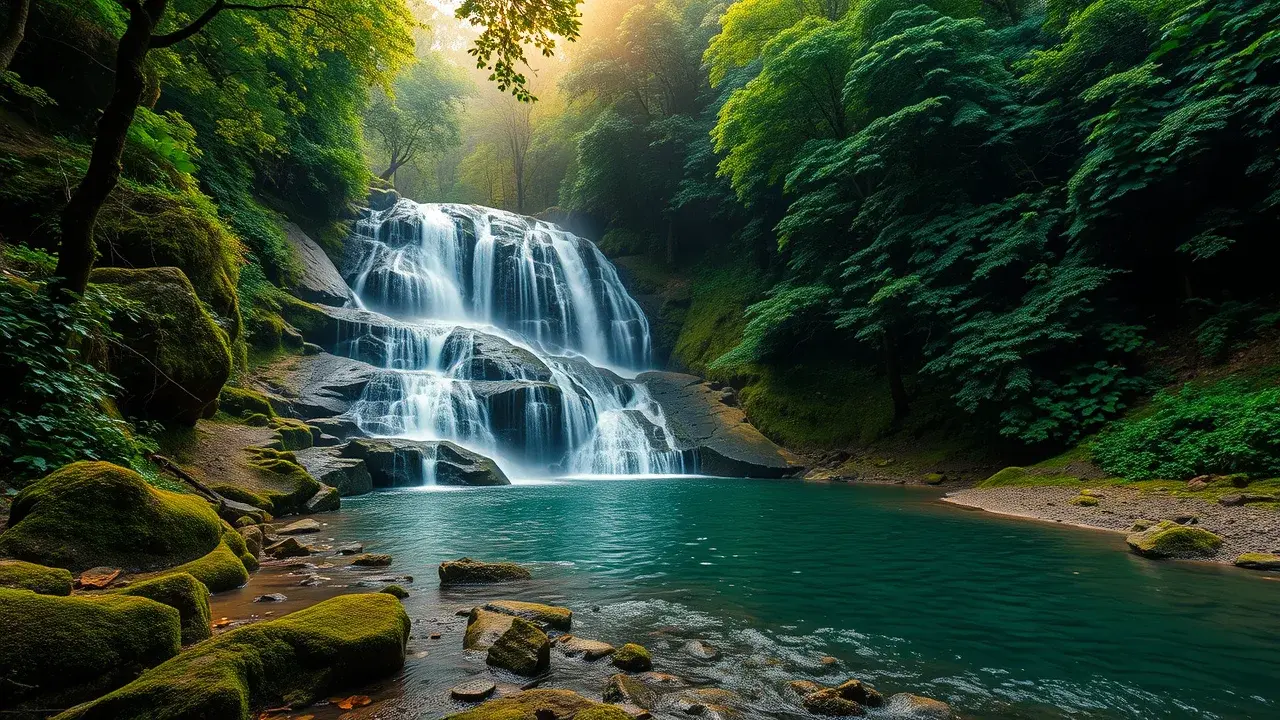
The monsoon window for waterfall chasing in the Mussoorie hills closes by mid-October — and right now, in 2024, the falls are running at full force while most tourists are still queuing at Kempty. According to the Uttarakhand Tourism Board’s 2023 visitor survey, over 1.5 million tourists visit Mussoorie annually. Yet the vast majority never leave the Kempty Falls parking lot to find what’s actually worth seeing.
I’ve spent three separate trips exploring the ridge trails, forest paths, and village tracks around Mussoorie specifically to find the cascades that don’t show up on tourist maps. What I found changed how I think about this hill station entirely.
This countdown covers 5 hidden waterfalls near Mussoorie that most tourists never visit — ranked by accessibility, scenic payoff, and how genuinely off-the-beaten-path they are. Each entry includes directions, best timing, and what to expect on the trail.
What Are the Hidden Waterfalls Near Mussoorie That Most Tourists Miss?
Beyond Kempty Falls — which draws enormous crowds and charges ₹50 per person just to enter the viewing area — Mussoorie’s surrounding forests hide a network of smaller, wilder cascades. These aren’t marked on Google Maps. Local guesthouse owners in Landour know them.
Forest department guides in Jabarkhet know them. Most visitors never think to ask.
The hidden waterfalls near Mussoorie are seasonal cascades and year-round streams tucked into the Garhwal foothills between 1,800 and 2,200 metres elevation. They range from 15-minute walks off the main road to 3-hour forest treks. Some are on private conservation land. Others flow through revenue forest where anyone can walk freely.
What unites them is solitude. On a busy May weekend when Kempty is processing 5,000 visitors a day, these spots see fewer than a dozen. That gap is the whole point of this list.
| Waterfall | Distance from Mussoorie | Trek Difficulty | Best Season | Entry Fee |
|---|---|---|---|---|
| Jharipani Falls | 8 km | Easy | July–September | Free |
| Mossy Falls | 7 km | Easy–Moderate | June–October | Free |
| Bhatta Falls | 11 km | Easy | Year-round | Free |
| Jabarkhet Stream Falls | 9 km | Moderate | July–October | ₹200 (reserve entry) |
| Nag Tibba Base Falls | 28 km | Moderate–Hard | June–September | Free |
How the Countdown Works — and Why This Order Matters
I ranked these five waterfalls on three criteria: how easy they are to reach independently without a guide, how spectacular the payoff is relative to the effort, and how genuinely unknown they remain to the average tourist. A waterfall that requires a 6-hour trek scores lower on accessibility even if it’s breathtaking. One that’s 20 minutes from the road but still completely empty scores higher overall.
The ranking is not about which waterfall is the prettiest in isolation. It’s about which one delivers the best experience for a traveller who wants to escape the Kempty crowd without becoming a hardcore trekker. That framing matters because Mussoorie’s tourist season is short — May through June for summer visitors, July through September for monsoon chasers — and most people have two or three days, not two weeks.
Why Are These Hidden Waterfalls Important to Visit?
The honest answer is ecological as much as experiential. Kempty Falls has been under stress for years. According to a 2022 report by the Wildlife Institute of India (Dehradun), unmanaged tourist pressure at single-point attractions in Uttarakhand’s hill stations has caused measurable damage to riparian vegetation and stream-bank erosion. Spreading visitor load across lesser-known sites directly reduces that pressure.
There’s also the economic argument. When you hire a local guide from Landour Bazaar (rates run ₹500–₹800 for a half-day), you’re putting money directly into a household rather than a commercial operator running buses to Kempty. The Uttarakhand Tourism Development Board’s 2023 annual report specifically flags dispersal of tourist spending as a priority for sustainable hill tourism.
And honestly — you’ll just have a better time. Standing alone next to a 25-foot cascade in an oak forest, hearing nothing but water and birds, is a fundamentally different experience from sharing a roped-off viewing platform with 400 strangers.
#5 — Jharipani Falls: The Easiest Entry Point
Jharipani is 8 kilometres from Mussoorie’s Library Chowk, accessible by shared jeep (₹30 per seat) or auto-rickshaw (₹150 for the whole vehicle). The falls sit about 1.5 kilometres below the Jharipani village road — a descent through pine forest on a clear path that takes roughly 25 minutes each way.
The cascade drops about 20 feet into a shallow pool. It’s not dramatic. But in July and August, the surrounding forest is so green it looks almost artificial, and the path is genuinely quiet on weekdays. I walked it on a Tuesday in August 2023 and passed exactly four other people in two hours.
The practical catch: the descent back up is steep enough to be tiring in afternoon heat. Start before 9 AM. Carry water — there’s no shop on the trail. The falls are free to visit and sit on revenue forest land, so no permits are needed.
#4 — Mossy Falls: The Local Favourite Nobody Advertises
Seven kilometres from Mussoorie on the road toward Cloud End Forest Resort, Mossy Falls is named for the thick moss coating every rock in the stream bed. The trailhead is unmarked — you’ll see a small break in the treeline on the left side of the road, roughly 400 metres past the Cloud End gate. Most drivers zoom past it.
The walk down takes about 20 minutes on a moderate slope. The falls themselves drop in two tiers — the upper tier is about 15 feet, the lower about 10 — into a wide flat area perfect for sitting. The moss on the rocks gives the whole place a distinctly Himalayan forest feel that photographs exceptionally well in the soft light of early morning.
Cloud End Forest Resort (established 1838, one of India’s oldest hill resorts) sits nearby and their staff can point you toward the trailhead if you ask politely at the gate. No entry fee. Best visited June through October. Avoid after heavy overnight rain — the lower path becomes a mud slide.
#3 — Bhatta Falls: Year-Round Flow, Zero Crowds
Bhatta Falls sits 11 kilometres from Mussoorie toward Dehradun, just past Bhatta village on the old Mussoorie–Dehradun road. Unlike the other falls on this list, Bhatta runs year-round because it’s fed by a perennial stream from the upper ridge rather than purely by rainfall. That makes it the best option if you’re visiting outside monsoon season.
The falls drop roughly 30 feet in a single clean cascade. The viewing area is a flat rocky platform about 50 metres from the road — so close that you don’t even need to trek. This accessibility is both its strength and its slight weakness.
On summer weekends, local Dehradun families do visit. But even then, it never approaches Kempty-level crowds.
Getting there: take any shared jeep from Mussoorie Library toward Dehradun (₹25 per seat) and ask to be dropped at Bhatta village. The falls are signposted from the village with a hand-painted board. Total time from Mussoorie: 30 minutes.
No entry fee. No guide needed.
#2 — Jabarkhet Stream Falls: Inside a Private Conservation Reserve
Jabarkhet Nature Reserve opened to eco-tourists in 2017 near Hathipaon, about 9 kilometres from Mussoorie. The reserve charges ₹200 per person for entry and requires you to book in advance through their website or by calling +91-135-263-1480. That small barrier keeps the crowds out entirely — on my visit in September 2023, I was one of six people in the entire reserve.
The stream falls inside Jabarkhet aren’t a single dramatic cascade. They’re a series of small drops — none taller than 12 feet — along a forest stream that runs through oak and rhododendron forest. The trail follows the stream for about 2 kilometres on the upper circuit. In monsoon season, water is everywhere: dripping from leaves, running across the path, pooling in rock hollows.
The reserve is also one of the best places near Mussoorie to see Himalayan birds. The Bombay Natural History Society’s 2021 survey recorded 147 bird species within Jabarkhet. Bring binoculars. The falls are secondary to the overall forest experience here — which is exactly why it ranks above Bhatta despite being harder to access.
- Completely managed — no litter, no crowds
- Year-round stream with monsoon peak
- Combined bird-watching and waterfall experience
- Guided walks available at ₹500 extra
- Advance booking required — no walk-ins
- ₹200 entry fee (higher than free alternatives)
- Falls are modest — not dramatic single drops
- Closes at 5 PM sharp
#1 — Nag Tibba Base Falls: The One Worth the Effort
This is the waterfall I keep thinking about months after visiting. The Nag Tibba base camp trail starts from Pantloon village, about 28 kilometres from Mussoorie via Kempty and then Nainbagh road. You’ll need to hire a private cab from Mussoorie (₹1,200–₹1,500 one way) or take a shared jeep to Nainbagh (₹60) and then a local vehicle to Pantloon.
The falls sit at roughly 2,200 metres elevation, about 4 kilometres into the Nag Tibba trek. Most trekkers walk straight past them, focused on reaching the summit at 3,022 metres. The cascade drops approximately 40 feet in two stages through a narrow gorge lined with Himalayan oak. In July and August, the flow is powerful enough that you can feel the spray 15 metres away.
The trek to reach them takes 2.5 to 3 hours from Pantloon. It’s classified moderate — steady uphill on a clear forest trail with no technical sections. Altitude is not a concern at this elevation.
Carry lunch because there’s nothing beyond the Pantloon tea shop (which serves excellent rajma-chawal for ₹80). The falls themselves have a flat rocky area where you can sit for an hour without seeing another soul.
What makes this #1 isn’t just the falls. It’s the complete package: the forest, the altitude, the silence, the knowledge that you earned the view. According to the Uttarakhand Tourism Board’s 2023 visitor data, Nag Tibba receives fewer than 12,000 trekkers annually — compared to Kempty’s 1.5 million annual visitors. That ratio tells you everything about what kind of experience awaits.
What Are the Benefits of Visiting These Hidden Waterfalls?
The practical benefits are straightforward: no entry queues, no parking chaos, no overpriced chai vendors every 50 metres. But the deeper benefit is what these places do to your sense of the landscape. Mussoorie from Mall Road feels like a crowded market that happens to have a mountain view. Mussoorie from the Nag Tibba trail or the Jabarkhet forest feels like the Himalayas actually are.
There’s also the timing advantage. Because these spots are unknown to most tourists, they remain accessible even during peak season — May, June, and the Dussehra–Diwali window in October. You don’t need to plan around crowds. You just need to plan around weather and your own fitness level.
The financial benefit is real too. A day at Kempty Falls — cab, entry, food from vendors, the inevitable souvenir pressure — easily costs ₹800–₹1,200 per person. A day at Bhatta Falls or Mossy Falls costs ₹100–₹200 total including transport and food. The money you save can fund a proper meal at Landour Bakehouse instead.
Your Move Before the Season Closes
The monsoon window — when all five of these waterfalls are running at maximum volume — ends around mid-October. After that, the smaller falls (Jharipani, Mossy) reduce to trickles. Bhatta and Nag Tibba base remain worth visiting through November, but the forest loses its monsoon green quickly.
If you’re planning a Mussoorie trip before October 15th, 2024, pick one of these five based on your fitness and time. Do Bhatta if you have two hours. Do Jabarkhet if you want a managed experience. Do Nag Tibba base if you want the memory that sticks.
And if you’ve already been to Kempty Falls and felt vaguely underwhelmed — that feeling is data. It’s telling you that the real waterfall experience near Mussoorie is 8 to 28 kilometres further down roads that most tourist maps don’t bother to show. Go find it before the season closes.
Frequently Asked Questions