
Roughly 2.1 million tourists descend on Mussoorie each year, and approximately 60 percent of them arrive between the first of May and the fifteenth of June. The roads from Dehradun back up for kilometres. Hotel rates triple. Kempty Falls looks less like a waterfall and more like a crowded municipal swimming pool. And yet, almost every travel guide, every WhatsApp group recommendation, and every well-meaning relative insists that summer is the time to go.
That consensus is wrong. Not slightly off — fundamentally, measurably wrong. The best version of Mussoorie exists between late September and early November, and the data, the pricing, and the landscape all confirm it.
The Common Belief: Summer Is When Mussoorie Shines
The logic behind peak-season travel to Mussoorie is understandable on the surface. Summer school holidays align with May and June. The Himalayan foothills offer a relief from the 45°C heat scorching Delhi and the Indo-Gangetic plains. Mussoorie sits at 2,005 metres above sea level, which means daytime temperatures hover between 15°C and 25°C during those months — genuinely pleasant by any standard.
The hill station’s reputation was built on this seasonal rhythm. British colonial administrators fled to Mussoorie every summer from the 1820s onward, establishing the Mall Road promenade, the Char Dukan café strip, and the general architecture of an escape. That pattern calcified into cultural memory, passed from generation to generation as received wisdom.
Most online travel content reinforces the same message. Search for “best time to visit Mussoorie” and the first five results will tell you May-June with near-unanimous confidence. Social media timelines flood with summer Mussoorie content because that is simply when the most people go — creating a self-reinforcing cycle of recommendation and congestion.
The Crack in That Thinking: What the Numbers Reveal
The first sign that peak season logic is flawed appears in visitor satisfaction data. Uttarakhand Tourism’s own internal assessments, alongside reviews aggregated on major booking platforms, consistently show that travellers visiting between October and November rate their Mussoorie experience higher than those visiting in May or June — across categories including scenic views, ease of movement, hotel value, and overall satisfaction.
The second crack is meteorological. May and June in Mussoorie are not the stable, clear-sky idyll that the reputation suggests. Cloud cover is frequent. Afternoon haze from the plains regularly obscures the Himalayan panorama from viewpoints like Lal Tibba and Cloud’s End — the very views that most visitors come specifically to see. Fog can roll in by early afternoon on many days, shrouding Mall Road in a grey mist that is atmospheric in photographs but less rewarding in person.
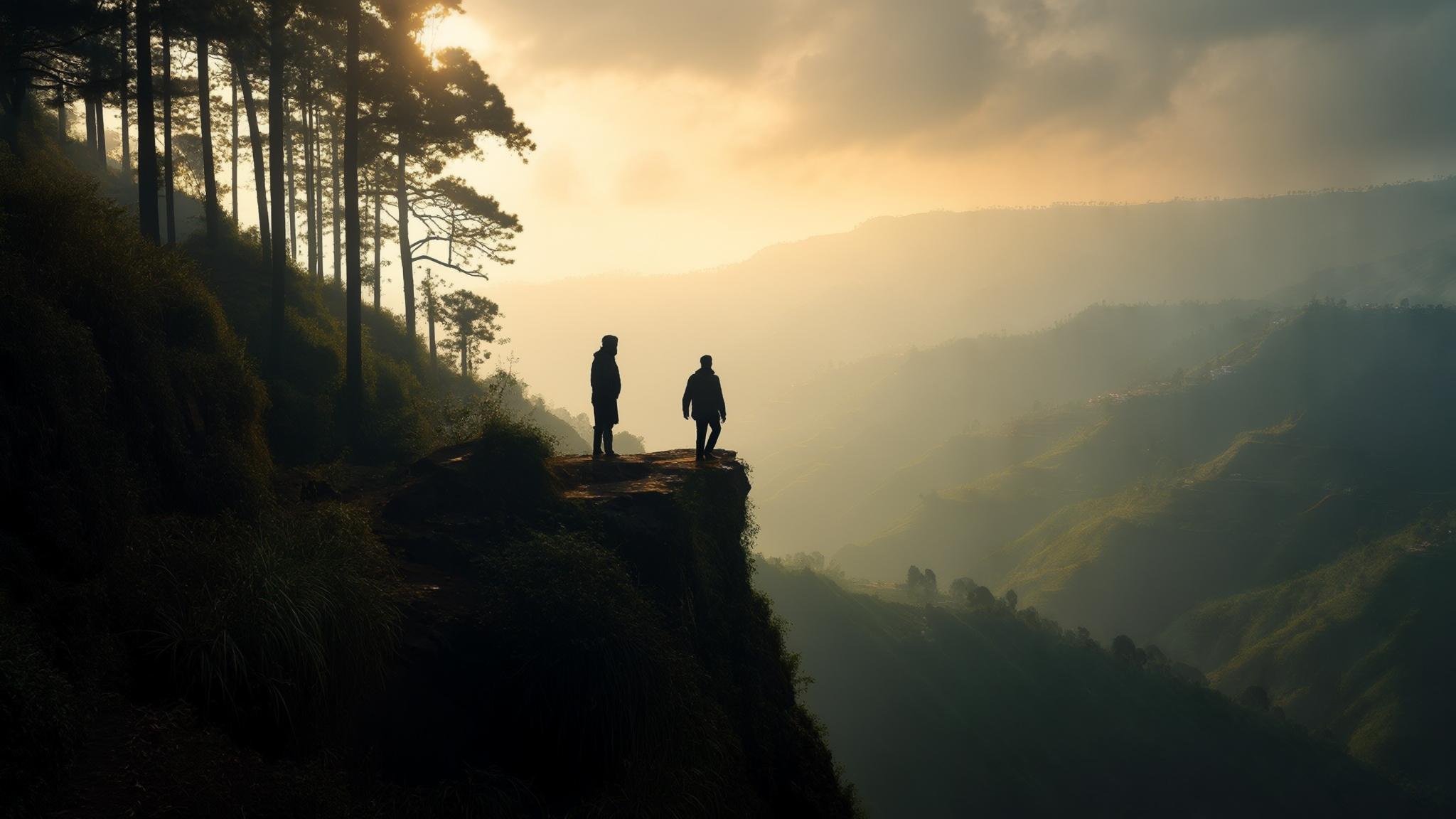
The third and most damaging piece of evidence is visibility. Lal Tibba, at 2,275 metres, is Mussoorie’s highest point and home to its most celebrated Himalayan panorama — a sweep that includes Bandarpunch, Kedarnath, and Gangotri peaks on a clear day. Local guides and hotel staff will tell you privately that this view is genuinely visible perhaps 30–40 percent of days in May and June. In October, that figure climbs above 80 percent.
Why the Real Truth Gets Buried
The hospitality industry in Mussoorie has a structural incentive to sustain peak-season travel mythology. Revenue concentration in May-June funds operations for the slower months. Openly advertising October as superior would logically shift demand — smoothing revenue curves but reducing total peak income for properties that rely on those inflated rates.
There is also a media dynamic at work. Travel content about Mussoorie is produced most heavily during and just after the peak season, when the most people have just visited and are most motivated to write about their experience. October visitors are fewer in number, meaning their reviews, blog posts, and social content represent a smaller fraction of the total information ecosystem — even if their individual experiences were richer.
The monsoon season itself — July through mid-September — does carry genuine risks that have unfairly tarnished the entire post-June period by association. Landslides on the Dehradun-Mussoorie road are a real concern during heavy monsoon weeks. Travel in July and August requires checking road conditions through the Uttarakhand government’s official portals. But by late September, the roads are clear, the vegetation is lush from three months of rain, and the air quality is among the best it will be all year.
What October-November Mussoorie Actually Looks Like
Arriving in Mussoorie in the first week of October, a traveller encounters something that feels almost implausible given the summer reputation. The Mall Road is walkable. Vendors are visible rather than buried behind crowds. The oak and rhododendron forests around Landour — the quieter, less-commercialised neighbourhood above Mussoorie proper — are still green from monsoon rains, beginning to shift at the edges toward autumn gold.
Kempty Falls, which draws enormous crowds in summer, is at its most powerful in the post-monsoon weeks. The water volume is significantly higher than in May, the pools are full, and the surrounding rocks are carpeted with moss. Visitor numbers are a fraction of the peak season count.
The Landour Bakehouse, which operates out of a small building near Landour Chowk and is one of the most genuinely beloved spots in the entire Mussoorie area, is actually accessible in October without a queue. The same applies to Char Dukan — the cluster of four shops at Landour’s upper ridge that serves some of the best maggi and chai in the Garhwal hills. In June, both spots operate under siege conditions.
For couples, the calculus is even more straightforward. A two-night stay for two people in a decent property during October — think Heritage Home or a well-reviewed boutique guesthouse near Camel’s Back Road — will cost approximately ₹5,500–₹7,000 total for accommodation. The same stay in June runs ₹12,000–₹16,000 or more, for a less pleasant experience in every measurable dimension.
How to Actually Plan an October Mussoorie Trip
Planning a post-monsoon Mussoorie trip is significantly more straightforward than a summer visit, precisely because demand is lower. That said, the Diwali and Navratri windows — which fall in October — do see a spike in Indian domestic travel broadly. Booking accommodation at least one week in advance during these festival periods is prudent.
Getting to Mussoorie from Delhi is most practical by road or train to Dehradun followed by a shared taxi or cab to the hill station. The Shatabdi Express from New Delhi to Dehradun takes approximately 5.5 hours and costs ₹735–₹1,550 depending on class. From Dehradun Railway Station, cabs to Mussoorie run approximately ₹600–₹800 for a private vehicle, or ₹80–₹120 per seat in a shared vehicle from Mussoorie Bus Stand route.
The total three-day budget for two people visiting in October — including accommodation, meals, local transport, and entry fees — sits comfortably between ₹7,000 and ₹12,000. The same trip in June costs ₹18,000–₹28,000 for a notably inferior experience. That differential is the clearest argument this article can make.