
The standard Mussoorie itinerary — Library Chowk, Mall Road, Kempty Falls, and a cable car ride to Gun Hill — has remained largely unchanged for two decades. Travel agencies, hotel concierges, and popular booking platforms all funnel visitors toward the same half-dozen landmarks. What most of them do not mention is that a shared taxi departing from Mussoorie’s Library Bus Stand can deliver a traveller to Dhanaulti, a quieter hill station at 2,286 metres above sea level, in under an hour and for a fraction of the cost of a single cable car ticket.
This is not a fringe opinion. Seasoned Uttarakhand travellers and local guides interviewed by NPP Mussoorie in March 2026 consistently named Dhanaulti as the single most underutilised day trip available from Mussoorie, particularly during the spring shoulder season running from late February through April.
The Route and What It Actually Costs in 2026
Dhanaulti sits 24 kilometres from Mussoorie along the Mussoorie–Chamba–Tehri road, locally called the Chakrata Road. The drive takes between 45 minutes and 70 minutes depending on traffic, road condition after winter snowfall, and the time of departure. Shared taxis depart from Library Bus Stand when seats fill, typically between 7:30 a.m. and 10:00 a.m. on weekday mornings.
According to local taxi operators at Library Chowk, shared seats were priced at ₹200–₹250 per person in each direction as of March 2026, placing the total transport cost for a solo traveller at roughly ₹400–₹500 return. Families or groups of three to four will find private cab rates more practical, with most drivers quoting ₹1,400 to ₹1,800 for a round trip including a two-hour halt.
Entry to Dhanaulti’s two Eco Parks — managed by the Uttarakhand Forest Department — was priced at ₹150 per adult and ₹75 per child as of the 2025–26 season, according to the department’s published rate card. A meal of rajma chawal or Garhwali thali at a dhaba near the Eco Park main gate runs ₹120–₹180. A full day trip, inclusive of transport, entry, and one meal, therefore lands under ₹900 per person for a solo traveller.
What Dhanaulti Offers That Mussoorie Does Not
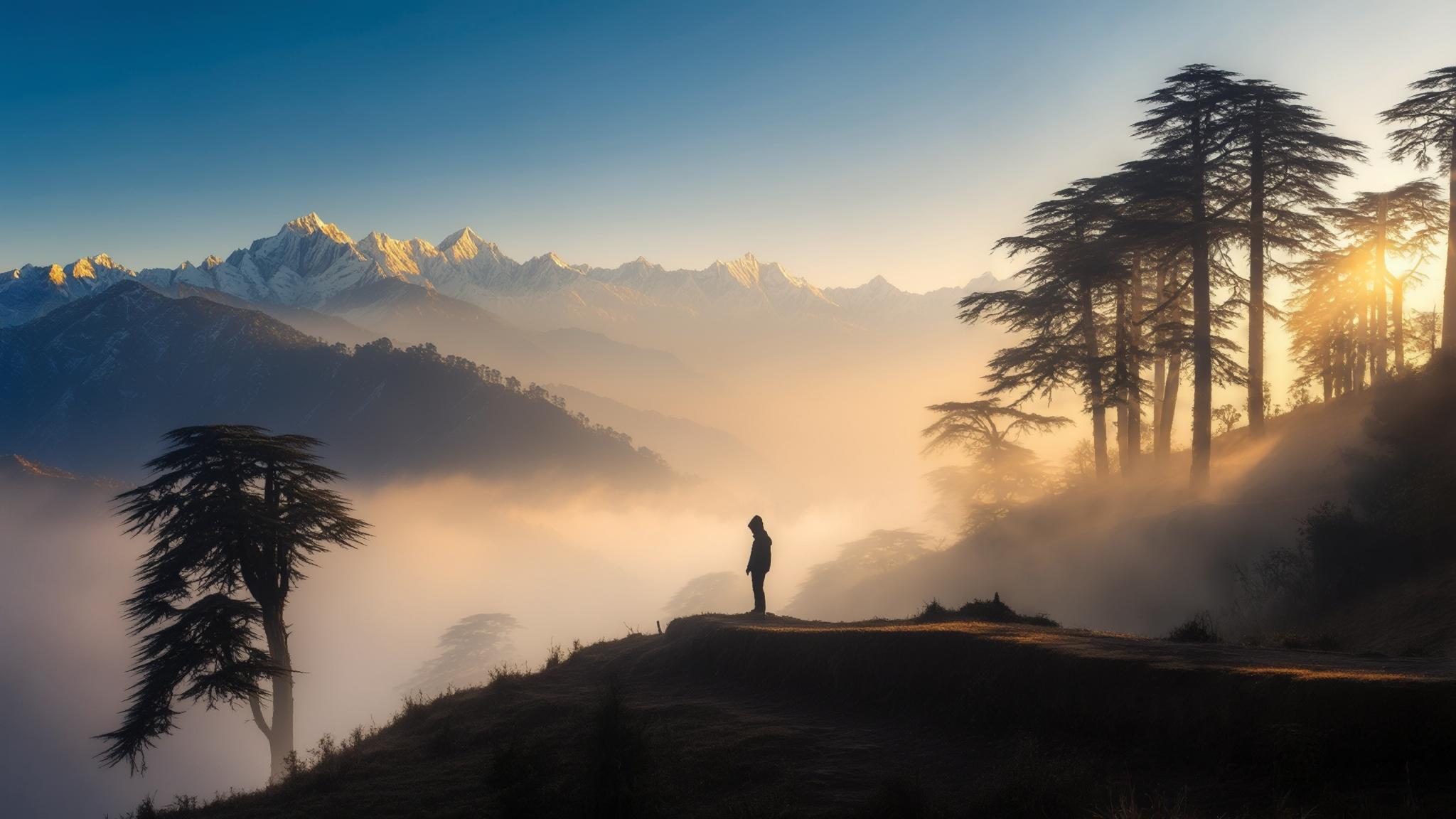
The primary draw is an unobstructed panoramic view of the Gangotri range, including peaks such as Bandarpunch (6,316 m) and Swargarohini, which are largely blocked from Mussoorie’s popular viewpoints by intervening ridgelines and building density. On clear mornings in March and April, the snow line is visible at a closer apparent distance than from any point on Mall Road.
The Eco Parks themselves cover roughly 13 hectares of dense deodar and rhododendron forest. The rhododendron bloom peaks in Dhanaulti between mid-March and mid-April, a window that aligns with the spring shoulder season when Mussoorie’s hotels offer rates 30–40 percent below peak summer pricing, according to rate data reviewed by NPP Mussoorie across three major booking platforms in March 2026.
Crowd levels at Dhanaulti are substantially lower than at Kempty Falls or Mall Road on weekends. The Uttarakhand Tourism Development Board has not published visitor count data for Dhanaulti separately from the broader Mussoorie circuit in its most recent annual report, but local vendors and park staff consistently described weekday footfall as manageable and weekends as “busy but not overwhelming” — a characterisation that stands in contrast to the congestion documented at Kempty Falls during peak hours.
Comparing Dhanaulti Against Mussoorie’s Standard Attractions
Practical Logistics: Timing, Season, and What to Bring
The Mussoorie–Dhanaulti road is paved for its entire length and is generally accessible year-round, though the Uttarakhand State Disaster Management Authority has periodically issued road advisories following heavy snowfall in January and February. As of March 31, 2026, no active closures were in effect on this corridor, according to the state transport department’s public bulletin board at Library Bus Stand.
Spring (mid-February to mid-April) and autumn (October to mid-November) are the two optimal windows. Summer weekends from May through June see the highest footfall as Mussoorie fills with visitors from Delhi and the NCR region. Winter visits are possible but require layered clothing and waterproof footwear; temperatures at Dhanaulti drop 3–5 degrees Celsius below Mussoorie levels owing to the higher elevation.
What Comes Next: Dhanaulti’s Growing Profile
The Uttarakhand Tourism Development Board listed Dhanaulti as part of its promoted “alternative destinations” cluster in its 2024–25 tourism strategy document, alongside Chakrata and Lansdowne. Infrastructure investment, including improved road surfaces and new toilet blocks near the Eco Park entrance, was completed in late 2024 according to the district administration’s public progress report.
Whether that investment translates into higher footfall — and therefore diminishing returns for visitors seeking quiet — remains to be seen. For the spring 2026 season, the conditions still favour the traveller willing to travel 24 kilometres past Mussoorie’s most photographed street.