
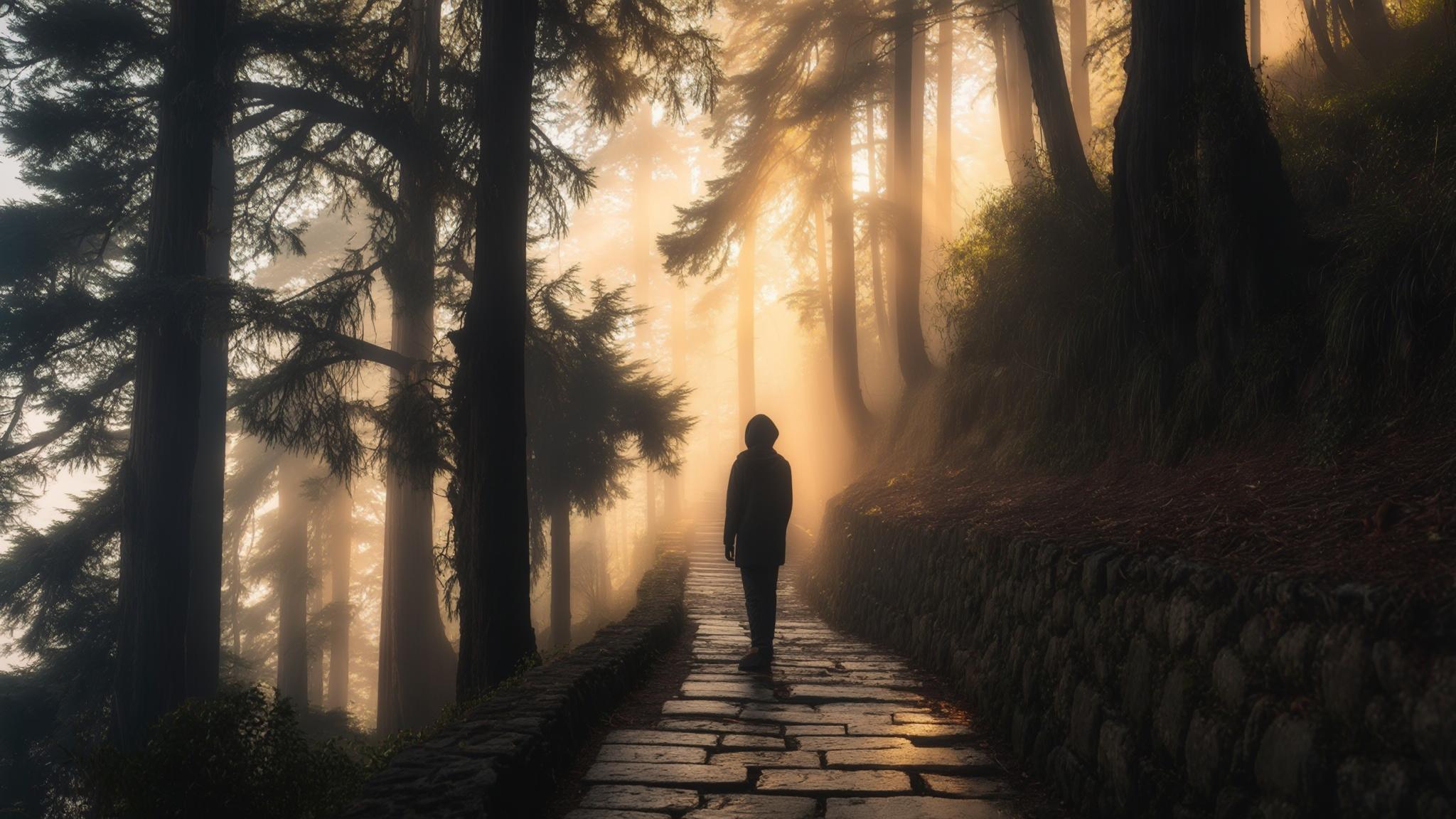
Conventional travel wisdom holds that Mussoorie is best experienced from its famous promenade — the cable car, the food stalls on Mall Road, the crowded viewpoint at Gun Hill. That framing is wrong, and local trekkers, Uttarakhand tourism researchers, and longtime residents will say so without hesitation. The western ridge stretching from Lal Tibba to Cloud’s End receives a fraction of Mussoorie’s estimated 25 lakh annual visitors, yet it consistently delivers clearer Himalayan sightlines, denser oak-rhododendron forest, and a per-day cost that can run 40 percent below the Mall Road corridor.
What the Western Ridge Actually Is — and Why Tourism Ignored It
The western ridge of Mussoorie is a roughly 7-kilometre arc running from Lal Tibba through the Benog Wildlife Sanctuary to Cloud’s End, the historic bungalow-turned-hotel that marks the motorable limit of the range. The terrain is steep in sections, forested for most of its length, and largely free of the commercial development that defines Mussoorie’s Landour and Mall Road zones.
Tour operators based in Dehradun and Delhi have historically routed visitors toward Kempty Falls and the ropeway because those attractions are faster to sell, easier to reach by vehicle, and require no physical effort from guests. According to local trek guide Ramesh Negi, who has led groups on the Benog trail for over a decade, the western corridor was deliberately excluded from standard itineraries because “it does not have a ticket counter or a parking lot, so there is nothing for the operator to earn a commission on.”
The Benog Wildlife Sanctuary, which covers approximately 239 hectares on the western slope, is administered by the Uttarakhand Forest Department. Entry requires a nominal permit, currently priced at ₹150 for Indian nationals and ₹600 for foreign visitors, according to the sanctuary’s posted fee board. The sanctuary is home to leopard, barking deer, red fox, and over 100 bird species including the endangered cheer pheasant.
The Actual Cost of Doing the Western Ridge Correctly
Budget travel journalism about Mussoorie tends to focus on accommodation discounts during the off-season. The more structural cost difference, however, lies in choosing the western ridge itinerary over the standard Mall Road circuit. The comparison below uses mid-range figures verified against current listings and local operator quotes as of April 2026.
Accommodation near Lal Tibba and the Landour-Cloud’s End corridor skews toward smaller guesthouses and heritage homestays rather than the large commercial hotels clustered around The Mall. Several guesthouses on Camel’s Back Road, which runs parallel to the western ridge, are priced between ₹1,200 and ₹2,200 per night as of current listings on major booking platforms.
When to Go and What the Seasons Actually Deliver
The western ridge performs differently across seasons, and the gap between visitor expectations and reality is sharpest in summer. May and June bring Mussoorie’s peak tourist load — the town’s hotels report near-full occupancy and traffic on Mall Road can stall for hours. The western ridge during this same window is quieter, cooler by 2–3 degrees Celsius due to canopy cover, and the rhododendron bloom along the Benog trail typically peaks in late March through mid-April.
Winter — November through February — is when the ridge earns its strongest recommendation from regulars. Snowfall is intermittent but possible from December onward, and the cleared atmosphere that follows a cold front produces the Himalayan panoramas that Mussoorie’s promotional photography promises but rarely delivers in the hazy summer months. According to the Uttarakhand Tourism Development Board, Mussoorie receives its clearest atmospheric conditions between October and February.
The post-monsoon window — October and early November — is widely considered by local naturalists to be the best period for birdwatching along the Benog trail. Migratory species passing through the Garhwal Himalayan foothills are detectable at dawn near the tree line, and the forest floor is green and intact before the dry season sets in.
How to Actually Get There from the Clock Tower
The logistics of reaching the western ridge are simpler than most travel blogs suggest. The standard approach is a shared jeep from Mussoorie’s Library Bus Stand or Picture Palace Chowk toward Lal Tibba — a journey of approximately 5–6 kilometres that costs ₹30–₹60 per seat on the shared route. Private cabs quote ₹200–₹350 for the same distance, according to local drivers interviewed in April 2026.
Cloud’s End itself, now operating as a heritage hotel under the Welcomheritage group, allows non-guests to use its grounds and café for a nominal entry charge. The property dates to 1838 and was originally a British-era bungalow. The café serves standard Garhwali and North Indian fare; a meal for two runs approximately ₹500–₹900 based on current menu prices.
What This Route Changes About a Mussoorie Trip
The western ridge itinerary is not a replacement for Mussoorie’s famous attractions — it is a parallel city that most visitors never discover. Camel’s Back Road, the 3-km promenade running along the northern escarpment between Kulri and Lal Tibba, offers sunrise views over the Doon Valley that are structurally superior to anything accessible from Gun Hill, which faces south and is often haze-obscured by mid-morning.
Negi, the trek guide, notes that repeat visitors to Mussoorie — particularly families who have been coming for multiple years — now specifically request western ridge itineraries after having exhausted the Mall Road circuit. “The first time people come, they want the ropeway and the maggi stalls. The third time, they want to know where the quiet forest is,” he said.
For a hill station that handles 25 lakh visitors annually according to state tourism estimates, the redistribution of even a modest fraction of that footfall toward the western corridor would meaningfully reduce congestion on Mall Road while generating income for smaller guesthouses and local guides who currently operate outside the mainstream tourism economy. Whether that redistribution happens through better itinerary design or updated promotional material from the Uttarakhand Tourism Development Board remains an open question.
What is not open to question is the view from Lal Tibba at 6 a.m. on a clear October morning — a 270-degree arc of snow peaks beginning with Swargarohini in the northwest and sweeping east past Bandarpunch to the Gangotri range. No ropeway ticket required.