
Here is an uncomfortable truth about Mussoorie: the most photographed spots in the city are also its most disappointing in person. Kempty Falls is choked with tour buses by 10 a.m. The ropeway to Gun Hill has a queue that stretches back forty minutes on any weekend between April and June. And Mall Road, for all its colonial charm, is essentially a corridor of fudge shops, overpriced chai stalls, and rented horse rides. Most travelers never look past any of it.
That is not a criticism of those travelers — it is a criticism of how Mussoorie is sold. Every travel listicle, every tourism brochure, every influencer reel points to the same coordinates. The result is a hill station that feels simultaneously crowded and underexplored. The real Mussoorie — the one with pine-shaded ridge walks, local dhabas serving dal that costs ₹60, and Himalayan panoramas with zero other humans in frame — exists in plain sight. You just have to stop following the signs.
The Lal Tibba Problem — and What the Locals Actually Do Instead
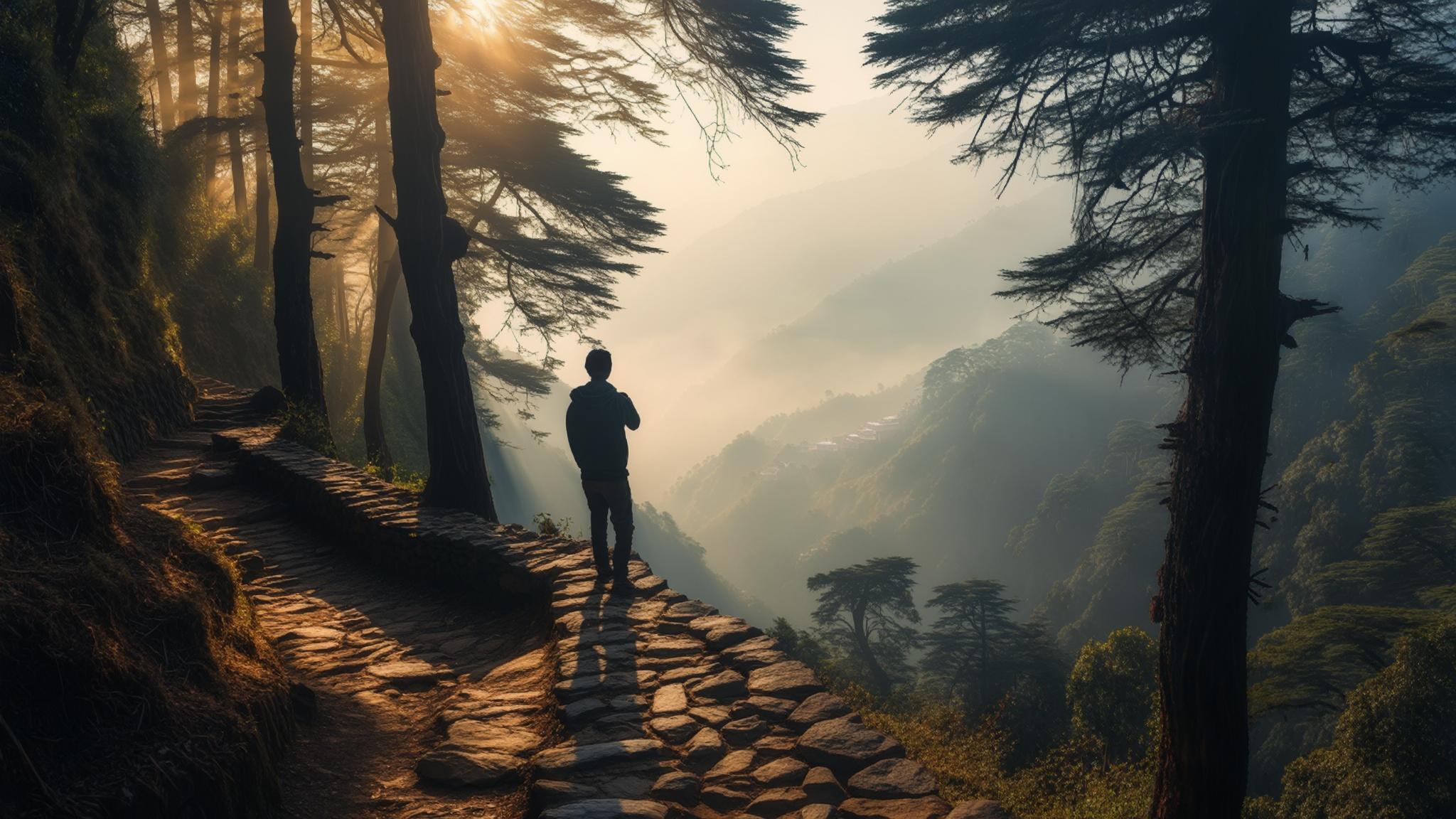
Lal Tibba is Mussoorie’s highest point at roughly 2,275 metres, and it is technically on every tourist map. Most visitors reach it, take a photo at the viewing telescope, and leave within twenty minutes. What those visitors miss is the 4-kilometre ridge trail that continues west from Lal Tibba toward Childer’s Lodge — a colonial-era building now managed by the Forest Department — and eventually loops back through dense oak and rhododendron forest.
Local trekking guides from the Landour area — the quieter cantonment town grafted onto the eastern edge of Mussoorie — regularly take this route on morning walks. The trail requires no permit, no guide, and no special footwear beyond decent sports shoes. It rewards you with unobstructed views of Bandarpunch and, on clear winter mornings, the Gangotri range. The entire loop takes about two hours at a moderate pace.
Landour itself deserves its own conversation. Unlike Mall Road, Landour’s four main lanes — known locally as the Chakkar — are quiet enough that you can hear birdsong over the sound of traffic. The weekly Wednesday market here sells local produce: wild mushrooms, hill garlic, fresh apricots in season, and homemade jams that cost a fraction of what the boutique shops on Mall Road charge. Author Ruskin Bond has lived in Landour for decades, and the neighbourhood retains a literary, unhurried character that feels genuinely different from the tourist core.
The Real Cost of a Mussoorie Trip — and Where the Money Actually Goes
The narrative that Mussoorie is an expensive hill station is only partly true. It is expensive if you stay on or adjacent to Mall Road, eat at restaurants with valley-view terraces, and book every activity through a hotel desk. It is surprisingly affordable if you move even slightly off the main circuit.
A realistic 3-night budget for two people — staying in a mid-range Landour guesthouse, eating at local dhabas for two meals and one sit-down restaurant meal per day, using shared Vikram taxis between Landour and Library Bazaar, and paying entry to the George Everest estate — comes to approximately ₹7,500 to ₹10,000 total. That includes one splurge dinner. The same trip on Mall Road, with a hotel that has a view and a restaurant attached, runs closer to ₹22,000 to ₹28,000.
Sir George Everest’s House — The Viewpoint Nobody Talks About
About 6 kilometres west of Mall Road, past the Barlowganj area, sits a crumbling estate that once belonged to Sir George Everest — the Surveyor General of India after whom the world’s highest peak is named. The property is maintained by the Archaeological Survey of India and charges a nominal entry fee of ₹25 per person. Most Mussoorie visitors have no idea it exists.
The estate sits on a narrow ridge with a sheer drop on both sides. On a clear day — and clear days are most reliable between late September and mid-November — you can see Panna and Bandarpunch peaks to the northeast and the Doon Valley spreading south below you. There are no hawkers, no horse-ride operators, and no queue. The walk from Barlowganj takes roughly 45 minutes on a paved road that climbs steadily.
The road to the Everest estate also passes through the small settlement of Park Estate, where a handful of century-old colonial bungalows have been converted into homestays. These are not marketed aggressively online — most bookings happen through word of mouth or through local travel agents in Dehradun. Rates run between ₹1,800 and ₹3,200 per night for a double room with breakfast, and the owners typically know every trail, shortcut, and seasonal feature in the surrounding area.
When to Actually Visit Mussoorie — The Season Nobody Recommends
Monsoon season in Mussoorie — roughly July through mid-September — has a reputation problem. The standard advice is to avoid it: roads get damaged, visibility drops, and landslides are a genuine risk on the Dehradun-Mussoorie highway (NH707A). All of that is true. What the standard advice omits is that monsoon Mussoorie is also the most visually dramatic version of the town that exists.
The hillsides turn a green so saturated it looks digitally enhanced. Waterfalls appear on ridges that are dry stone for the rest of the year. The air smells of pine resin and wet earth. Hotel occupancy drops sharply — rates fall by 40 to 60 percent compared to May-June peak — and the town returns to something resembling its actual character. Dhabas are not overwhelmed. The Chakkar in Landour is genuinely peaceful. You can get a window table at Char Dukan, the cluster of four small shops near Landour’s clock tower that serves some of the best maggi and omelettes in the region, without waiting.
October and November represent the genuine sweet spot. Post-monsoon vegetation is still lush, skies are clear enough for reliable mountain views, and temperatures range between 10°C and 20°C — warm enough for t-shirts by midday, cool enough to justify the blankets that Mussoorie guesthouses pride themselves on. Accommodation rates have not yet climbed back to December-holiday levels. This is the window serious Mussoorie visitors return for, year after year.
What to Eat in Mussoorie Without Spending Like a Tourist
Mussoorie’s food scene divides cleanly into two categories: the restaurants that exist because of the view from their terrace, and the places that exist because the food is worth eating. These two groups overlap less than you might hope.
The local staple worth seeking out is the Garhwali thali — a platter of kafuli (a spinach and fenugreek preparation), chainsoo (black lentil dal), and mandua ki roti (finger millet flatbread). A handful of dhabas near Landour Bazaar serve this for ₹120 to ₹180 per person, and it is both more nutritious and more representative of the region than any wood-fired pizza on Mall Road. Sisters Bazaar, a small commercial cluster above the Landour clock tower, has at least three dhabas that rotate this thali depending on seasonal availability.
- Char Dukan, Landour: Four small shops selling maggi, omelettes, and tea. Open from roughly 8 a.m. Cost: ₹80–₹150 per person.
- Prakash Store, Landour Bazaar: A tiny shop selling local honey, hill spices, and home-pressed mustard oil. Not a restaurant, but worth a stop for edible souvenirs under ₹200.
- Local bakeries near Library Chowk: Several small bakeries sell fresh bread, local jam, and tea cakes — a breakfast for two costs under ₹200 and is considerably better than any hotel breakfast buffet at the same price point.
- Kalsang Friends Corner, Mall Road: One of the few Mall Road restaurants that earns its reputation — Tibetan momos and thukpa at ₹150–₹250 per dish, and the kitchen is consistent across visits.
The broader point is this: Mussoorie rewards curiosity in direct proportion to how far you are willing to walk from the nearest tourist signboard. The town’s genuine character — its Garhwali food, its ridge trails, its literary history, its quiet cantonment streets — has not been erased by tourism. It has simply been buried under a layer of it. Dig a little, and it surfaces immediately.