
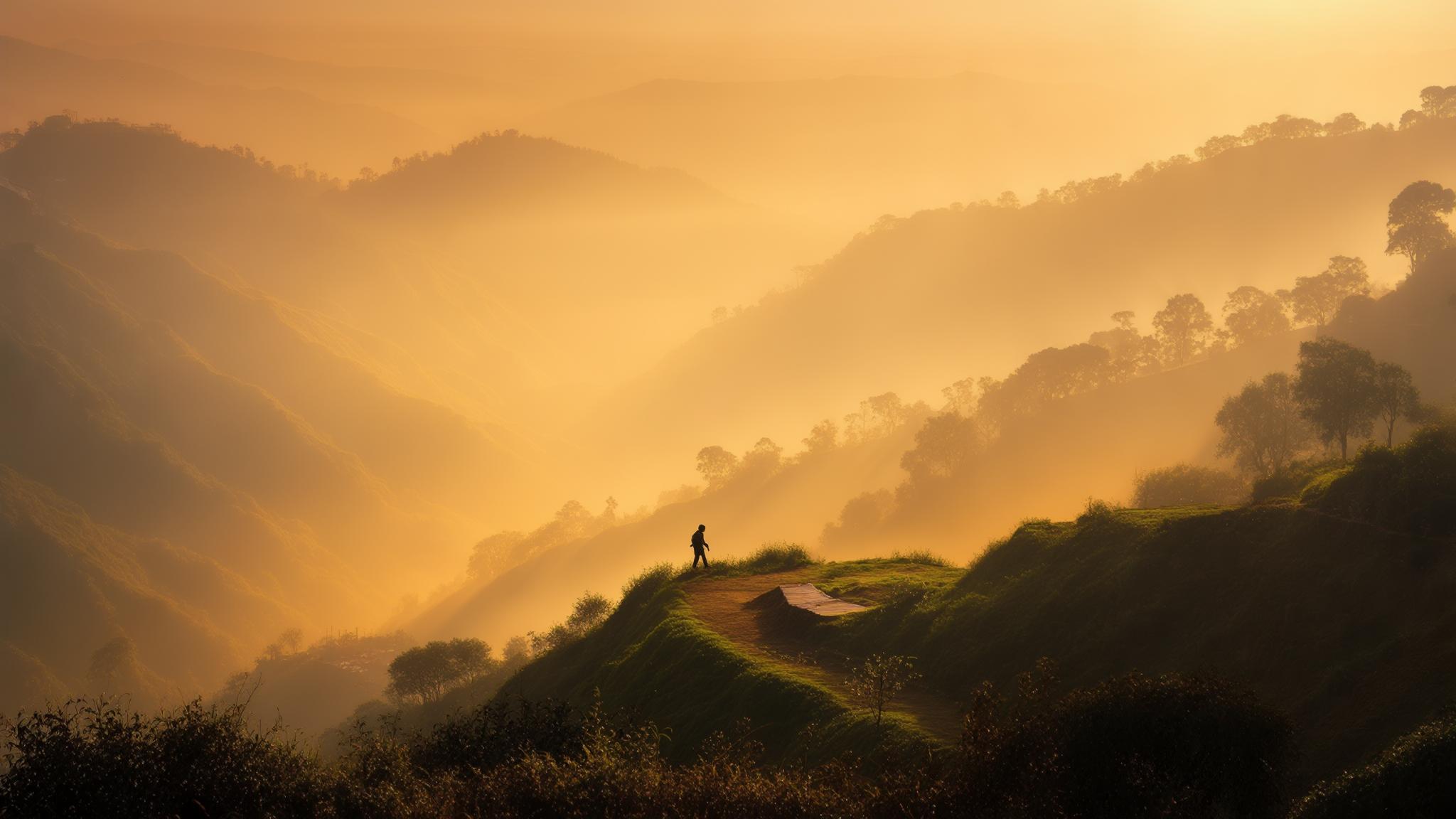
When did you last stop and ask yourself what you actually want from a hill station holiday — not what the Instagram reels promised you, but what genuinely makes you feel rested? That question matters more in Mussoorie than almost anywhere else in India, because this small Uttarakhand town has a remarkable ability to be completely different things depending on how much you spend, where you stay, and what you choose to do.
Mussoorie sits at roughly 2,000 metres above sea level in the Garhwal Himalayan range, about 35 km from Dehradun and approximately 290 km from Delhi. It draws an estimated 30 lakh visitors annually, making it one of the most trafficked hill stations in the country. And yet, conversations about what a trip actually costs remain oddly vague — buried in outdated blog posts or inflated by sponsored hotel content.
This article does something different. It maps out three realistic daily budgets — ₹3,000, ₹8,000, and ₹20,000 per person — and tracks exactly what each one buys you in Mussoorie in 2026. The findings are specific, occasionally surprising, and genuinely useful for planning.
The Budget Traveller’s Mussoorie: ₹3,000 Per Day
Travelling Mussoorie on ₹3,000 per day per person is absolutely viable — and in many ways, it produces the most authentic experience of the town. This bracket covers a decent guesthouse, three meals, local transport, and entry to major attractions without significant compromise on quality.
Accommodation in this range centres around the Landour area and the roads branching off Library Bazaar. Guesthouses like those on Camel’s Back Road or the lanes around Sisters Bazaar typically price between ₹800 and ₹1,500 per night for a clean double room with mountain views. These are often family-run operations where the hosts will proactively tell you which dhabas to trust and which days the Mall Road gets dangerously crowded.
Food at this budget is genuinely good. Mussoorie’s dhaba circuit — particularly along Kulri Bazaar — offers hot Garhwali thalis for ₹180-220, momos from street carts for ₹60-80, and maggi at countless viewpoints for ₹50-70. The Landour Bakehouse, a beloved institution on the Landour clocktower road, sells fresh-baked cinnamon rolls and filter coffee for around ₹300 for two — an indulgence that fits even a tight budget.
- Kempty Falls entry: ₹50 per person (ropeway extra at ₹150)
- Gun Hill ropeway: ₹150 per person return
- Lal Tibba viewpoint: Free; telescope use approximately ₹20
- Camel’s Back Road walk: Free; sunrise here is one of Mussoorie’s best kept non-secrets
- Shared jeep from Dehradun to Mussoorie: ₹100-120 per seat
The honest limitation at this budget is timing. During peak season — roughly mid-April through June and the Diwali week — even budget guesthouses fill up fast and prices jump 40-60%. Booking at least three weeks ahead is essential. The traveller who arrives unannounced in May and expects a ₹1,000 room will be disappointed.
The Mid-Range Reality: ₹8,000 Per Day
At ₹8,000 per day per person, Mussoorie shifts into a noticeably different register — not luxurious, but genuinely comfortable in ways that matter after a long drive from Delhi or Dehradun. This is the sweet spot for couples and small families who want ease without extravagance.
Accommodation in this bracket opens up a strong set of options. Properties like Sterling Mussoorie on Camel’s Back Road, or the Heritage Hotel near Library Chowk, offer well-maintained rooms with valley-facing balconies, included breakfast, and reliable Wi-Fi. Prices here run ₹3,500-5,500 per night for a double during shoulder season (September-November, February-March), rising to ₹6,000-8,500 during peak periods.
Dining at ₹8,000 per day allows for proper sit-down meals at restaurants like Café Ivy or the rooftop at Kalsang Friends Corner in Kulri Bazaar — the latter’s Tibetan noodle dishes have been a Mussoorie staple for decades. Budget roughly ₹600-900 for a relaxed dinner for two, including drinks. Lunch can reasonably be a lighter ₹300-400 affair at one of the bakeries near Landour.
What this budget also buys is flexibility with private transport. A full-day cab hire (Maruti Ertiga or similar) for sightseeing — covering Kempty Falls, Dhanaulti, and the George Everest House trail — runs approximately ₹2,000-2,500. This matters because Mussoorie’s key attractions are spread across 8-10 km of winding road, and shared jeeps, while economical, run on fixed routes that don’t always align with where you want to go.
The Luxury Tier: ₹20,000 Per Day and What It Actually Delivers
Spending ₹20,000 or more per day per person in Mussoorie places you in a genuinely small category of travellers — and the experience is meaningfully different, not just marginally better. The key distinction is not the thread count on the sheets; it is the removal of friction at every step of the trip.
At this level, the accommodation choices narrow to a handful of properties. The Savoy Mussoorie, a heritage property with roots going back to 1902, offers colonial-era architecture and rooms priced between ₹12,000-22,000 per night depending on room type and season. The JW Marriott Mussoorie Walnut Grove Resort and Spa, located just outside the main town on a quieter ridge, runs ₹18,000-35,000 per night and includes one of the most dramatic infinity pool setups in the Garhwal hills.
At this budget, food becomes an experience in itself. The Savoy’s in-house restaurant, The Tavern, serves multi-course dinners with Uttarakhand-sourced ingredients and a wine list that is genuinely curated. Expect to spend ₹2,500-4,000 per couple for dinner. Spa treatments at JW Marriott start at ₹3,500 for a 60-minute session, and private guided treks to the George Everest House or through the Landour forest trail can be arranged through the concierge for approximately ₹1,500-2,000 per person.
What you are paying for at this tier, honestly, is exclusion from crowds. These properties handle your dining reservations, arrange transfers in SUVs, and ensure your trail walk doesn’t coincide with three school groups. That is a real service, particularly in peak season when Mussoorie’s famous Mall Road can feel more like a crowded metro platform than a mountain promenade.
Choosing Your Season: The Variable That Overrides Budget
Your budget matters, but the season you choose matters more. Mussoorie’s character shifts dramatically across the year, and the right season for one type of traveller is entirely wrong for another.
September through November is, by most measures, the most rewarding time to visit. The monsoon has cleared the air, the Himalayan peaks visible from Lal Tibba — including Bandarpunch and the Gangotri range — are at their sharpest, and the town is running at 60-70% of peak capacity. Hotel prices are honest, restaurants are unhurried, and a walk on Camel’s Back Road at dawn feels like Mussoorie was made specifically for you.
Winter travel — December through February — is for a specific kind of traveller. Snowfall in Mussoorie is not guaranteed, but it does happen, typically once or twice between late December and early February. When it does, the town transforms. The trade-off is that many smaller eateries shutter, road conditions require attention, and heating in budget guesthouses can be inadequate. Pack accordingly or upgrade your accommodation.
What Nobody Tells You About Mussoorie’s Hidden Costs
Every Mussoorie trip carries a set of costs that don’t appear in any budget template but reliably appear on your bank statement. Knowing them in advance is not about being miserly — it is about not being caught off guard when you are tired and 290 km from home.
Parking in Mussoorie, if you drive your own vehicle, costs ₹150-200 for a car at the designated lots near Library Chowk and Picture Palace. During peak season, these fill by 10 AM. The municipal authority has been gradually expanding paid parking zones, and tolls on the approach road from Dehradun add another ₹90-120 per trip. For a couple driving from Delhi, the toll and fuel cost for the round trip runs approximately ₹2,500-3,200 in a standard sedan.
Shopping on Mall Road deserves a specific note. Mussoorie’s souvenir market — carved wooden items, Garhwali woolens, flavoured honeys, and teas — ranges from genuinely good craft to mass-produced goods marked up sharply for tourists. Budgeting ₹500-800 for a few quality purchases is reasonable; the stalls near the Gandhi Chowk end of Mall Road tend to have slightly more authentic local products than the Picture Palace end, which caters more aggressively to one-time visitors.
The George Everest House, officially called Park Estate, sits about 6 km from Library Chowk and requires a short trek to access. Entry is free, but the view of the Doon Valley from the ruins of the surveyor’s estate is worth more than most paid attractions in Uttarakhand. Few visitors make the effort, which means it remains one of Mussoorie’s genuinely uncrowded experiences in any season.
Mussoorie rewards specificity. The travellers who leave disappointed are almost always the ones who arrived with a vague plan and a reliance on things working out. The ones who leave wanting to return — and there are many — came knowing where they were staying, what they wanted to eat, and which two or three things they genuinely wanted to see. The mountain will do the rest.