
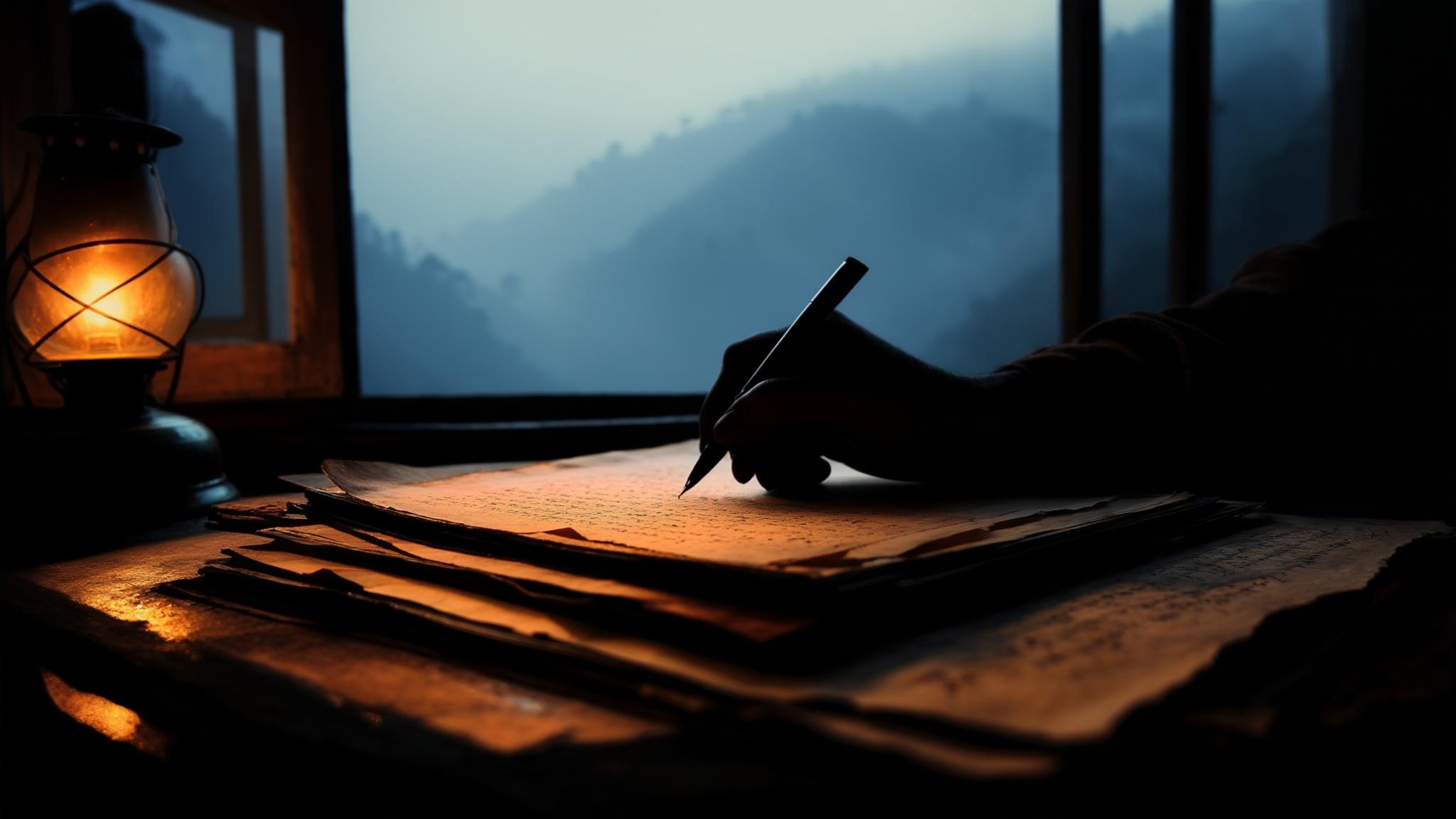
Picture this: you’re sitting on the Mall Road in Mussoorie, tea in hand, watching the Doon Valley disappear into the evening haze below. The town hums with the familiar chaos of honking taxis and laughing families. A local shopkeeper points to a well-worn paperback on his shelf — Mussoorie’s Mythistory — and says, simply, “This man knew us better than we knew ourselves.” That book was written by Hugh Gantzer. And on February 2, 2026, the man behind it passed away peacefully at his residence in Mussoorie, leaving behind a literary inheritance that travelers, historians, and residents are only beginning to fully reckon with.
For decades, Hugh Gantzer — alongside his wife and co-author Colleen — wrote about India’s landscapes, people, and stories with a directness that most travel writers struggle to find. He was not a romantic who airbrushed inconvenience. He was a documentarian of place, and Mussoorie was his most enduring subject.
Who Was Hugh Gantzer — And Why Mussoorie Claimed Him
Hugh Gantzer was not from Mussoorie originally, but Mussoorie made him its own. A Padma Shri recipient and one of the most decorated travel writers in India, Gantzer built a career that spanned multiple decades, dozens of destinations, and a consistent philosophy: write about a place as it actually is, not as tourism boards want it to appear. According to Times Now News, his writing reshaped how India was portrayed on the page — a significant claim in a country with a deeply complex relationship to its own travel narrative.
He wrote prolifically with Colleen, his wife and co-author, forming one of Indian travel writing’s most distinctive partnerships. Their 2011 travelogue The Alluring North — from which the two were filmed reading excerpts for the Mussoorie Writers short film series — demonstrated the range of their curiosity. The Gantzers were not content documenting the obvious. They went looking for the stories a hill station keeps to itself.
The Books That Built a Body of Work
Gantzer’s bibliography reflects the breadth of a writer who never stayed in one lane. According to his Goodreads author page, he has 10 books listed, with 75 ratings and Mussoorie’s Mythistory standing as his most-read title. The numbers are modest by commercial standards — but in the world of serious Indian travel writing, his influence runs far deeper than bestseller lists suggest.
His titles include The Black Beast of Mussoorie and Other Tales and India (Travel Bugs), each approaching their subject with the same unsentimental curiosity. Gantzer was drawn to what a place meant — historically, culturally, personally — rather than simply where to eat and what to see. That approach was rare in Indian travel journalism when he started, and it remains rare now.
What His Writing Meant for How India Travels
Before Gantzer, travel writing about India’s hill stations often defaulted to colonial nostalgia or generic scenic description. Mussoorie was frequently reduced to its weather, its hotels, and its view of the plains. Gantzer pushed back against that flattening. He wrote Mussoorie as a place with memory — layered with British-era architecture, Garhwali culture, migrant stories, and the slow negotiations of a town that had to reinvent itself every few decades.
That approach had a real effect on Indian travel culture. Writers who came after him — both professional journalists and travel bloggers — absorbed, often unconsciously, the idea that a destination deserves more than a checklist. His was a principled position: if you’re writing about a place, you owe it accuracy and depth.
The Gantzers also helped establish the idea of Mussoorie as a literary town, not just a tourist one. Their readings at Mussoorie Writers events gave the hill station a cultural identity that sat alongside — and sometimes challenged — its reputation as a weekend getaway for Delhi families. For travelers who show up looking for more than cable car rides and Kempty Falls, the Gantzer legacy is the reason that “more” exists in the first place.
Landour, Mussoorie, and the Geography of a Life’s Work
Hugh Gantzer lived and died in Mussoorie — a fact that matters more than it might seem. Many Indian travel writers parachute in, write their piece, and leave. Gantzer stayed. He was a resident, a neighbor, a figure at the local market. That residency gave his writing an authority that purely visiting writers simply cannot access.
The Gantzer home sat in a town that changes dramatically by season. In summer (April to June), Mussoorie swells with domestic tourists — roughly 4,000 to 5,000 visitors per day at peak, with hotel tariffs ranging from ₹1,500 for budget guesthouses to ₹12,000 and above for heritage properties. The monsoon (July to September) strips away the crowds and reveals the town Gantzer actually wrote about — quieter, greener, and considerably cheaper. Winter brings a different quiet entirely, with fog settling into the valleys and Landour’s lanes going almost completely still.
For travelers who want to walk in Gantzer’s literary footsteps, the Landour quarter — about 2 km uphill from the main Mussoorie bazaar — is the obvious starting point. This older, quieter enclave has changed less than Mall Road and retains the architectural character that appears throughout his writing. The Char Dukan tea stalls, the colonial cemetery, the winding cobbled paths: all of it is documented in his pages and still recognizable in person.
What Comes Next — Preserving the Gantzer Legacy for Travelers
The question that Mussoorie’s literary community is grappling with now is one of preservation. Gantzer’s books are available through platforms like ThriftBooks and in select Mussoorie bookshops, but they are not prominently stocked or marketed. In a town that generates significant tourism revenue — Mussoorie attracts roughly 3 million visitors annually — there is a real case for integrating its literary heritage more formally into how the destination is presented.
Some informal steps are already being taken. The Mussoorie Writers initiative, which documented the Gantzers reading from their own work, is one example of how the hill station’s cultural memory is being archived before it fades. Heritage walks in Landour increasingly reference the writers and thinkers who shaped the area’s identity, and Gantzer’s name appears on more than a few of those routes.
A Hill Station That Deserves to Be Read, Not Just Visited
Hugh Gantzer’s death on February 2, 2026, prompted tributes from across the country. Lt. Gen. Gurmit Singh was among those who publicly mourned the loss of the Padma Shri recipient, according to a post on his official Facebook page. The tributes underlined something that daily tourism numbers rarely capture: Mussoorie is not just a scenic destination. It is a place with a sustained intellectual and literary tradition, and Gantzer was its most persistent guardian.
For travelers planning a trip to Mussoorie in 2026, that tradition is still accessible — in the bookshops of Landour, in the colonial architecture of the cantonment area, in the views that Gantzer described so precisely that a reader arriving for the first time often feels they’ve been before. That is the specific achievement of his writing: it makes a place feel like a return rather than a first visit.
Mussoorie will keep attracting millions of visitors. The cable car to Gun Hill will keep running. Kempty Falls will keep drawing families with children. But for those who want the hill station to mean something beyond a weekend escape, the Gantzer books are the most honest map available. Pick one up. The town looks different once you do.
.pvv-faq-section details summary::-webkit-details-marker{display:none}.pvv-faq-section details summary::marker{display:none;content:””}.pvv-faq-section details[open] summary .pvv-faq-arrow{transform:rotate(90deg)}