
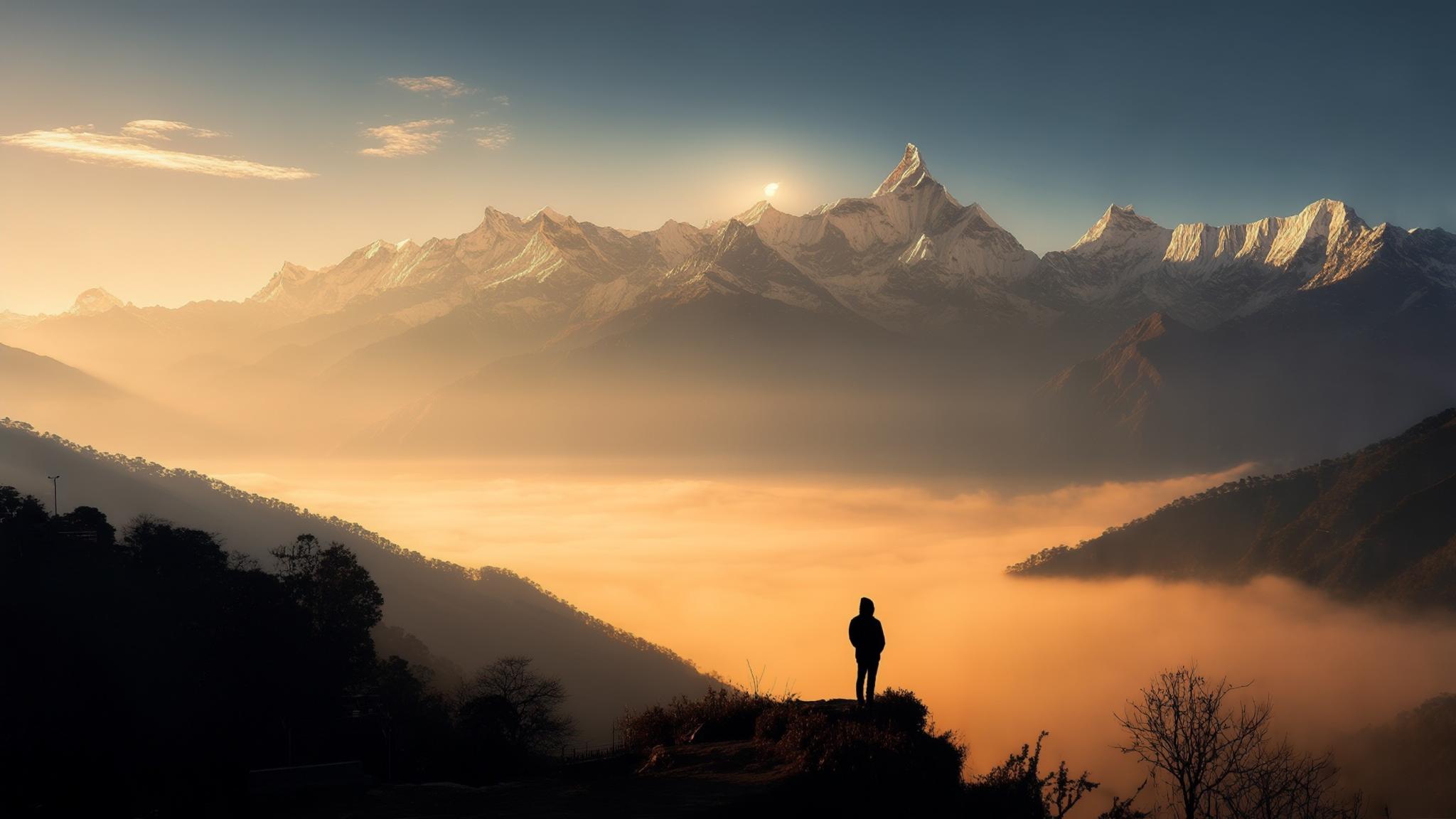
When was the last time you stood at a Mussoorie viewpoint and had it entirely to yourself? For most visitors arriving at Lal Tibba or Gun Hill during peak season, the answer is likely never — yet a functioning wildlife reserve sits six kilometres away, accessible by road, priced at ₹200 per person, and consistently undervisited even on long weekends.
Benog Wildlife Sanctuary, officially gazetted by the Uttarakhand Forest Department, occupies 239 hectares along the western ridge of the Mussoorie range. At its far end sits Cloud’s End — a historic estate and the last motorable point before the trail drops into dense mixed forest. Together, they form what local trekking guides describe as Mussoorie’s most rewarding half-day outing, provided visitors know when and how to go.
What Is Benog Wildlife Sanctuary and Where Exactly Is It
Benog Wildlife Sanctuary is a protected forest area administered by the Uttarakhand Forest Department, located on the western outskirts of Mussoorie in Dehradun district. The sanctuary is named after Benog Hill, which rises to approximately 2,290 metres above sea level — slightly higher than Mussoorie’s central ridge at roughly 2,005 metres.
The sanctuary is home to leopard, barking deer, Himalayan goral, and over 100 recorded bird species including the cheer pheasant, which is listed as vulnerable on the IUCN Red List. Birdwatchers have documented sightings of the white-capped water redstart and the rufous-bellied niltava along the sanctuary’s lower stream trails, according to eBird observation logs submitted by verified Dehradun-based birding groups.
The road to the sanctuary begins near Library Bus Stand in Mussoorie and runs west through residential areas before reaching the Cloud’s End property boundary. A shared cab or auto from Library Bus Stand typically charges ₹150–₹200 for the one-way trip, though rates vary by season and negotiation.
The Cloud’s End Estate — Context Most Visitors Miss
Cloud’s End is not simply a viewpoint label — it is a heritage property with a documented history stretching back to the British colonial period. The main building, now operating as a heritage hotel under the name Cloud’s End Villa, was constructed in 1838 and is widely cited as one of the oldest surviving structures in Mussoorie.
According to records maintained by the Mussoorie Heritage Society, the property was originally built as a hunting lodge and later functioned as a private residence for several decades before its conversion to hospitality use. The surrounding oak and rhododendron forest remained largely intact through that transition, which is part of why the area retains its wildlife value today.
Day visitors who are not staying at the estate can still access the trail entrance adjacent to the property, subject to the Forest Department entry fee. The trail itself is not technically demanding — it is rated easy to moderate for average fitness levels, with a total elevation gain of approximately 180 metres from the Cloud’s End road terminus to the Benog Temple viewpoint.
Best Time to Visit and What the 2026 Season Looks Like
The sanctuary is open year-round, but trail conditions and visibility vary significantly across seasons. The Uttarakhand Forest Department does not impose a formal closure during the monsoon, though the department’s Mussoorie range office advises against trail entry between mid-July and mid-September due to slippery paths and reduced wildlife activity near the upper ridgeline.
For 2026, the spring rhododendron bloom at Benog is expected between mid-March and late April based on elevation and historical phenology data tracked by the Botanical Survey of India’s Dehradun-based Northern Regional Centre. The bloom adds significant colour to the forest trail and is among the primary reasons birders and photographers visit during this window.
Practical Planning — Distances, Costs, and What to Carry
The full round-trip from Mussoorie’s Library Bus Stand to Cloud’s End and back, including a two-kilometre forest walk to the Benog Temple viewpoint, takes approximately three to four hours at a relaxed pace. Most travellers who start at 6:00 AM gate-opening can complete the outing and return to Mall Road by 10:30 AM — before the day-tripper crowds peak.
Total approximate cost per person for a half-day Benog outing from central Mussoorie: ₹500–₹600, inclusive of cab fare both ways, entry fee, and a basic breakfast stop on return. This compares favourably against the ropeway to Gun Hill, which charges ₹150 per person each way for a three-minute ride to a viewpoint with consistently higher crowd density.
Visitors planning a full day can combine the Benog trail with the George Everest Estate, located on the opposite eastern end of the Mussoorie ridge. The two sites together cover Mussoorie’s quietest heritage walking options and can be done on the same day with a midday return to town between outings, according to itinerary formats shared by the Uttarakhand Tourism Development Board.
What Comes Next for the Sanctuary
The Uttarakhand Forest Department submitted a proposal in late 2025 to the state environment ministry for expanding interpretive infrastructure at Benog, including a nature interpretation centre near the gate and a designated birdwatching platform approximately 800 metres inside the trail. The proposal, referenced in the department’s 2025–26 Annual Action Plan, has received in-principle approval but no construction timeline has been confirmed as of March 2026.
Local conservation groups, including the Mussoorie chapter of the Bombay Natural History Society, have welcomed the proposal while cautioning against over-development. Their primary concern, documented in a letter submitted to the divisional forest officer in January 2026, is that increased footfall without regulated entry caps could disturb the cheer pheasant breeding corridor that runs through the sanctuary’s northern section.
For now, the sanctuary remains one of the few places within immediate reach of Mussoorie where the ratio of infrastructure to wilderness still favours the latter — and where ₹200 buys something increasingly scarce in popular hill stations: an hour of uninterrupted forest quiet.