
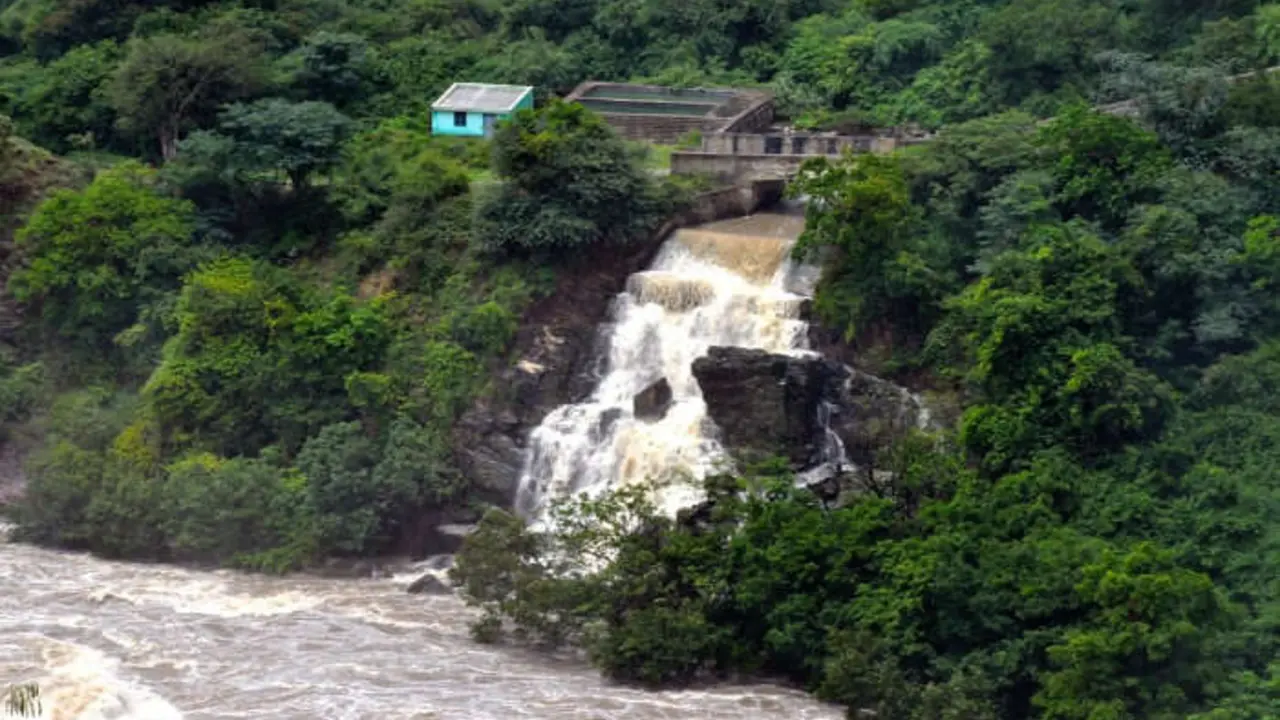
Have you ever stood at Kempty Falls on a Sunday afternoon, shoulder to shoulder with a thousand strangers, and wondered if there’s something better just around the next hill? There is. Several somethings, actually.
Mussoorie draws roughly 30 lakh visitors every year, and nearly all of them funnel into the same three or four attractions. Kempty Falls gets the crowds, the chai stalls, the inflatable toys for rent, and the noise. Meanwhile, within 20 to 40 kilometres of Mall Road, a handful of waterfalls sit almost completely ignored.
No entry queues. No vendors blocking the view. Just water, rock, and forest.
This is the story of those falls, why they stay hidden, and exactly how to reach them before word fully gets out.
Why Mussoorie’s Crowds Miss the Best Water
Mussoorie’s tourism infrastructure was built in the colonial era and hasn’t changed its bones much since. Tour operators still push the same circuit: Gun Hill, Lal Tibba, Kempty. These places are easy to package, easy to reach by road, and easy to monetise. Off-circuit spots generate no commission for travel agents, so they simply don’t appear in itineraries.
Most visitors also arrive for two nights and leave with a checklist mentality. Spending three hours on a forest trail to reach a waterfall feels like a risk when you’ve paid for a hotel and a cab. So the crowds concentrate, and the quiet places stay quiet.
There’s also a language barrier of sorts. Local names for these spots are in Garhwali or colloquial Hindi, and they rarely appear on English-language travel blogs. A waterfall called Jharipani ka jharna or a seasonal fall above Bhadraj Temple won’t surface in a quick Google search the way Kempty does.
| Waterfall | Distance from Mussoorie | Trek Difficulty | Best Season | Entry Fee |
|---|---|---|---|---|
| Jharipani Falls | 8 km | Easy | July to September | None |
| Bhadraj Falls | 15 km | Moderate | July to October | None |
| Mossy Falls | 7 km | Easy–Moderate | June to September | None |
| Bhatta Falls | 11 km | Easy | July to September | ₹50 (approx.) |
| Kempty Falls | 15 km | None (roadside) | Year-round | ₹50–₹100 |
The Waterfalls Worth the Detour
Each of these falls has a distinct character. Some are best after heavy monsoon rain. Some hold water into October.
One is a 20-minute walk from a metalled road; another requires two hours of forest trail. Here’s what you actually need to know about each one.
Jharipani Falls
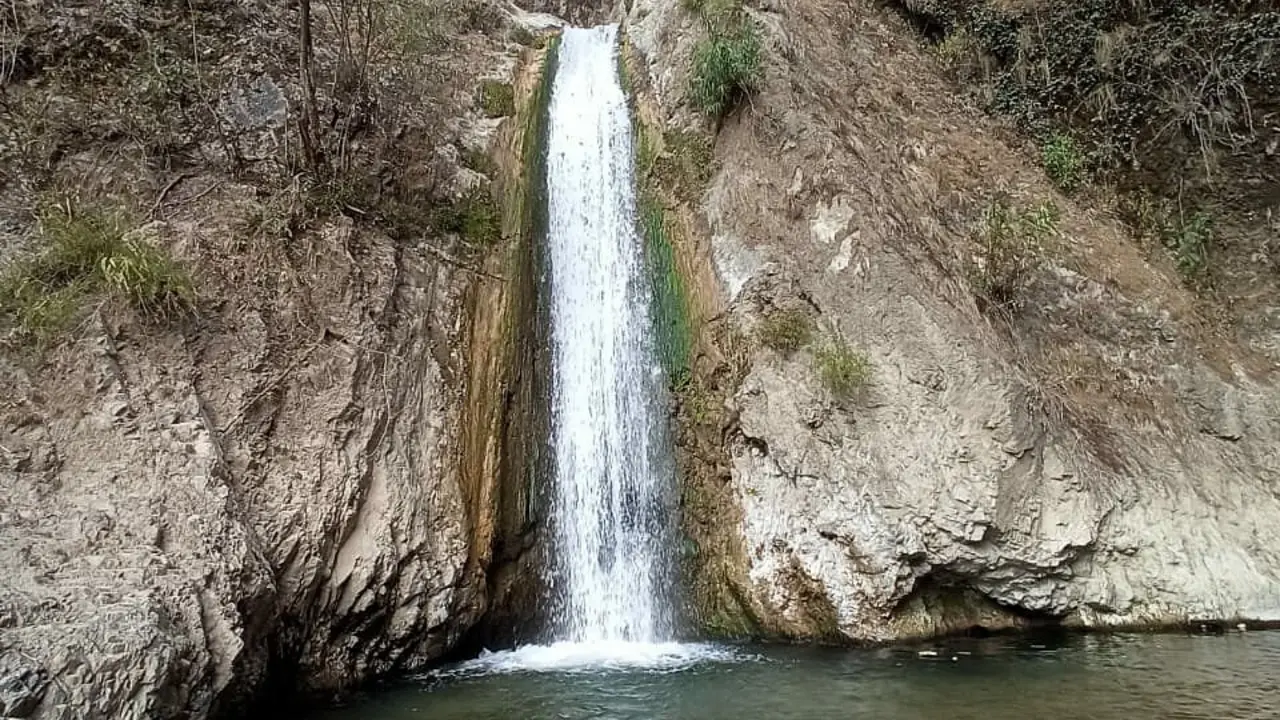
Jharipani village sits about 8 kilometres from Mussoorie on the Dehradun road, and most people drive through it without stopping. Below the village, a seasonal stream drops roughly 25 metres over a basalt ledge into a small pool. You won’t find this on most maps by that name, but locals know it immediately if you ask for paani wala nala near the Jharipani Forest Rest House.
Getting there takes about 20 minutes on foot from the Jharipani bus stop. Follow the trail downhill past the old orchard walls. After the monsoon, the fall runs strong through September.
By November it’s reduced to a trickle. Carry water, wear shoes with grip, and go on a weekday. On weekends, local families from Dehradun sometimes picnic here, but it never gets Kempty-level crowded.
No entry fee. No facilities. Bring your own food and carry your rubbish back out.
Mossy Falls
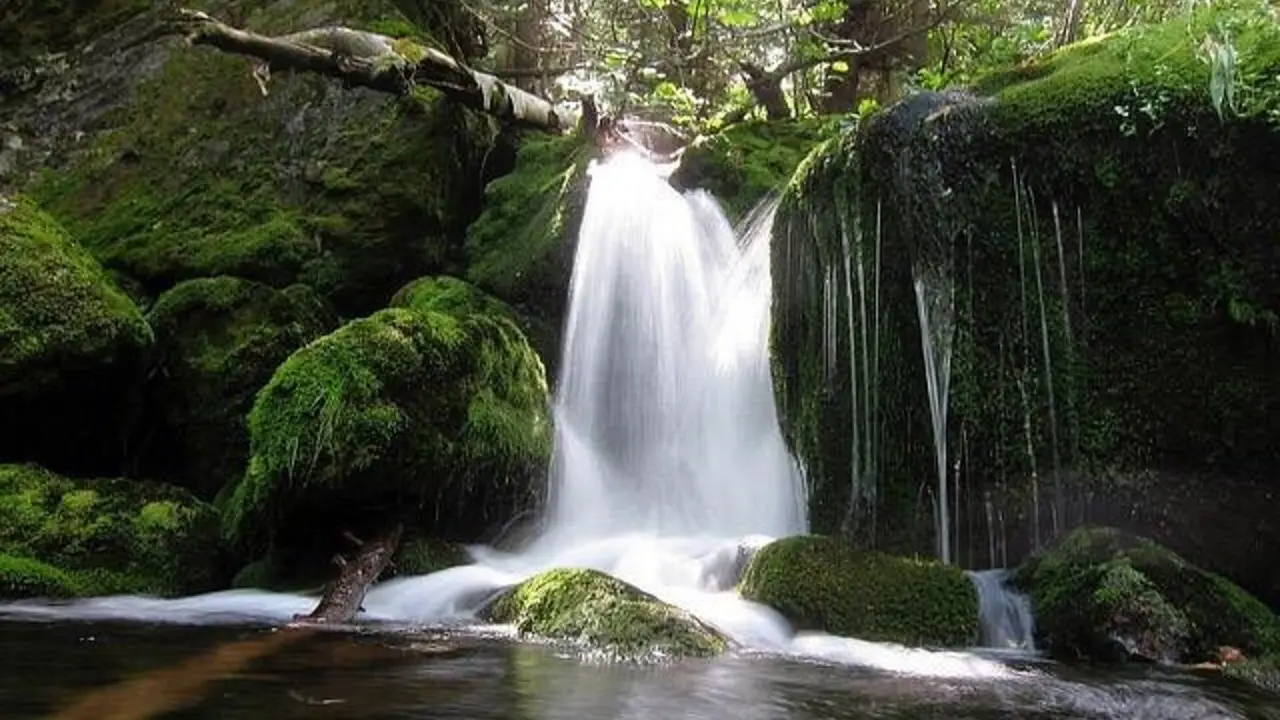
Mossy Falls is probably the most accessible of the genuinely quiet falls near Mussoorie, sitting about 7 kilometres from the Library Chowk area. A rough jeep track leads toward Barlowganj, and from there a short forest path drops to the fall. Local cabs know the route; the fare from Mall Road runs approximately ₹300 to ₹400 one way as of 2024.
What makes Mossy Falls special is the approach. Thick oak and rhododendron forest lines both sides of the trail. In June and July, the forest floor is green in a way that feels almost excessive. The fall itself drops in two tiers, with the lower pool wide enough to sit beside comfortably.
Go between 9 AM and 2 PM for the best light. After heavy rain, the trail can be slippery near the base, so trekking poles or a walking stick help. Uttarakhand Tourism’s official site lists some trekking routes in the Mussoorie range, though Mossy Falls specifically isn’t always featured.
Bhadraj Falls
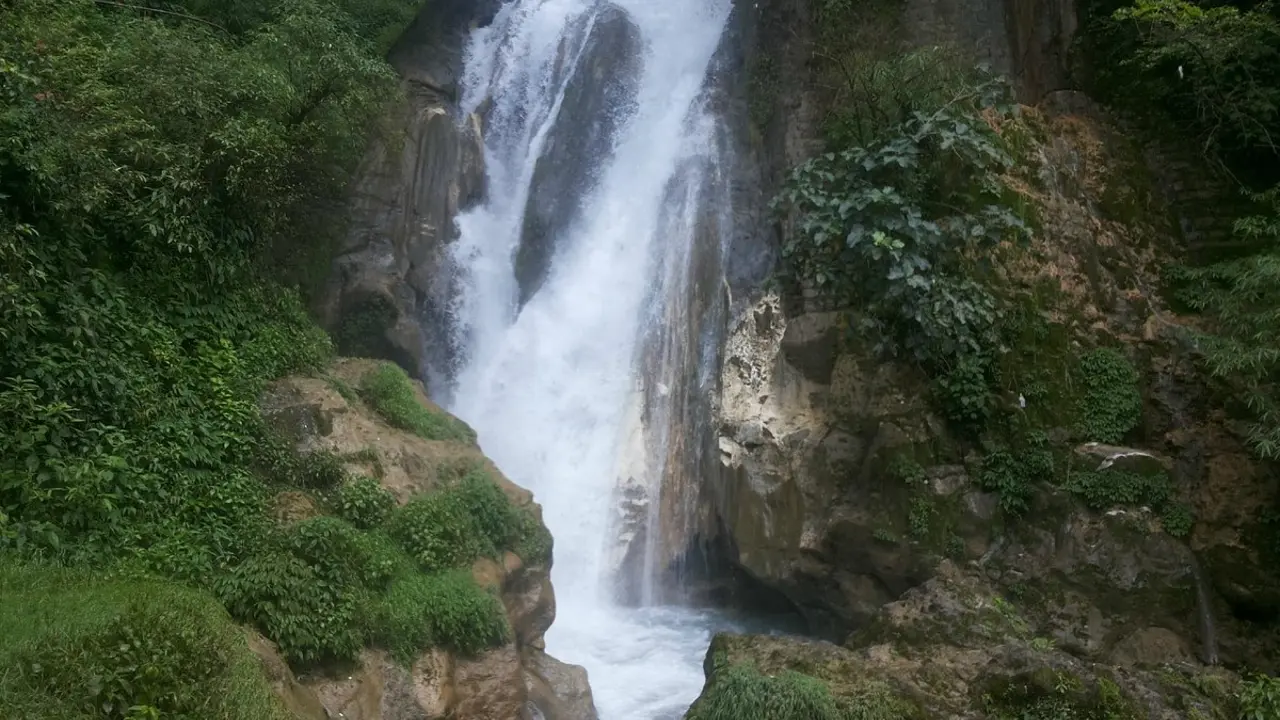
Bhadraj Temple sits on a ridge about 15 kilometres from Mussoorie, dedicated to Bal Bhadra. Most people who make the effort to reach the temple turn around at the shrine and miss the waterfall entirely. Below the temple, a seasonal stream runs down the eastern face of the ridge and drops into the valley in a narrow curtain of white water.
Reaching it requires following the trail past the temple for another 30 to 40 minutes downhill. Inform someone at the temple about your plan before descending, as the path is less maintained below that point. Sturdy shoes are non-negotiable here. The reward is near-total solitude, a view of the Doon Valley below, and the sound of water with no human noise competing.
Best visited between August and October. After October, the stream slows significantly. Shared jeeps from Mussoorie toward Bhadraj run in the morning; the return requires either a pre-arranged cab or a longer walk back to the main road.
Bhatta Falls
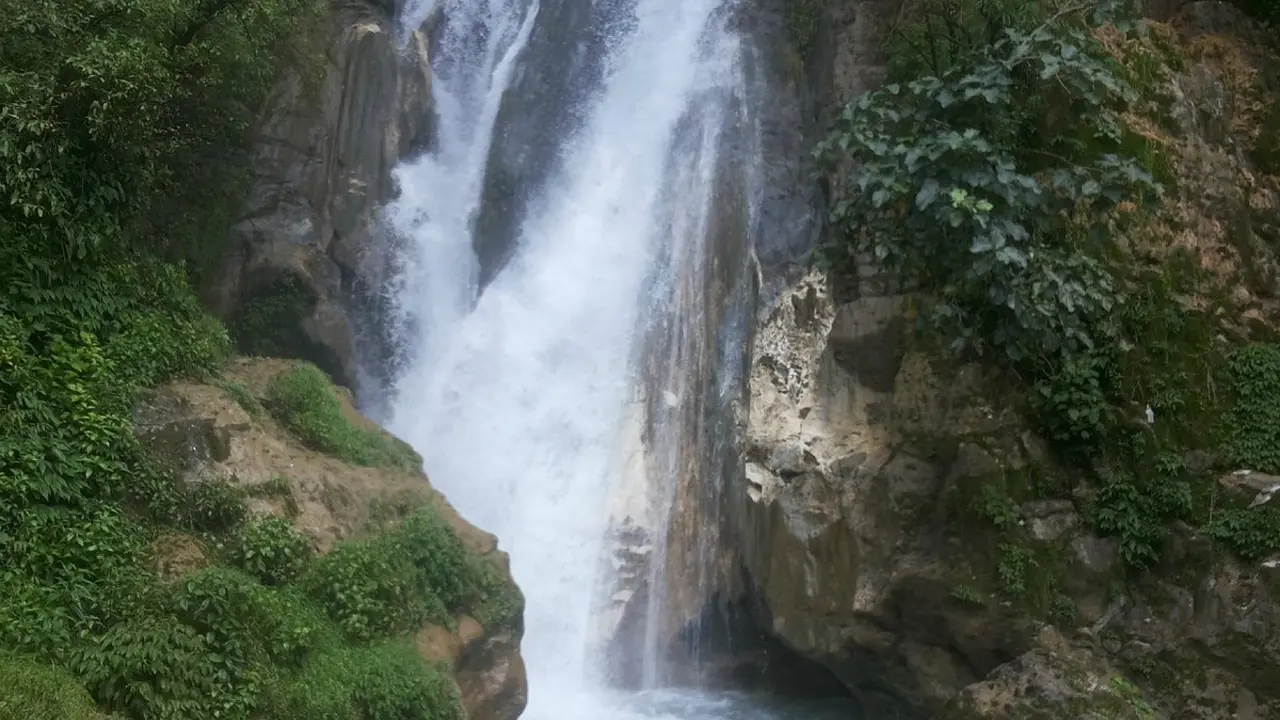
Bhatta Falls near Bhatta village, approximately 11 kilometres from Mussoorie on the Mussoorie-Dehradun bypass road, is the one exception in this list: it does have a small entry fee (approximately ₹50 per person as of 2024) and a few food stalls nearby. But compared to Kempty, it’s practically deserted on most days outside peak summer holidays.
A short descent from the road leads to the base of the fall, where a stream drops about 20 metres. Families with young children often find this easier to manage than the longer treks. Search Bhatta Falls on Google Maps before you go to confirm current road conditions, as the approach road occasionally gets damaged during heavy monsoon.
Morning visits are calmer. By early afternoon on weekends, a handful of local picnickers arrive, but the space is large enough that it never feels congested.
What You Actually Need to Know Before Going
None of these falls are maintained tourist sites with safety railings and first-aid posts. That’s part of their appeal, but it also means preparation matters. A few practical points that most travel guides skip over:
- Monsoon trails near waterfalls can become genuinely dangerous after 48 hours of continuous rain. Check the weather in Dehradun (the nearest major weather station) the night before.
- Mobile signal is unreliable on most of these trails. Download offline maps via Google Maps before leaving your hotel.
- Leeches are active from June through September on forested trails. Salt or a lighter works for removal. Tuck your trousers into your socks.
- Carry at least 1.5 litres of water per person. Stream water near these falls is not reliably safe to drink without purification.
- Local guides from Mussoorie’s trekking operators charge approximately ₹500 to ₹800 for a half-day waterfall trek as of 2024. For first-time visitors, this is worth considering for Bhadraj Falls specifically.
GMVN (Garhwal Mandal Vikas Nigam) operates rest houses near some of these areas and can be a useful base for early morning starts. Their booking portal at gmvn.in lists available properties in the Mussoorie range.
The Season Changes Everything
Timing your visit correctly is the single biggest factor in whether these falls disappoint or astonish. Most are seasonal, fed by monsoon rainfall and snowmelt. Visit in March and you’ll find dry rock faces. Visit in August and the same spot becomes a roaring curtain of water.
July through September is peak flow for all five falls listed here. October offers a good balance: water levels remain decent, leeches disappear, the forest starts turning, and crowds thin out dramatically after school holidays end. November is the last viable month for most of these; after that, only Bhatta Falls and Jharipani see any meaningful flow.
Spring visitors (March to May) who want water should focus on Bhatta Falls, which gets some snowmelt flow in April. The others are largely dry until the pre-monsoon showers begin in late June.
Plan your Mussoorie trip around these windows and you’ll see a version of the hills that the weekend crowd in matching raincoats at Kempty never gets to experience. That version is quieter, wetter, and considerably more worth the journey.
Frequently Asked Questions