
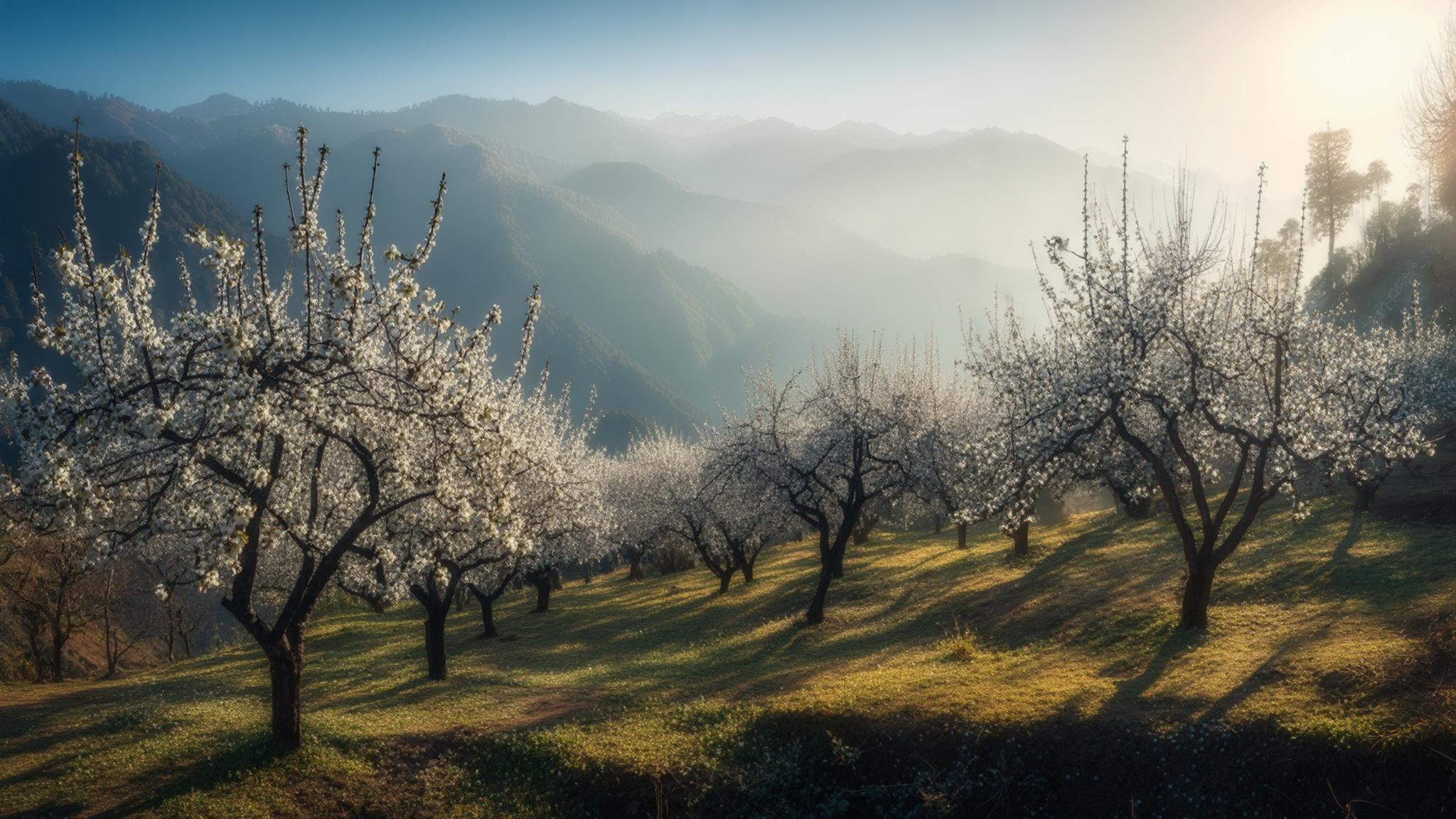
As of the last week of March 2026, Dhanaulti — a quiet hill station sitting at approximately 2,286 metres above sea level on the Mussoorie–Chamba road — is carrying a rare overlap: patchy snow on the Surkanda ridge and a full flush of apple blossom in the orchards below. Local hoteliers and taxi operators in Mussoorie say this combination, which draws a quieter, more intentional crowd than peak summer, typically disappears by the second week of April as temperatures climb.
For travellers already based in Mussoorie, or those planning arrivals in early April, the trip requires roughly half a day, a budget of ₹800–₹1,500 per person, and almost no advance infrastructure. What it does require is timing.
What Makes the Late-March to Mid-April Slot Different From Any Other Time
Dhanaulti is open year-round, but the late-March to mid-April period produces conditions that do not repeat at any other point on the calendar. Snowfall at Dhanaulti’s elevation typically ends in mid-February, but residual cover on the Surkanda Devi ridge — at 2,756 metres, roughly 470 metres above Dhanaulti town — persists into early April most years.
Simultaneously, the apple, pear, and plum orchards that line the approach road from Mussoorie enter full bloom during the last 10 days of March. The blossom cycle at this altitude lasts approximately 18–22 days before petals drop. The two phenomena overlap for, at most, two to three weeks.
Pramod Rawat, who operates a shared taxi service between Mussoorie’s Picture Palace stand and Dhanaulti, said conditions in late March 2026 are comparable to 2023, which is considered one of the better years for the overlap. “The snow is still there above Surkanda temple,” Rawat told NPP Mussoorie on March 28. “But it is going fast. Another 10 days, maybe 12, and the ridge will be clear.”
How to Get There and What It Costs
The most practical route from Mussoorie runs via the Mussoorie–Chamba road through Suakholi. The road is paved, carries moderate traffic in early spring, and takes approximately 50 minutes under normal conditions. Three transport options exist for travellers without a personal vehicle.
- Shared taxi from Picture Palace stand: Departs when full (typically 6 passengers). Fare is approximately ₹120–₹150 per seat one-way as of March 2026. Vehicles run from roughly 7:30 a.m. onward.
- Private taxi (booked at stand or via hotel): Full cab hire runs ₹1,200–₹1,600 return, including a two-to-three hour wait at Dhanaulti. Rates vary by vehicle type.
- GMOU bus: The Garhwal Motor Owners Union operates occasional services toward Chamba that stop at Dhanaulti Chowk. Fare is approximately ₹60–₹80 one-way. Schedules are not guaranteed and are best confirmed at Mussoorie bus stand the day prior.
What to Do Once You Are There — The Practical Breakdown
Dhanaulti is small. The main cluster of activity sits within roughly two kilometres of the Chowk. A full visit covering the primary points of interest takes three to five hours comfortably.
Eco Park, managed by the Uttarakhand Forest Department, is the most visited site. The park is divided into three enclosures — Amber, Shivalik, and Himalaya — and entry costs ₹50 per adult and ₹25 for children as of the 2025–26 rate schedule. The park is particularly scenic during the blossom period, with rhododendron, oak, and deodar framing the walking paths. It opens at 8:30 a.m. and closes at 6:30 p.m.
The Surkanda Devi temple, located 8 kilometres from Dhanaulti Chowk, is the primary point of access to snow in early April 2026. A ropeway — operated by the Uttarakhand Tourism Development Board — runs to a point approximately 200 metres below the temple summit. The ropeway fare is ₹150 per person return. From the ropeway upper station, a 15-minute walk on stone steps reaches the temple at 2,756 metres. Snow is currently present on the path above the ropeway station, according to the taxi operator Rawat.
Where to Eat and Whether an Overnight Stay Is Worth It
Dhanaulti has no large hotel chains as of March 2026. Accommodation is entirely in the guesthouse and resort category, with most properties sitting on the Mussoorie–Chamba road. Mid-range rooms — attached bathroom, geyser, mountain view — run approximately ₹1,800–₹3,200 per night in early April. Rates rise sharply after April 20 as the pre-summer booking window opens.
For a day trip, food options at Dhanaulti Chowk are reliable but limited. The cluster of dhabas near the Eco Park entrance serves standard Garhwali meals — rajma-chawal, aloo ke gutke, dal with roti — at ₹120–₹200 per plate. The Maggi stalls near the ropeway base remain open through the day and are, according to most accounts, the preferred stop for travellers on a short visit.
What Changes After Mid-April — and Why It Matters for Planning
The shift after mid-April is not a collapse of Dhanaulti’s appeal — it simply becomes a different destination. Snow disappears from all but the highest visible ridges. Orchards transition from blossom to early leaf, and while green and pleasant, the dramatic white-pink contrast of the spring window is gone. Temperatures climb to 18–22°C by day, and the weekend crowd from Dehradun and Delhi begins arriving in volume by the last week of April.
By May, Dhanaulti sees genuine tourist pressure — rooms book up on weekends, the Eco Park queue builds by mid-morning, and the Surkanda ropeway has reported wait times of 30–45 minutes on Saturdays during peak season. None of this makes the destination unworthy, but it is a fundamentally different experience from the quiet, cool, visually extraordinary week or so that remains as of March 30, 2026.
Savitri Negi, whose family has operated a guesthouse in Dhanaulti for over 15 years, noted that bookings for the first two weeks of April filled faster in 2026 than in any year since 2019. “People are reading more, planning better,” she said. “But the ones who wait for a long weekend in April — they will find it already gone.”