
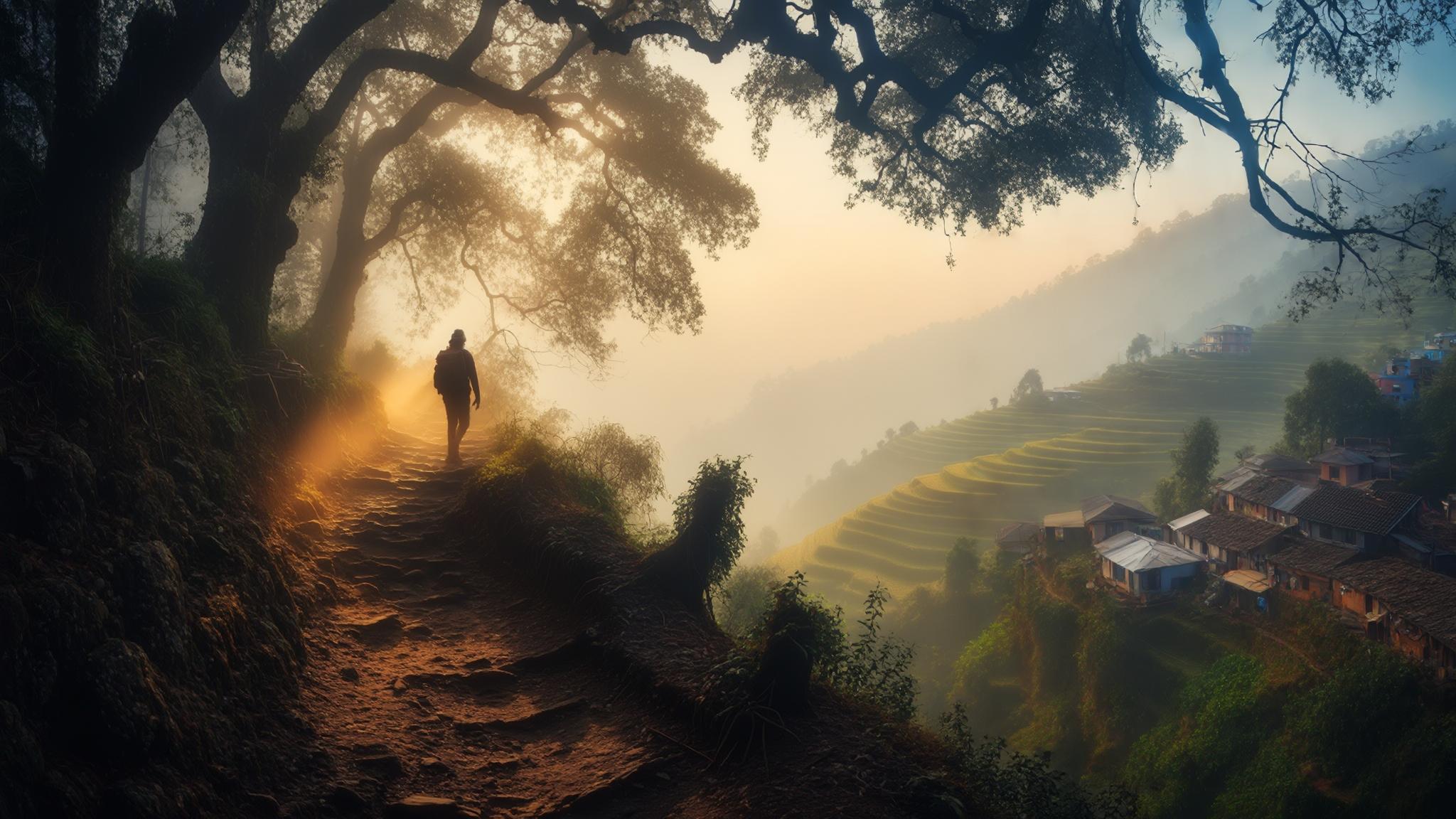
Priya and her husband arrived in Mussoorie on a Friday evening in October, checked into a hotel on Mall Road, and spent the next two days doing exactly what three million other annual visitors do — Kempty Falls, Gun Hill, a camel ride for the kids, and a slow walk past overpriced shops selling woollen scarves. On Sunday evening, waiting for their cab back to Dehradun, Priya told her husband: “It was fine. But I don’t know why people rave about it.” She had seen Mussoorie. She had not experienced it.
That gap — between the tourist surface and the actual town — is what this guide is built to close. Mussoorie at its best is not a checklist. It is a 2,000-metre ridge sitting above the Doon Valley, with Himalayan views, colonial-era graveyards, rhododendron forests, and a pace of life that still moves on its own terms. You just have to know where to step off the main road.
When to Actually Go (Not Just When Everyone Else Does)
The honest answer most travel content avoids: May and June are the worst months to visit Mussoorie for anyone wanting peace. That is precisely when Indian schools break for summer and the town swells beyond its infrastructure. Hotels triple their rates, Mall Road becomes shoulder-to-shoulder, and traffic jams stretch from Kingcraig to Picture Palace for hours.
The best windows are March to early April and mid-September to November. In March, rhododendrons bloom across the upper ridges and the air is sharp without being punishing. October and November bring the clearest Himalayan views of the year — on a good morning from Lal Tibba, you can see Bandarpunch and Swargarohini without a telephoto lens. Rates drop by 40–60% outside peak season.
Monsoon (July–August) divides opinion. Landslides on the Dehradun–Mussoorie road are a real risk and road closures happen every season — check the Uttarakhand government’s road advisory before travelling. That said, the valley turns an improbable green, waterfalls run full, and accommodation prices bottom out. Experienced travellers who go in monsoon and accept the uncertainty often call it their favourite version of the trip.
The Places That Actually Reward Your Time
Gun Hill and Kempty Falls will remain on every itinerary, and there is nothing wrong with them. Gun Hill’s ropeway (₹150–200 per person) gives a decent Himalayan panorama and is genuinely pleasant before 9 AM when the queues are short. Kempty Falls is spectacular after monsoon rains. But a Mussoorie trip built only on these two anchors is like visiting Mumbai and only going to Gateway of India.
Lal Tibba is the highest point in Mussoorie at 2,275 metres and sits in the Landour cantonment area, roughly 6 km from the Library end of Mall Road. The viewpoint has a vintage telescope through which Kedarnath, Badrinath, and Gangotri peaks are reportedly visible on clear days. The walk through Landour’s quiet lanes to reach it — past the old clock tower, the Char Dukan tea stalls, and stone houses draped in ivy — is worth the trip on its own.
Benog Wildlife Sanctuary deserves a dedicated morning. Located about 11 km from Mall Road near the Clouds End area, it is a small but dense oak and rhododendron forest managed by the Uttarakhand Forest Department. Entry is free, and the trail rewards birdwatchers — Himalayan woodpeckers, red-billed blue magpies, and khalij pheasants are regularly sighted. The total walk to the Benog temple and back is roughly 7 km and takes 3–4 hours at a comfortable pace.
Camel’s Back Road is a 3 km loop road named for a rock formation that resembles a camel’s hump. Locals use it for morning walks. At sunrise, with the Doon Valley below and the Himalayan snowline catching first light, it is the single most atmospheric experience Mussoorie offers — and it costs nothing.
Getting There and Moving Around: The Practical Numbers
Mussoorie has no railway station. The nearest railhead is Dehradun (Jolly Grant Airport is an alternative for flyers, located 54 km away). From Dehradun railway station, shared taxis to Mussoorie leave from the stand near the station and cost approximately ₹100–150 per seat. Private cabs run ₹800–1,200 for the full car. The journey takes 45–75 minutes depending on traffic and road condition.
Within Mussoorie, the town is long and narrow — stretching roughly 15 km from Barlowganj in the west to Landour in the east. Walking is practical for the central Mall Road section. For longer distances, shared auto-rickshaws (₹20–50 per person for most hops) run between Picture Palace, Kulri, and the Library end. Hiring a full auto for the day runs ₹600–900 and is worthwhile for families covering multiple sites.
Where to Eat Without Paying Resort Prices
Mussoorie has a persistent reputation for overpriced, mediocre food on Mall Road. That reputation is earned for about a third of the establishments there. The rest, particularly the smaller Garhwali dhabas in the Kulri and Landour Bazaar areas, serve genuinely good food at honest prices.
Specific stops worth noting: Char Dukan in Landour is a cluster of four old tea shops that has become a Mussoorie institution — the maggi, toast, and chai here are unremarkable by food standards but the setting, on a quiet ridge lane, makes them a ritual for return visitors. Kalsang Restaurant near the Picture Palace has served reliable Tibetan and Chinese food for decades, with momos priced around ₹100–150 per plate. For a proper sit-down meal, Tavern Restaurant on Mall Road and Casa Mia in Kulri are consistently recommended for continental and Indian options without the steep resort markups.
- Budget meal (dhaba, local): ₹80–150 per person
- Mid-range restaurant: ₹300–600 per person
- Hotel restaurant / resort dining: ₹800–1,500 per person
- Street food (corn, bhutta, chaat near Mall Road): ₹30–80 per item
A Realistic 2-Night Budget for Two People
Mussoorie is one of those destinations where spending patterns vary enormously based on decisions made before you even arrive — primarily accommodation and transport. A couple travelling mid-week in October can have a full, unhurried experience for under ₹8,000 total. The same trip in peak May can cost ₹25,000 without any splurging.
The single biggest lever on cost is accommodation. Mussoorie has a wide spread from budget guesthouses in the ₹600–900 per night range (basic but clean, away from Mall Road) to heritage properties like Savoy Hotel which run ₹8,000–15,000 per night. According to Incredible India, Uttarakhand’s hill stations collectively see their highest hotel occupancy rates in the country during April–June, which directly drives those seasonal price swings.
For families, the calculus changes — adding children’s activity costs, bigger room requirements, and the practical reality that kids want to do the cable car twice. Budget ₹12,000–18,000 for a family of four over two nights in mid-season, and you will be comfortable without stretching.
The town Priya dismissed from a taxi window on her way back to Delhi is the same town thousands of travellers have made a near-annual ritual. The difference is never the destination. It is almost always where you choose to walk.