
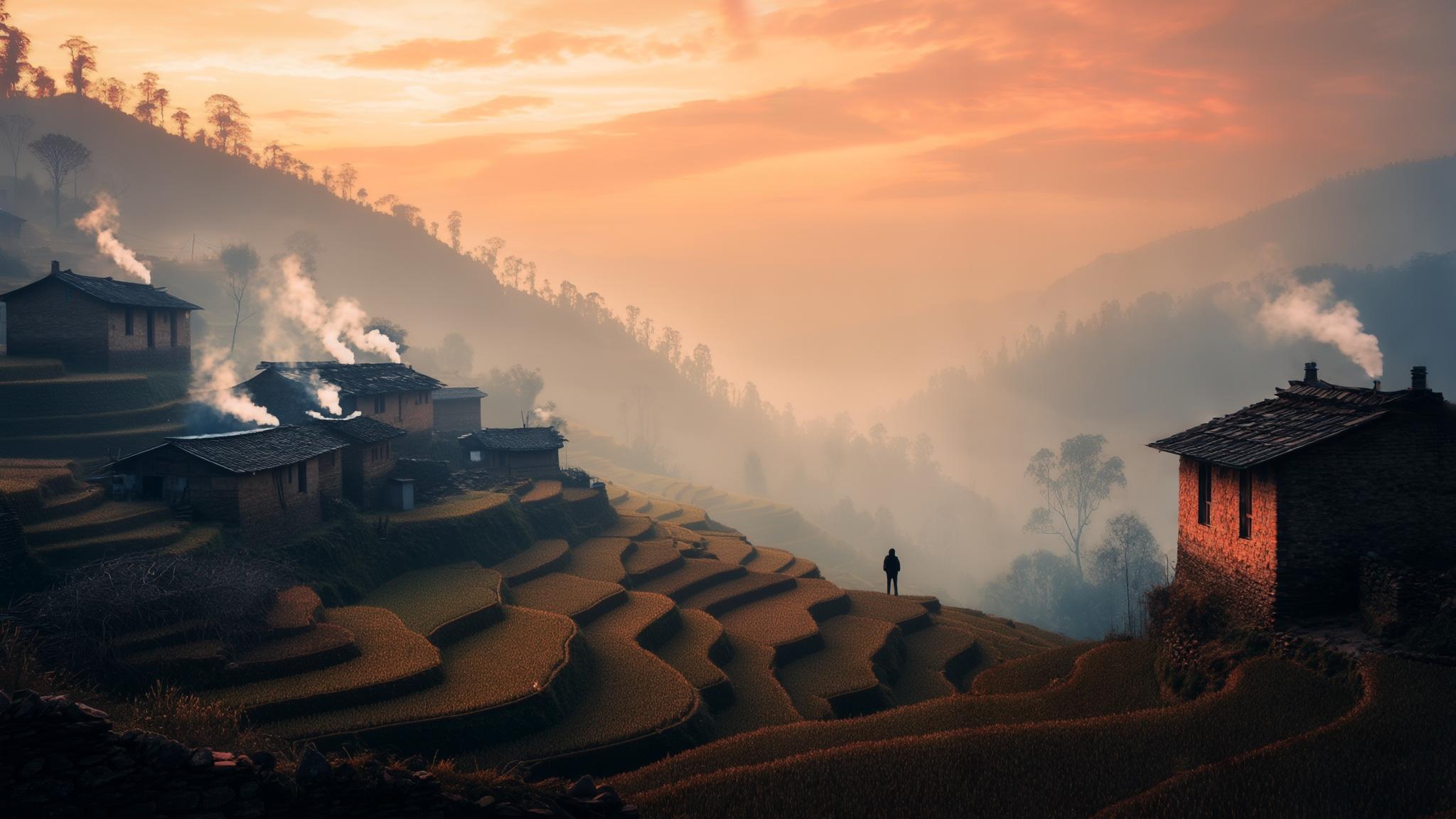
In 2024, more than 2 million people visited the twin hill towns of Mussoorie and Landour in the Himalayan foothills — a number that has surged roughly sixfold over the past decade, according to Deccan Herald’s investigation into Himalayan overtourism, according to deccanherald.com. Authorities have already started discussing daily visitor caps. The traffic on the Dehradun–Mussoorie highway regularly backs up for hours. And yet, just 12 km from the gridlock, a small waterfall called Kimadi sits in near-total silence.
That contrast is the real story of Mussoorie today. The hill station at 6,500 feet above sea level remains genuinely beautiful. The problem is that most visitors see roughly the same 3 km stretch of Mall Road and call it a trip. This guide is for the traveler who wants something more deliberate.
The Scale of What You Are Actually Walking Into
Understanding Mussoorie’s overcrowding problem is not meant to discourage you — it is meant to help you plan smarter. The Guardian reported in 2025 that authorities in Landour and Mussoorie have begun introducing daily visitor limits in response to the pressure on roads, water supply, and the hill ecology. The main road connecting Dehradun and Mussoorie has been closed on multiple occasions due to heavy rains, cloudbursts, and debris — leaving over 2,000 tourists stranded on at least one documented occasion in 2024, as reported by Financial Express, according to financialexpress.com.
Peak season — May through June, and again in October — brings the worst of it. Parking lots fill by 9 AM. The cable car to Gun Hill has queues that stretch well past an hour. If your travel dates fall in this window, build in two extra hours of buffer for every road journey you plan.
The good news is that a significant infrastructure shift is coming. The Mussoorie Sky Car ropeway — currently under development — will reduce travel time from Dehradun to Mussoorie to just 20 minutes, according to Times of India. When operational, this will ease the notorious highway bottleneck considerably — but until then, plan your arrivals for early morning on weekdays.
Landour: The Quieter Address That Writers Have Always Known
Landour sits approximately 2.5 km from Library Chowk in Mussoorie town, and its Bazaar — a narrow, sloping lane of old stone shops — belongs to a different era entirely. This is where author Ruskin Bond has lived since 1963, and the streets carry the particular calm of a place that has resisted the urge to modernize for tourists.
The Mussoorie Heritage Centre at Landour Bazaar is a practical starting point for first-time visitors to this area. It documents the colonial and post-colonial history of the twin towns with real archival depth. From there, the Char Dukan — a cluster of four old tea stalls — serves breakfast that has changed little in decades. Travel and Leisure Asia’s Ruskin Bond travel guide maps several of the specific locations that appear in his fiction, making this a genuinely literary walk rather than a generic heritage tour, according to travelandleisureasia.com.
Allow at least half a day for Landour. The roads are narrow and not suitable for large vehicles, which naturally limits the crowds. Wear comfortable walking shoes — the lanes are steep in places and not always paved evenly.
The Radius Beyond Mussoorie: Waterfalls, Villages, and Wildlife
Most visitors to Mussoorie spend all their time within the town itself and miss what the surrounding hills actually offer. Within a 25 km radius, the landscape changes dramatically — and the crowd density drops to near zero.
Sainji Village deserves particular attention. Known for its distinctive practice of hanging corn on the exterior walls of houses to dry — creating a striking visual during harvest season — it sits roughly 20 km from Mussoorie and sees a fraction of the tourist traffic. The drive itself, through winding deodar-forested roads, is worth the trip. Budget about ₹800–1,200 for a return cab ride if you are not driving.
Bhadraj Temple at 15 km is an ideal half-day trek. The trail is moderately difficult and rewards walkers with panoramic views of the Doon Valley. Rajaji National Park, roughly 60 km away, is a full-day commitment — it is home to elephants, leopards, and over 300 bird species. Entry fees for Indian nationals are approximately ₹150 per person for the park, with additional charges for safari vehicles.
Where to Stay and What It Actually Costs
Accommodation in Mussoorie spans a wide range, and the right choice depends largely on how much road noise you can tolerate. Mall Road properties offer maximum convenience but come with the noise and footfall of the busiest part of town. Properties slightly off the main drag — or up toward Landour — tend to offer better value and quieter nights.
The Fern Brentwood Resort on Mall Road is one of the better-positioned mid-range options, combining access to the main promenade with reasonably comfortable rooms. Outlook Traveller’s review notes it sits in the scenic Doon Valley corridor and suits travelers who want to walk to key attractions without requiring a cab for every outing.
For a two-night, three-day trip covering Mussoorie town, Landour, and one day excursion to Sainji or Bhadraj, a couple traveling on a moderate budget should plan for approximately ₹8,000–12,000 total including accommodation, meals, cab hires, and entry fees. Solo travelers can do it comfortably for ₹4,500–6,000 by opting for shared cabs and mid-range guesthouses in Landour.
The Infrastructure Shift Coming — And What Travelers Should Watch
The Mussoorie Sky Car ropeway project, when complete, will connect Dehradun to Mussoorie in approximately 20 minutes — compared to the current 45-minute to 2-hour drive depending on traffic. This is not a minor convenience upgrade; it fundamentally changes the calculus of a Mussoorie visit. Day-trippers from Dehradun will be able to come and go far more easily, which could either redistribute crowds or intensify them.
The Uttarakhand government’s simultaneous push toward daily visitor caps in Landour reflects an awareness that the current model is unsustainable. Travelers planning trips in 2026 and beyond should monitor these policy changes, as advance booking or permit systems may eventually become mandatory for certain zones — similar to what has already been implemented in parts of Himachal Pradesh.
What Mussoorie Rewards — If You Let It
Mussoorie at its best is a place where a slow morning walk through Landour’s fog-covered lanes, a cup of tea at Char Dukan, and an afternoon drive to a quiet waterfall constitute a complete and satisfying day. The hill station has always rewarded those who treat it as a place to slow down, not a checklist to complete.
The overtourism pressure is real and growing. But the geography of the region — the valleys, the forest paths, the small villages within a 25 km radius — still absorbs visitors who are willing to look slightly beyond the obvious. The hill station that Ruskin Bond has written about for decades has not entirely disappeared. It has simply moved a few kilometers away from the cable car queue.