
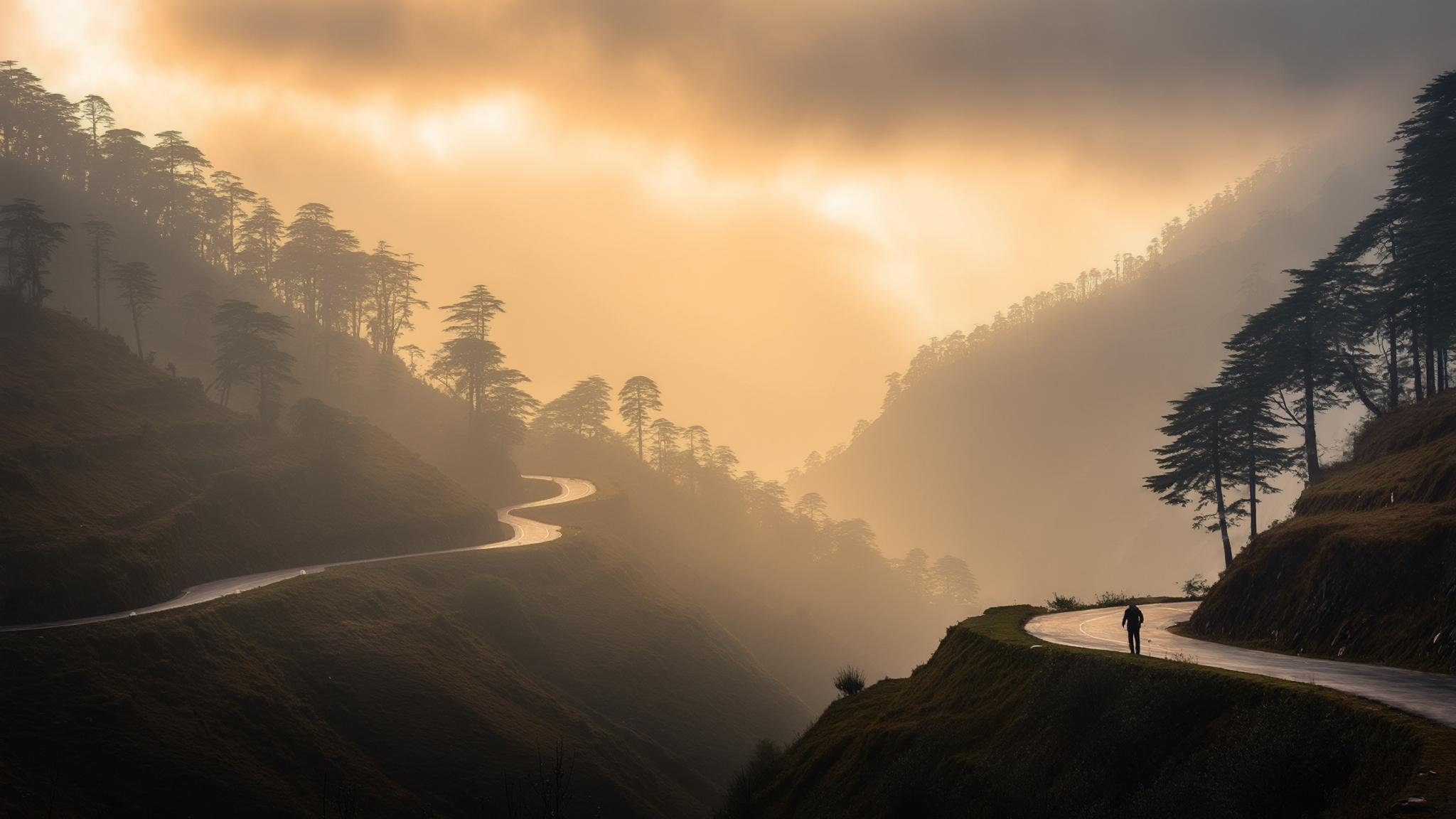
Riya and her husband booked a long weekend in Mussoorie in May, chasing the cool air that Delhi refuses to offer after April. They did everything the travel blogs told them to do. By Sunday afternoon, they were stuck in a three-kilometre traffic jam near Kempty Falls, sunburned, mildly irritated, and wondering why everyone calls this place the Queen of Hills. The hills were there. The queen had apparently stepped out.
That story is more common than Mussoorie’s tourism board would like to admit. The town is genuinely beautiful — a colonial-era ridge town at 2,005 metres, draped in oak and rhododendron, with Himalayan views that stop you mid-sentence. The problem is rarely the destination. It is the itinerary.
What Mussoorie Actually Is — And Why the Crowds Concentrate Where They Do
Mussoorie stretches roughly 15 kilometres along a horseshoe-shaped ridge in Uttarakhand’s Dehradun district. The town has two main commercial poles: Landour Bazaar to the east and Library Chowk to the west, with Mall Road connecting them in the centre. Most tourists compress their entire visit into the Mall Road–Kempty Falls–Gun Hill triangle, which is why those three spots feel overwhelmed while the rest of the town remains genuinely quiet.
Kempty Falls sits 15 kilometres from the main town on the Chakrata Road. It is a legitimate waterfall — a 40-metre cascade that feeds a shallow pool at the base. But it receives roughly 3,000–4,000 visitors on a peak-season Saturday, which means the pool is crowded, the surrounding area is loud, and the drive back to town can take 45 minutes for what should be a 20-minute journey. The waterfall itself is not the problem. The infrastructure around it simply was not built for this volume.
Gun Hill, at 2,122 metres, is Mussoorie’s second-highest point and reached by a ropeway (cable car) from Mall Road. The ropeway ticket costs ₹150 per person each way as of early 2026. On clear days — particularly October through December — the view from Gun Hill takes in Bandarpunch, Swargarohini, and the Gangotri range. On hazy summer days, you may see little beyond the town itself. Checking weather forecasts the night before is not optional; it is the difference between a ₹300 round trip that justifies itself and one that does not.
The Landour Circuit: Where Mussoorie Gets Quiet and Interesting
The single best decision most Mussoorie visitors can make is walking the Landour circuit. Landour is a cantonment area that adjoins Mussoorie to the northeast, sitting about 300 metres higher than Mall Road. It is quieter, cooler, and architecturally more intact than the main bazaar. No private vehicles are permitted on its upper lanes, which means you walk, and walking is how you actually see a hill station.
The Chaar Dukan — literally “four shops” — is a small cluster of tea stalls and bakeries near Landour’s clock tower. It has been serving tea and Maggi to locals, military personnel, and the occasional writer for decades. Author Ruskin Bond, who has lived in Landour for most of his adult life, is occasionally spotted at these stalls on quiet mornings. The area around his home on Ivy Cottage has become an informal literary landmark, though residents understandably prefer visitors respect their privacy.
The Landour loop walk takes about 90 minutes at a relaxed pace. It passes St Paul’s Church (built 1840), the Wynberg-Allen School, and several stone cottages that date to the British garrison era. The Sisters Bazaar section offers a handful of small bakeries selling local breads, jams, and walnut cake — items that do not appear anywhere on Mall Road’s commercial strip.
Seasonal Timing: The Decision That Changes Everything
When you go to Mussoorie matters more than almost any other planning variable. The town experiences four distinct phases, each with a different character and cost profile.
March and April occupy a sweet spot that is chronically underrated. Temperatures are comfortable (10–18°C), rhododendrons are in bloom along the Camel’s Back Road, and hotel tariffs have not yet hit their summer ceiling. The Camel’s Back Road itself — a 3-kilometre promenade named for the camel-shaped rock formation visible from it — is at its most photogenic in late March, when the flowering trees along its path peak.
July through mid-September is monsoon season. Mussoorie receives significant rainfall, landslides are a real possibility on roads approaching the town, and visibility is frequently poor. Some travellers love it for the dramatic mist and the near-empty streets; others find it restrictive. If you go during monsoon, check the Uttarakhand Disaster Management Authority updates before departing, and build flexibility into your return date.
The Real Budget Breakdown: What a Mussoorie Trip Actually Costs in 2026
Budget anxiety is one of the most common reasons Indian domestic travellers underprepare for hill station trips. Here is what a realistic three-day, two-night Mussoorie trip costs for two people, broken into honest categories.
The train from Delhi to Dehradun (the Shatabdi Express, departing Hazrat Nizamuddin) takes approximately 5.5 hours and costs ₹800–₹1,200 per person in chair car or AC chair. From Dehradun railway station, shared cabs to Mussoorie run throughout the day and cost ₹150–₹200 per seat. This is almost always the most cost-effective approach from Delhi, and the train journey itself is pleasant, passing through the Shivalik foothills as you approach Dehradun.
Hotels directly on Mall Road command a premium for their location. Properties one or two streets back — on Picture Palace Road or Camel’s Back Road — often offer equal or better views at 20–35% lower prices. Booking two to three weeks ahead in peak season is not excessive; good mid-range rooms in May genuinely sell out.
What to Actually Do: A Practical Sequence for Three Days
Day one should belong entirely to arrival and orientation. Check in, walk Mall Road in the late afternoon when light is golden and crowds have thinned slightly, eat dinner at one of the Tibetan restaurants near Kulri Bazaar — momos and thukpa are both inexpensive and genuinely good — and sleep early. The town looks and feels different when you are not rushing.
Lal Tibba, at 2,275 metres, is Mussoorie’s highest point and offers the best Himalayan panorama in the area on clear days. It sits in the Landour cantonment and requires a short auto ride from the main town. There is a Japanese telescope at the viewpoint that visitors can use to see distant peaks more clearly — a small detail, but a memorable one. Entry is free; the auto ride costs roughly ₹80–₹100.
What Changes After This Trip
Mussoorie done thoughtfully is a different experience from Mussoorie done reflexively. The town has real depth — in its architecture, its literary history, its walking routes, its food — but that depth only reveals itself when you move slowly enough to encounter it. The waterfall will still be there. The traffic jam will be there too. The question is what else you choose to put in the middle.
As Uttarakhand continues developing its tourism infrastructure, the pressure on Mussoorie’s most popular spots is likely to increase before any management solutions bring it down. The travellers who get the most from the town in the near term will be those who plan around the crowds rather than assuming they will not be there. Off-peak dates, early morning starts, and a willingness to walk 20 minutes past where the auto-rickshaws stop — these are the variables that still separate a good Mussoorie trip from a frustrating one.
Riya went back to Mussoorie in October. She walked the Landour loop on her second morning, had tea at Chaar Dukan while the mist was still on the ridges, and skipped Kempty Falls entirely. She said the town finally made sense to her. That is not a complicated itinerary. It is just a considered one.