
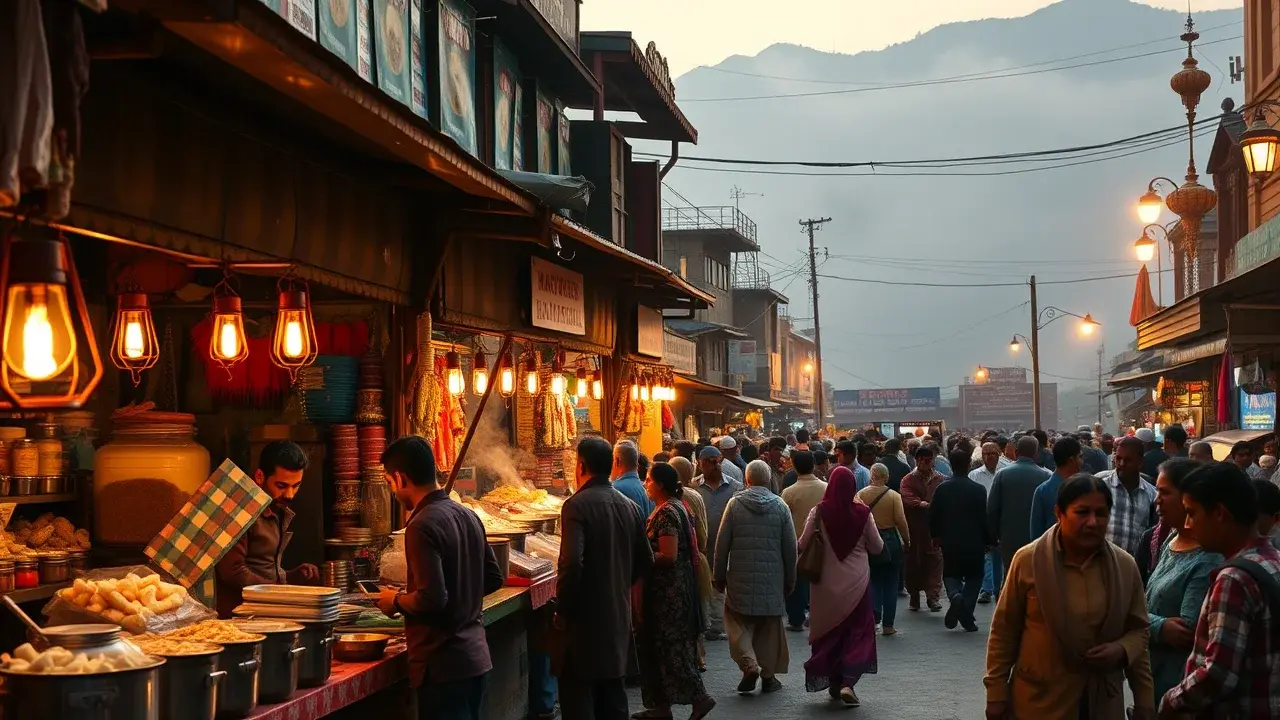
Roughly 35 street food vendors operate within a 500-metre radius of Library Chowk on any given weekend in peak season. Most tourists walk past all of them hunting for a sit-down restaurant, spend ₹600 on mediocre pasta, and leave Mussoorie without tasting what the town actually eats. That is the single biggest food mistake you can make on Mall Road.
The Scene at Library Chowk: Why This Spot Matters
Library Chowk sits at the western end of Mall Road, directly in front of the old British-era library building. It is the junction where the ropeway cable car lands, where Kulri Bazaar traffic converges, and where locals actually stop to eat. The air here carries coal smoke, frying oil, and the faint sweetness of boiling milk — all at once.
This is not the tourist-facing stretch of Mall Road with its overlit cafes. This stalls at Library Chowk serve the shopkeepers, the school kids walking home, the taxi drivers waiting for fares. Food is honest and the portions are generous. When you are feeding regulars every single day, you cannot cut corners.
This stall culture here has been running since at least the 1970s. Some vendors are second-generation. A few are third. The recipes have not changed much, and neither have the prices relative to what you get.
The Five Stalls Worth Stopping At
Not every vendor near Library Chowk deserves your time. These five have earned their place through consistency, flavour, and the simple fact that locals queue at them daily.
Dolma’s Momo Cart
Look for a small blue cart parked roughly 80 metres from the ropeway ticket booth, toward the Kulri side. Dolma has been selling steamed and fried momos here for over fifteen years. The dough is hand-rolled each morning; the filling is spiced cabbage and ginger with optional chicken on request.
Six steamed momos cost ₹60. Twelve cost ₹100. The chilli oil she serves alongside is dark, smoky, and genuinely hot — not the watered-down version you get at tourist restaurants.
The cart has four plastic stools. Arrive before 1 PM or after 6 PM to get a seat without waiting.
Ram Bharose Chaat Stall
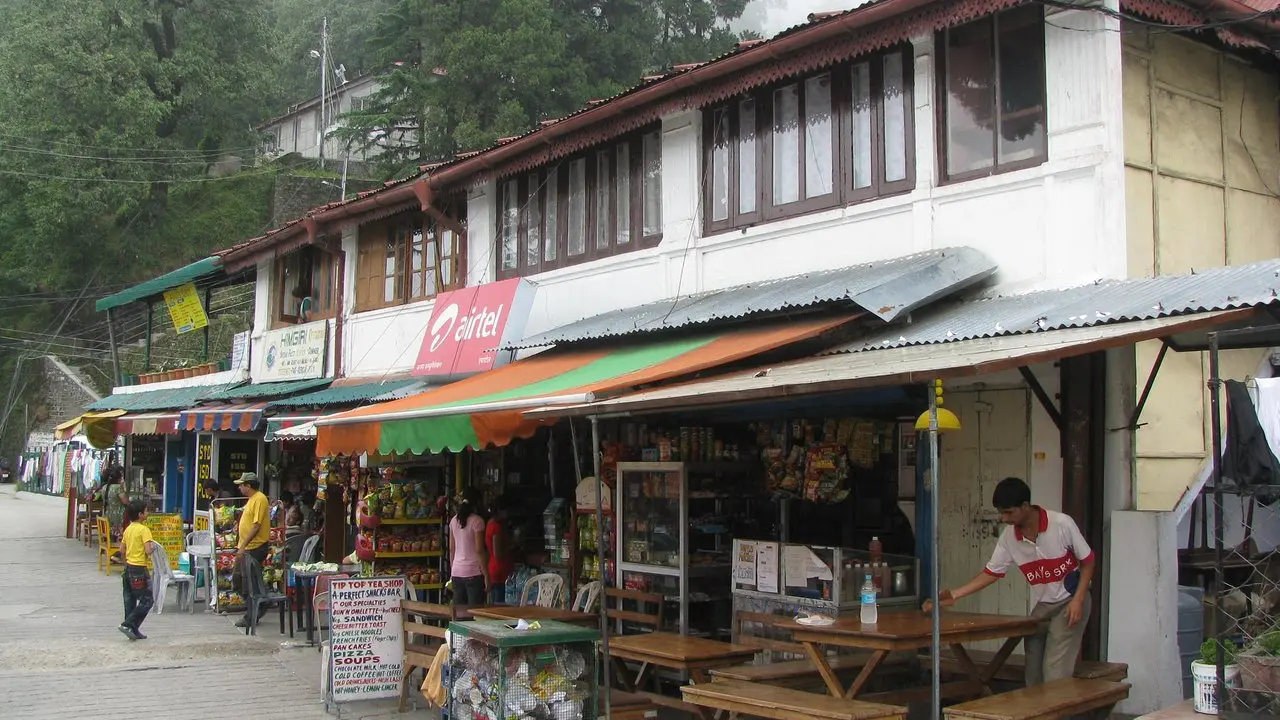
Ram Bharose is not a restaurant name — it is the actual name of the man who runs this stall, and he has been at the same spot near the Library Chowk taxi stand for decades. His aloo chaat starts at ₹40 for a small plate and ₹60 for a full one. The potatoes are boiled, not fried, then tossed in cumin, chaat masala, and a tamarind chutney he makes fresh each morning in a battered aluminium pot.
The curd he adds is cold and thick. On a warm Mussoorie afternoon when the sun hits the valley and the hills go golden, this is the thing to eat. He also does papdi chaat for ₹60 when he has the supplies.
The Morning Bread Pakora Cart
This unnamed cart appears at Library Chowk every morning between 8 AM and 11 AM, then disappears. The vendor fries bread pakoras in a wide iron kadhai over a gas burner. Each piece is stuffed with mashed potato seasoned with coriander and dried mango powder, then dipped in a thick besan batter and fried until the outside crackles.
Two pieces cost ₹30. Three cost ₹50. He hands them to you wrapped in a torn piece of newspawith a smear of green coriander chutney on the side.
The oil is fresh in the morning. Come before 10 AM for the best batch.
The Rajma Chawal Lunch Cart
This is the one most visitors miss entirely because it only operates during lunch hours. A man with a large pressure cooker and a rice vessel sets up near the bus stand side of Library Chowk from roughly noon to 2:30 PM. He serves Uttarakhand-style rajma: smaller, darker kidney beans cooked in a thinner, more aromatic gravy than the Punjabi version.
A full plate with rice costs ₹80 to ₹120 depending on portion size. He sells out most days by 2 PM. Food is plain, filling, and exactly what the hill town tastes like when no one is performing for tourists. Bring your own water; he does not sell drinks.
The Bhutta Roaster by the Ropeway
The corn vendor near the ropeway gate runs a charcoal grill that sends a thin thread of smoke across the road all evening. Corn on the cob costs ₹30 to ₹50 depending on size. He rubs each cob with half a lemon dipped in rock salt and red chilli powder. In monsoon season, when the clouds sit low over the Doon Valley and the temperature drops to 15 degrees, standing here with a hot bhutta is one of the more uncomplicated pleasures Mussoorie offers.
What to Eat and When: Timing Your Visit
This stall economy near Library Chowk runs in two distinct shifts. The morning shift (8 AM to noon) is bread pakoras, chai, and the occasional poha or upma vendor. The evening shift (5 PM to 9 PM) is when momos, bhutta, Maggi, and chaat all operate simultaneously and the footpath gets genuinely crowded.
Lunch is the overlooked window. Between noon and 2:30 PM, the rajma chawal cart and a few thali vendors serve the working population of this part of Mall Road. These are the cheapest, most filling meals available anywhere near Library Chowk, and almost no tourist knows to look for them.
- 8–11 AM: Bread pakoras, chai, boiled eggs from the egg cart near the taxi stand
- 12–2:30 PM: Rajma chawal, aloo chaat, bal mithai from the sweet shop
- 5–9 PM: Momos, bhutta, Maggi, jhalmuri, kulfi (summer only)
- Morning chai + bread pakoras: ₹45–₹75
- Lunch rajma chawal: ₹80–₹120
- Afternoon aloo chaat: ₹40–₹60
- Evening momos (6 pcs): ₹60
- Bhutta: ₹30–₹50
- Evening chai: ₹15–₹25
Total: ₹270–₹390 for a full day of eating — well under ₹200 per sitting
Practical Notes Before You Go
Cash is essential. Not one stall near Library Chowk accepts UPI or cards reliably. Carry small notes; vendors rarely have change for ₹500 bills during the first hour of operation.
The Uttarakhand Tourism official website lists Mussoorie as one of the state’s top hill stations, but it will not tell you where the rajma chawal cart parks. That information lives only in the knowledge of people who have actually walked this stretch. For directions to Library Chowk itself, Google Maps has the pin.
Monsoon season (July–September) is when the bhutta vendors and hot Maggi stalls do their best business. The cold and damp make hot street food feel necessary rather than optional. Avoid the stalls immediately after heavy rain; the footpath drainage near the ropeway gate is poor and the area floods briefly.
One last thing: the chai near Library Chowk comes in scratched steel glasses, not paper cups. It is strong, milky, and sweet by default. If you want it less sweet, say kam cheeni before the vendor pours.
Nobody will be offended. They have heard it before.
Frequently Asked Questions