
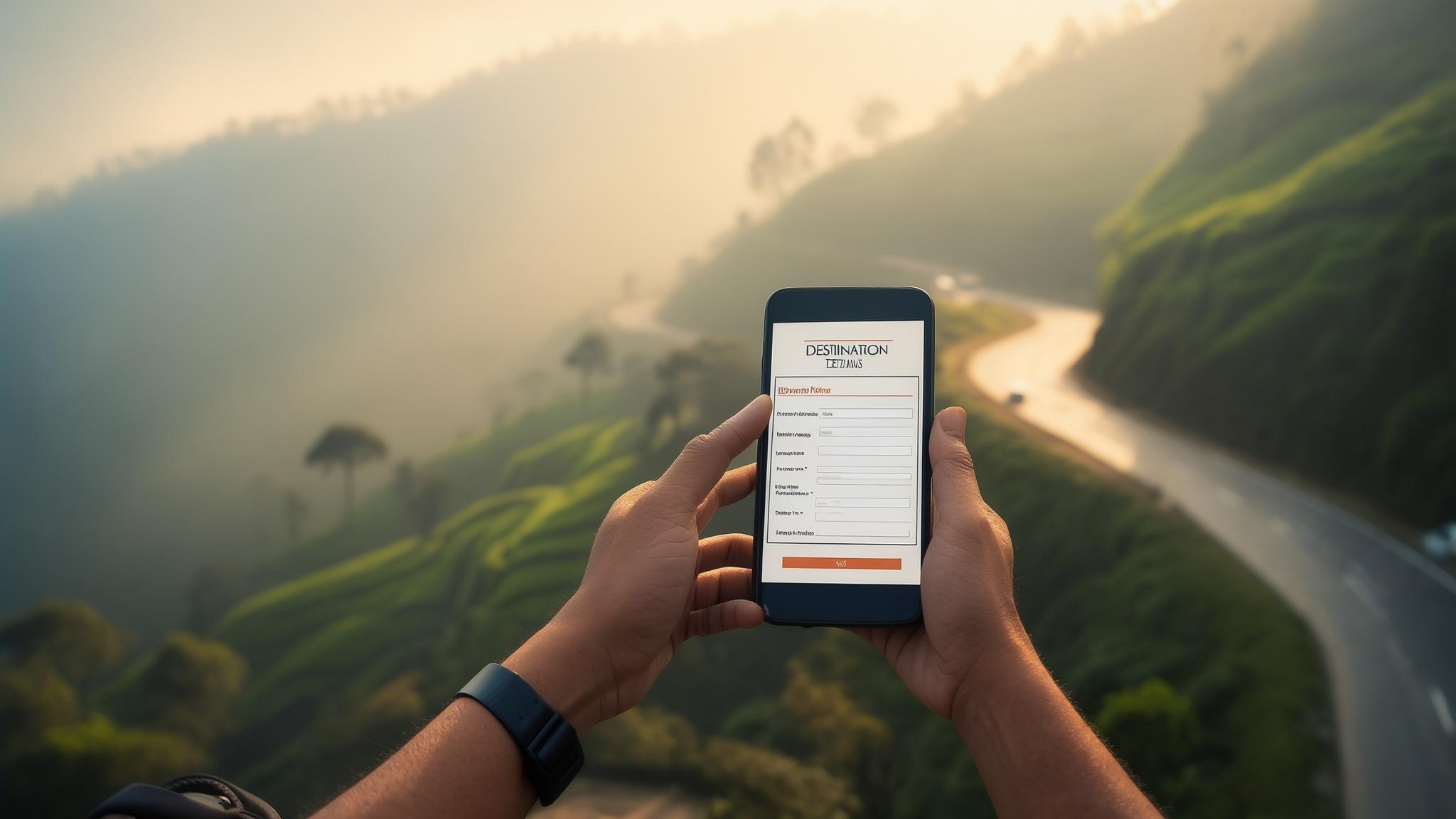
Have you ever arrived at a popular hill station after a four-hour drive, only to find the Mall Road gridlocked, hotels overbooked, and parking lots sealed off — and wondered whether anyone was actually managing any of this? That experience, repeated by hundreds of thousands of visitors every summer, is precisely what Mussoorie’s new mandatory tourist registration system is designed to prevent.
The Dehradun district administration has launched a compulsory online pre-registration framework for tourists planning to visit Mussoorie, according to Times of India. The system, which is set to take effect from August, requires visitors to register through an official portal before entering the hill town — a first-of-its-kind digital governance measure for an Indian leisure destination of this scale.
What the New Rule Actually Requires
The requirement is straightforward in concept, but it marks a significant operational shift for leisure travellers accustomed to spontaneous hill station trips. Under the new framework, every visitor must complete an online pre-registration on a portal being developed by the Dehradun district administration, according to Travel and Leisure Asia.
Hotels operating in Mussoorie bear a parallel obligation. They are required to register on the same portal and log guest details for every check-in. A QR code-based verification system is also part of the rollout, enabling authorities to track real-time visitor volumes at key entry points into the town.
The system applies specifically during peak tourist season — primarily the summer months when Delhi and NCR residents descend on the hill station in large numbers. Authorities have not yet clarified whether the rule will apply year-round or remain a seasonal measure.
Why Mussoorie Reached a Breaking Point
Mussoorie sits at approximately 2,005 metres above sea level in the Garhwal Himalayan range of Uttarakhand, roughly 35 kilometres from Dehradun. Its proximity to Delhi — a drive of approximately 290 kilometres — has made it one of the most visited domestic hill stations in India, with footfall intensifying sharply after the pandemic-era travel surge of 2021–2023.
The town’s road infrastructure — largely built for a fraction of current vehicle volumes — has struggled to cope with holiday weekend surges. Traffic jams extending several kilometres from the town’s entry points have become a recurring feature every May and June. Local hoteliers and residents have repeatedly raised concerns about the strain on water supply, waste management, and public safety infrastructure.
Authorities have described the pre-registration system as a tool for “much-needed discipline,” according to reporting by Gulf News. The underlying logic is that if administrators can see real-time data on how many tourists have registered for a given day or weekend, they can impose caps, manage vehicle entry, and pre-position emergency and sanitation services accordingly.
How the Hotel Registration Component Works
The hotel-side obligation is a distinct but linked element of the new system. Properties across Mussoorie — from large branded hotels to smaller guesthouses — will be required to create accounts on the official portal and submit guest records digitally at the time of check-in. This mirrors digital guest logging systems already used in some other regulated tourism zones in India.
The practical implication for travellers booking through third-party platforms such as MakeMyTrip or Booking.com is not yet fully defined. It remains unclear whether online travel agencies will integrate a registration prompt into the checkout flow, or whether the responsibility will rest entirely with the individual traveller to complete registration independently after booking.
Broader Context: India’s Shift Toward Managed Tourism
Mussoorie’s pre-registration rule arrives at a moment when India is rethinking how it manages high-volume domestic tourism destinations. The country’s hill stations, coastal towns, and heritage sites have all reported infrastructure stress as post-pandemic travel demand has outpaced the pace of civic investment.
The timing of the Mussoorie announcement also coincides with other digital travel infrastructure developments across India. Delhi’s Indira Gandhi International Airport is set to introduce an E-Arrival Card system from October 1, allowing passengers flying in from the UAE to complete arrival formalities online before boarding, according to Gulf News reporting on the initiative. Separately, India’s civil aviation ministry is reportedly considering financial penalties for major airports that fail to meet service benchmarks — including long queues at check-in, baggage delays, and substandard terminal hygiene — a signal that digital accountability is extending across the travel ecosystem.
Whether Mussoorie’s pre-registration model, if successful, becomes a template for other congested hill stations such as Shimla, Manali, or Nainital remains to be seen. Uttarakhand tourism officials have not publicly committed to a statewide rollout, but the infrastructure being built for Mussoorie could theoretically be adapted for other destinations in the region.
For travellers already accustomed to the logistical friction of a Mussoorie summer trip — the traffic, the crowds on Mall Road, the hunt for parking — the added step of online registration may ultimately prove a modest inconvenience relative to the potential benefit of a better-managed arrival experience. The measure’s success, however, will depend entirely on how consistently it is enforced and how user-friendly the registration portal turns out to be when it finally launches.