
Sarah stared at the ultrasound screen, her hands trembling as the technician pointed to a tiny form barely visible through the grainy image. At 22 weeks pregnant, she’d rushed to the emergency room after severe cramping. The words “preterm labor” hung in the air like a death sentence. Her baby wasn’t ready for the world outside her womb, but her body was giving up the fight.
In that sterile hospital room, Sarah found herself wishing for something that sounded like science fiction: a machine that could finish what her body couldn’t. She didn’t know that somewhere across the country, researchers were already testing exactly that technology on lamb fetuses, watching them grow and develop in clear, fluid-filled chambers.
Welcome to the complicated world of artificial wombs, where cutting-edge medical hope collides head-on with our deepest fears about what it means to be human.
The Medical Marvel Taking Shape in Labs Worldwide
Artificial wombs aren’t fantasy anymore. They’re real, they’re being tested, and they could revolutionize how we save the tiniest patients in neonatal intensive care units.
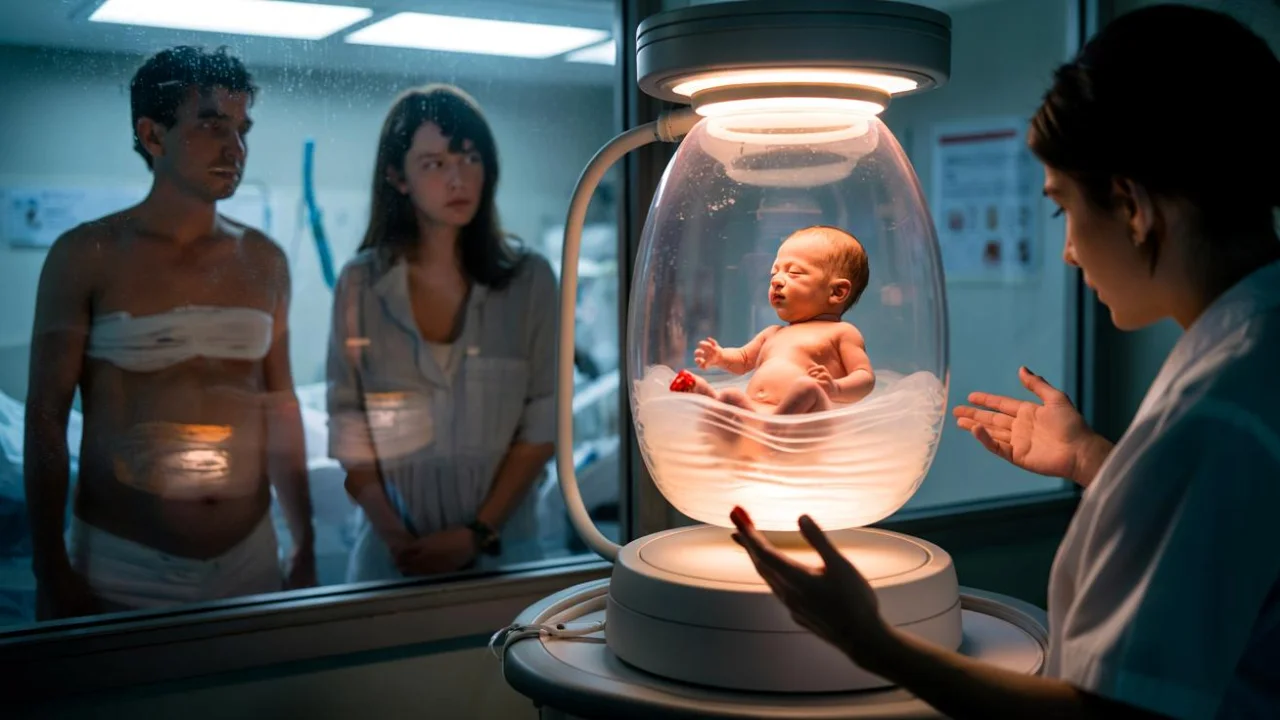
These devices, technically called ectogenesis systems, work by mimicking the environment inside a mother’s womb. A premature baby floats in warm, oxygenated fluid while nutrients flow through an artificial umbilical cord. The system maintains perfect temperature, monitors vital signs, and provides the gentle, liquid environment that developing organs desperately need.
Dr. Alan Flake, who leads artificial womb research at Children’s Hospital of Philadelphia, explains it simply: “We’re trying to bridge the gap between the mother’s womb and the outside world for babies born too early.”
The technology has already shown remarkable success in animal trials. Lamb fetuses have survived and thrived in artificial wombs for weeks, developing normally and showing no signs of brain damage or organ problems that typically plague extremely premature births.
What Artificial Wombs Could Mean for Families
The numbers tell a stark story about why this technology matters so urgently:
- 15 million babies are born prematurely worldwide each year
- Premature birth complications are the leading cause of death in children under 5
- Babies born before 28 weeks have survival rates as low as 50%
- Survivors often face lifelong disabilities including cerebral palsy, blindness, and intellectual delays
- NICU care costs average $76,000 per baby, with extreme cases reaching over $500,000
For parents like Sarah, artificial wombs represent hope where none existed before. Instead of watching their tiny baby struggle with breathing tubes and harsh medical interventions, they could see natural development continue in an environment designed to nurture rather than merely sustain life.
| Current NICU Care | Artificial Womb Care |
|---|---|
| Mechanical ventilation | Liquid breathing environment |
| IV nutrition | Umbilical cord feeding |
| Temperature regulation challenges | Consistent womb-like warmth |
| High infection risk | Sterile closed system |
| Developmental complications | Natural growth environment |
Dr. Emily Partridge, a fetal surgeon working on artificial womb development, notes: “This isn’t about replacing mothers. It’s about giving the most vulnerable babies a fighting chance when traditional methods aren’t enough.”
The Dark Side of Medical Progress
But not everyone sees artificial wombs as pure medical advancement. Critics worry about a slippery slope toward what bioethicist Dr. Marcy Darnovsky calls “gestational outsourcing.”
The concerns run deep and touch on fundamental questions about motherhood, equality, and human dignity:
- Could wealthy women opt out of pregnancy entirely, treating childbirth like an inconvenient medical procedure?
- Would employers pressure female employees to use artificial wombs to avoid maternity leave?
- Could this technology widen the gap between rich and poor, creating “premium babies” for those who can afford artificial gestation?
- What happens to the mother-child bond that forms during pregnancy?
Religious groups have raised additional concerns about interfering with natural processes they view as sacred. Some feminist scholars worry that artificial wombs could be used to further marginalize women by removing their unique biological role in reproduction.
“We’re not just talking about saving premature babies anymore,” says bioethics professor Dr. Robert Klitzman. “We’re potentially talking about fundamentally changing how humans reproduce.”
When Medical Need Meets Social Fear
The technology is advancing faster than society’s ability to process its implications. Research teams expect to begin human trials within the next five years, but regulatory frameworks and ethical guidelines lag far behind.
Countries are already taking different approaches. Japan has invested heavily in artificial womb research, viewing it as a solution to declining birth rates. European nations are proceeding more cautiously, with extensive ethics reviews. The United States finds itself caught between medical innovation and cultural resistance.
Parents facing premature labor don’t have the luxury of philosophical debate. They want to know: Will this save my baby? Everything else feels secondary when your child’s life hangs in the balance.
Maria Rodriguez, whose son was born at 26 weeks, puts it bluntly: “People can debate the ethics all they want. I would have put my baby in a machine, a test tube, anything that gave him a better chance.”
The question isn’t whether artificial wombs will become reality – they already are. The question is whether society will embrace them as life-saving medical tools or reject them as threats to human nature itself.
As Sarah learned months later, her son survived his premature birth through traditional NICU care. But she still wonders about that other path, the one that might have spared him weeks of medical interventions and given him an easier start to life.
The future of birth is being written in research labs today, one artificial heartbeat at a time.
FAQs
How do artificial wombs actually work?
They use a fluid-filled chamber that mimics the mother’s womb, providing oxygen and nutrients through an artificial umbilical cord while maintaining perfect temperature and pressure.
When will artificial wombs be available for human babies?
Researchers expect to begin human clinical trials within 5-10 years, but widespread availability could take 15-20 years depending on safety testing and regulatory approval.
Would artificial wombs replace natural pregnancy entirely?
No, current research focuses only on helping extremely premature babies survive, not replacing normal pregnancy from conception to birth.
How much would artificial womb treatment cost?
Costs are unknown but likely to be expensive initially, though potentially less than extended NICU stays that can reach hundreds of thousands of dollars.
Are there risks to babies in artificial wombs?
Animal studies show promising results, but long-term effects on human development, brain function, and bonding remain unknown until human trials begin.
Could artificial wombs be used for the entire pregnancy?
While theoretically possible in the distant future, current technology and research focus only on supporting premature babies, not full-term artificial gestation.