
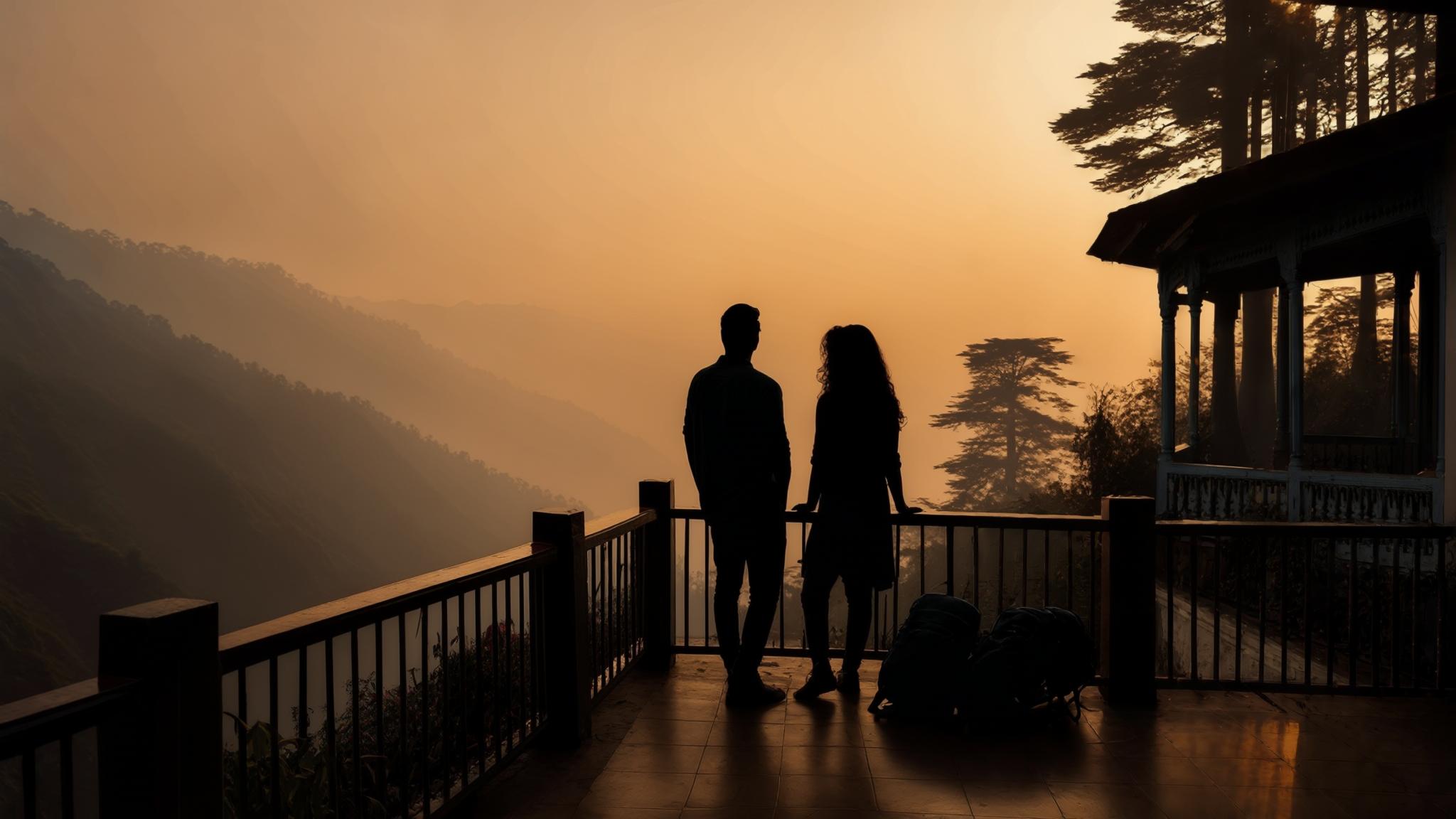
How often do you pay full price for half an experience? Thousands of visitors arrive in Mussoorie every April, walk the length of Mall Road, buy a magnet, and leave convinced they have seen the hill station. They have not. The Mussoorie that locals navigate — quieter ridgelines, off-route dhabas, and viewpoints that require a twenty-minute walk — sits just behind the tourist infrastructure, largely invisible to first-timers who did not know to look.
This is not a philosophical complaint. It is a practical one. According to the Uttarakhand Tourism Development Board, Mussoorie receives approximately 35 lakh visitors annually, with a significant concentration between April and June. The infrastructure — cable cars, horse rides, photo booths — is designed for volume, not depth. Understanding what is worth your money and what is not changes the trip entirely.
What April Actually Looks Like in Mussoorie
April in Mussoorie sits in a narrow meteorological window that experienced travellers consider the most comfortable of the year. Daytime temperatures hover between 15°C and 22°C at the main ridge, dropping to 8°C–12°C at night. The snow that draws winter visitors has largely cleared from lower elevations, and the monsoon-driven greenery of July has not yet arrived — but the rhododendrons along the Camel’s Back Road are typically in full bloom through the first three weeks of the month.
The Doon Valley below becomes visible on clear mornings from multiple vantage points along the ridge, a view that closes almost entirely once monsoon haze settles in June. Lal Tibba, the highest point in Mussoorie at approximately 2,275 metres above sea level, offers Himalayan sightlines toward Bandarpunch, Kedarnath, and Badrinath ranges on clear April mornings — typically before 9 a.m., before valley haze rises.
The Real Budget Breakdown: Where ₹4,500 Goes
The ₹4,500 figure is achievable but not automatic. It requires specific choices at each stage of the trip. The largest variable is accommodation. Guesthouses in the Kulri Bazaar area and along Picture Palace Road — away from the Mall Road premium zone — list at ₹1,200–₹1,800 per night for a double room in early April, according to listings tracked on MakeMyTrip and Booking.com as of early April 2026. The same room categories on Mall Road itself run ₹2,800–₹4,500 per night.
Food costs are the most controllable variable on the trip. The cluster of dhabas near Landour Bazaar — roughly 2 kilometres east of Mussoorie’s main commercial strip — serve thali meals at ₹120–₹180. The same thali in a Mall Road restaurant costs ₹350–₹550. Entry fees across Mussoorie’s main attractions — Gun Hill cable car (₹150 return per person), Kempty Falls (₹30 entry), and Lal Tibba telescope fee (₹30) — total under ₹300 for the primary sites.
The Stops That Actually Justify the Trip
Kempty Falls, located approximately 15 kilometres from Mussoorie on the Chakrata Road, remains the most visited natural attraction in the region — and one of the most mismanaged. The falls drop roughly 40 feet into a pool area that becomes severely crowded from late morning onward during April weekends. Arriving before 8:30 a.m. means a functionally different experience: fewer vendors, accessible viewpoints, and the sound of water over rock rather than crowd noise.
Lal Tibba is the stop that most visitors to Mussoorie’s Mall Road corridor skip because reaching it requires a 3-kilometre walk from Landour Bazaar or a short shared taxi ride to the Depot Hill area. The British-era telescope installed at the observation point — now operated by the local cantonment administration — allows close-range views of Himalayan peaks on clear April mornings for ₹30. No cable car. No queue. The walk back through the Landour cantonment lanes, past Char Dukan (four shops at a ridge junction that have operated since the colonial period), is considered by returning visitors to be among the most atmospheric thirty minutes available in the hill station.
The Camel’s Back Road — a 3-kilometre paved loop road that runs parallel to Mall Road along the northern ridge — is technically open to pedestrians and cyclists. In April, the road’s western section passes through rhododendron cover that locals consider peak for approximately the first three weeks of the month. The road is named for a rock formation visible from its midpoint. Horse rides are available along portions of the route at ₹200–₹350 for a half-circuit, though walking the full loop takes under an hour and costs nothing.
What Most Budgets Get Wrong in April
The single most common financial error among first-time Mussoorie visitors in April is under-budgeting for the Dehradun–Mussoorie leg of the journey. Shared taxis from Dehradun’s Library Chowk bus stand to Mussoorie operate frequently and cost ₹60–₹80 per seat. Private cabs from Dehradun railway station, however, are quoted at ₹600–₹900 for the same route during April, and surge pricing on app-based platforms on peak weekends has been reported above ₹1,200. According to data aggregated by RedBus, the Dehradun–Mussoorie Uttarakhand Roadways bus service (Route 59) runs multiple times daily at ₹45 per seat — the lowest-cost option available and one that few visitors from outside the region appear aware of.
One category that consistently surprises budget-conscious visitors is the cost of wool and handicraft shopping on Mall Road. Pashmina-labelled shawls in the ₹300–₹600 range sold by street vendors are not Pashmina by any regulated definition — the Geographical Indication tag for genuine Kashmiri Pashmina is traceable and accompanied by documentation. Visitors seeking authentic Uttarakhand woolens — including Garhwali-woven wool blankets and cotton-wool blend shawls from local cooperatives — are directed by local residents to the Khadi Gramodyog outlet near Library Chowk, where pricing and sourcing are standardised.
The broader implication of the April timing is straightforward: the hill station’s most appealing qualities — the morning visibility, the temperate climate, the accessible trails — are available for free or at minimal cost. The infrastructure that charges most is peripheral to the experience that most visitors later describe as memorable. The ₹4,500 budget is not a constraint. For this particular destination, in this particular month, it is close to optimal.