
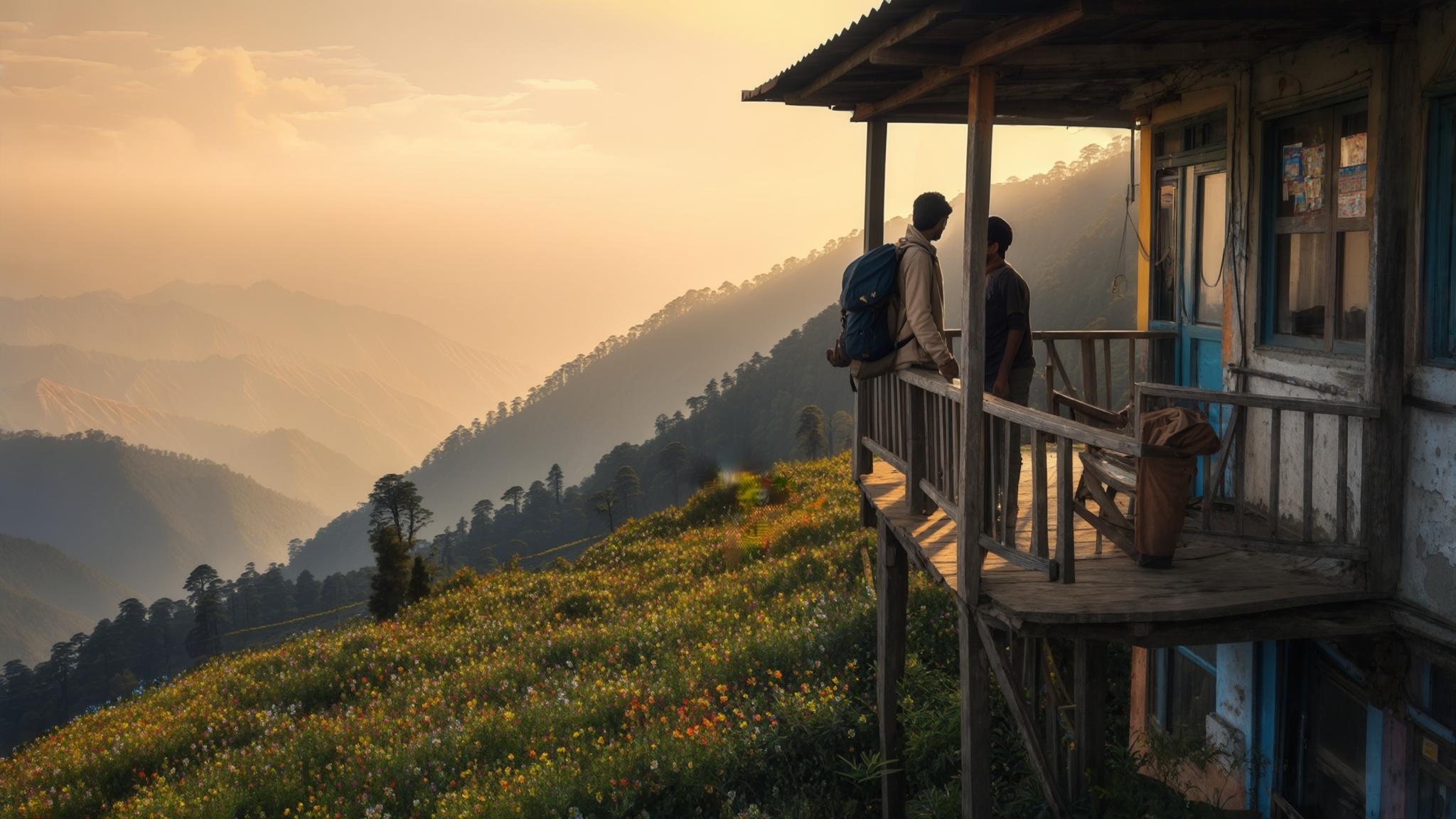
Riya Sharma stepped off the Dehradun–Mussoorie shared cab at Library Chowk on a Tuesday morning in early April, her backpack holding three days’ worth of clothes and a budget she had fixed at ₹5,000. By the time she checked out on Thursday, she had spent ₹4,340 — covered a waterfall, two heritage walks, a sunrise viewpoint, and eaten at six different local dhabas. Her experience is not unusual. According to travel communities on platforms like TripAdvisor India, Mussoorie consistently ranks among the most cost-manageable weekend hill destinations from Delhi NCR, particularly in the pre-peak window of late March through mid-April.
What changes year to year is pricing and crowd behaviour. In April 2026, Mussoorie sees moderate footfall before the summer school-holiday surge that typically begins in mid-May. That window matters for budget travellers significantly.
Getting to Mussoorie: Costs and Options from Delhi and Dehradun
The most direct route from Delhi to Mussoorie runs approximately 290 kilometres via NH 334 through Meerut and Roorkee. Most budget travellers take an overnight bus from Delhi’s Kashmere Gate ISBT to Dehradun, which costs between ₹350 and ₹600 depending on operator and seat class, then a shared cab or Vikram tempo from Dehradun’s Clock Tower to Mussoorie Library Chowk for an additional ₹60–₹80 per person.
The Dehradun–Mussoorie shared cab route covers roughly 35 kilometres and takes between 45 minutes and 75 minutes depending on traffic near Rajpur Road. Tourists arriving by private car should note that Mussoorie municipality restricts vehicle entry into the Mall Road pedestrian zone during peak hours, requiring parking at designated lots near Library Chowk or Picture Palace, which charge approximately ₹50–₹100 for two hours as of early 2026.
Where to Stay: Budget Options That Don’t Compromise on Location
Mussoorie’s accommodation strip runs roughly from Library Chowk in the west to Kulri Bazar in the east, with the majority of budget guesthouses concentrated around Gandhi Chowk and the lanes above Picture Palace. In April 2026, double rooms in this belt are available between ₹800 and ₹1,400 per night, according to current listings on Booking.com. Hostels with dormitory beds — a newer addition to Mussoorie’s accommodation scene — charge between ₹400 and ₹600 per bed.
The advantage of staying near Kulri Bazar is walkability. The Mall Road, Camel’s Back Road, and the ropeway to Gun Hill are all within a 10–15 minute walk. Staying further downhill near Barlowganj or Jhula Ghar reduces room costs by another ₹200–₹400 per night but adds cab fare or a steep uphill walk every morning.
What to See in Three Days: A Realistic Sequence
Three days is enough time to cover Mussoorie’s primary attractions without rushing — provided the itinerary is planned around travel time between points. The town’s topography means that distances which look short on a map can involve 20–30 minutes of uphill walking.
Day one works best anchored to the Mall Road and Camel’s Back Road, both of which are free to access. The 3-kilometre Camel’s Back Road loop, named for a rocky outcrop that resembles a camel’s silhouette, offers clear Himalayan views in the morning before cloud cover rolls in from the valley — typically by 10 or 11 AM in April. Gun Hill, accessible via a ropeway from the Mall Road, charges approximately ₹150 per person for the cable car ride as of early 2026 and provides panoramic views toward Bandarpunch and Swargarohini peaks on clear days.
- Day 1: Mall Road walk, Camel’s Back Road at sunrise, Gun Hill ropeway, Kulri Bazar dinner
- Day 2: Kempty Falls (18 km from Mall Road, taxi approximately ₹300–₹400 return shared), Landour Bazar afternoon, Sister’s Bazaar
- Day 3: Lal Tibba viewpoint (highest point in Mussoorie at 2,275 metres), Company Garden, depart by early afternoon
The Landour Detour: Why It’s Worth an Afternoon
Landour, technically a cantonment area and administratively separate from Mussoorie, sits roughly 2 kilometres uphill from the Mall Road and is accessible on foot via a steady climb past Char Dukan. The bazar — a narrow lane of old stone shops selling local produce, Maggi, and wood-smoked chai — became significantly more widely known after author Ruskin Bond, who has lived in Landour for decades, began appearing in travel features about the area.
Char Dukan itself, a cluster of four small eateries near the top of the Landour climb, is one of the few dining spots in the greater Mussoorie area where the view competes seriously with the food. A plate of Maggi with chai at any of the four stalls costs between ₹80 and ₹130. The walk from Mall Road to Char Dukan takes approximately 35–45 minutes at a moderate pace.
Food Costs and Where Locals Actually Eat
Mussoorie’s dining options spread across a wide price range, but the gap between tourist-facing restaurants on the Mall Road and local dhabas in the lanes behind Kulri Bazar is significant. A full meal — rice, dal, sabzi, and roti — at a dhaba behind Picture Palace runs approximately ₹120–₹180 per person. The same meal at a sit-down restaurant on the Mall Road with a view and printed menus costs ₹350–₹600.
For breakfast, the bakeries near Kulri Bazar and the small stalls near Library Bus Stand sell fresh bread, omelettes, and chai for under ₹80. Momos — a staple snack across Uttarakhand hill towns — are available at most street stalls for ₹60–₹100 for a plate of six. According to food listings on Zomato, Mussoorie has approximately 140 listed food outlets in the central area, with a significant concentration near Gandhi Chowk and Kulri Bazar.
What Changes in May: Why April Timing Matters
Mussoorie’s tourist calendar compresses sharply in May. School summer holidays across Uttar Pradesh, Delhi, and Haryana push visitor numbers dramatically higher from mid-May onward, with Uttarakhand Tourism reporting that Mussoorie receives a significant share of its annual tourist footfall between May 15 and June 30. Guesthouse rates in the central area climb 40–70% during that period, and Mall Road becomes congested enough that local Vikram tempos slow to a crawl during evening hours.
The monsoon arrives in Mussoorie typically by late June or early July, bringing landslide risk on the Dehradun–Mussoorie road and reduced visibility from the viewpoints. The post-monsoon window of September and October offers clear skies and reduced crowds but cooler temperatures averaging 10–15 degrees Celsius at night.
For travellers whose primary goal is value and calm, early April sits in an optimal position — post-Holi crowd surge, pre-summer rush, and with the added advantage of rhododendron blooms visible on the hillsides above Landour through mid-April. According to the Uttarakhand Tourism Development Board, spring is formally listed as one of two recommended travel windows for Mussoorie, alongside October–November.
.pvv-faq-section details summary::-webkit-details-marker{display:none}.pvv-faq-section details summary::marker{display:none;content:””}.pvv-faq-section details[open] summary .pvv-faq-arrow{transform:rotate(90deg)}