
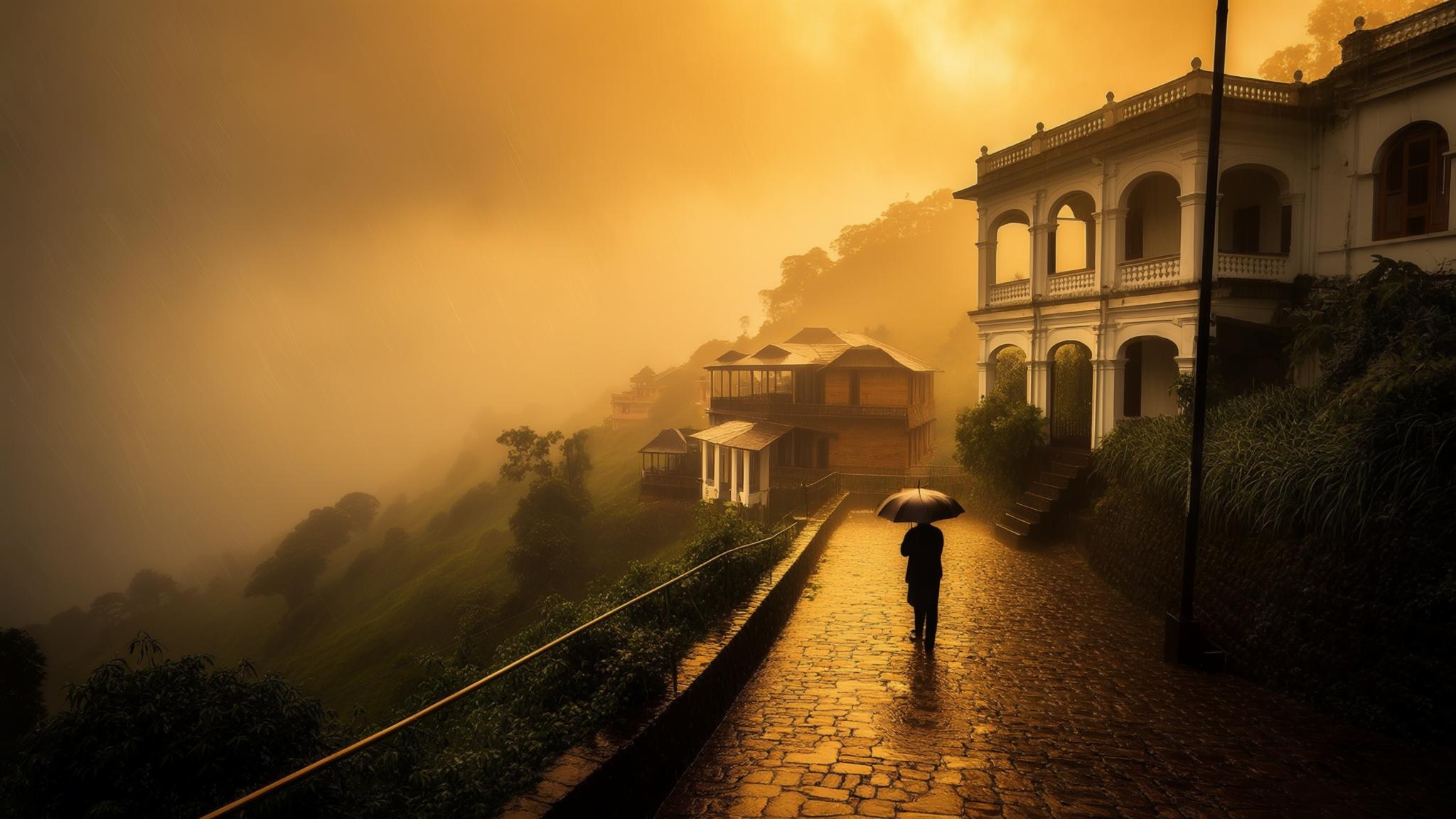
Over 2 million tourists visit Mussoorie every year according to Uttarakhand Tourism data, and somewhere between 40 to 50 percent of them arrive in May and June. Those two months are also when hotel rates triple, Mall Road becomes a slow-moving crowd of strangers, and the famous views from Lal Tibba are hazy with summer dust. The “Queen of Hills” reputation was built on a different Mussoorie — one most visitors never actually experience.
This article is not about secret spots or off-the-map trails. It is about a straightforward timing mistake that costs Indian travelers thousands of rupees and hours of frustration every single year. Once you understand why peak season Mussoorie underdelivers, the better alternatives become obvious.
The Belief That Fills Mussoorie in Summer
The logic behind a May-June Mussoorie trip is straightforward and not entirely wrong. School holidays align perfectly, temperatures in the plains are brutal at 40°C-plus, and Mussoorie at roughly 2,005 metres above sea level promises a cool escape. Travel agents have reinforced this pattern for decades, and family WhatsApp groups pass it on like received wisdom.
The town itself does not discourage this. Hotels run early-bird summer deals that still charge far more than off-season rates. Tour packages bundled from Delhi or Lucknow almost always target May–June. The perception is self-reinforcing: everyone goes in summer, so summer must be the right time.
- Average temperature in Mussoorie during May: 15°C–25°C — genuinely pleasant
- Drive time from Dehradun to Mussoorie in peak season: 2.5 to 4 hours for a 35 km stretch
- Drive time in October: 45 to 60 minutes on the same road
- Hotel occupancy in May–June: regularly above 90 percent on weekends
The temperature argument is real. But when a 35 km drive takes four hours because of tourist traffic, when Gun Hill has a queue stretching 200 metres, and when every restaurant on Mall Road has a 45-minute wait — the pleasant temperature stops being the dominant factor in your experience.
The Crack in the Summer Story
Talk to any Mussoorie local — a shopkeeper on Kulri Bazaar, a guesthouse owner near Landour, or a guide at Camel’s Back Road — and the first thing they say about summer visitors is that they leave disappointed. Not because the town fails, but because the version of Mussoorie they expected does not exist in May and June.
The Himalayan panorama from Lal Tibba — the highest point in Mussoorie at 2,275 metres — is the single most-photographed reason people visit. During May and June, atmospheric haze from the hot plains reduces visibility dramatically. The crisp, snow-capped views that appear in every Mussoorie travel photograph? Those are October, November, and late-February shots.
Beyond visibility, the ecology of the region changes too. The forests around Cloud’s End and Jabarkhet are dusty and dry by late May. The waterfall at Kempty Falls, one of the most visited attractions near Mussoorie, runs at a fraction of its monsoon-season volume during summer. Visitors see a trickle where they expected a cascade.
What the Data and the Seasons Actually Show
Mussoorie’s climate has four distinct phases, and only two of them deliver what the town is actually capable of offering. Understanding each one prevents the most common planning mistake.
Monsoon gets a mixed review from experienced Mussoorie travelers. The hills turn dramatically green, Kempty Falls runs full and thundering, and the town has a moody, cinematic quality that photographers love. But landslide risk on the Dehradun–Mussoorie highway is real in July and August, and some roads around Dhanaulti and Kanatal (popular day trips from Mussoorie) can close without notice. Travel insurance and flexible bookings are non-negotiable in this window.
The Real Window: October–November and March–April
October and November are, by every measurable factor, the best months to visit Mussoorie. The monsoon has cleared the air, the forests are still green, and the first snow has appeared on distant Himalayan peaks. Visibility from Lal Tibba on a clear October morning can extend to peaks over 200 km away, including Swargarohini and Bandarpunch in the Garhwal range.
March and April offer a different but equally compelling version of Mussoorie. Rhododendrons bloom across the hillsides around Landour and the Jabarkhet Nature Reserve, temperatures are mild — roughly 10°C to 20°C — and the roads are empty enough that you can actually stop at a viewpoint without being jostled. This is the window that Landour’s literary and artistic community — the neighbourhood that Ruskin Bond has called home for decades — looks most like itself.
For couples, March–April is worth serious consideration. The famous walk along Camel’s Back Road at sunrise, the quiet cafes in Landour Bazaar, the sunset from Cloud’s End — these experiences require space and stillness that summer simply cannot provide. A 2-night itinerary in this window costs roughly ₹7,000–₹12,000 for two people including accommodation, meals, and local transport, compared to ₹18,000–₹25,000 for the same quality in June.
How to Plan a Mussoorie Trip Around This Reality
The practical adjustments are not complicated, but they require booking differently than most travelers are used to. Off-peak Mussoorie does not require advance reservations 3 months out — in October or March, a week’s notice is usually enough for good mid-range options in Landour or near Library Chowk.
Getting to Mussoorie is straightforward from most of North India. Dehradun’s Jolly Grant Airport connects to Delhi, Mumbai, and Bangalore, with the Mussoorie road beginning near Dehradun city. The train journey from Delhi to Dehradun on the Shatabdi Express takes approximately 5.5 hours and costs ₹1,200–₹1,800 in chair car or executive class. From Dehradun’s ISBT, shared taxis to Mussoorie run regularly at ₹120–₹150 per person.
The bottom line is arithmetic that most travelers have simply never done. Visiting in October instead of May saves a family of four roughly ₹15,000–₹25,000 over three nights — and delivers the views, the quiet, and the weather that Mussoorie’s reputation was actually built on. According to Uttarakhand Tourism, the state has been actively promoting shoulder-season travel to reduce overcrowding at key hill stations, a signal that the infrastructure itself cannot sustain peak-season volumes indefinitely. The travelers who have figured this out are keeping quiet about it. Now you know.
.pvv-faq-section details summary::-webkit-details-marker{display:none}.pvv-faq-section details summary::marker{display:none;content:””}.pvv-faq-section details[open] summary .pvv-faq-arrow{transform:rotate(90deg)}