
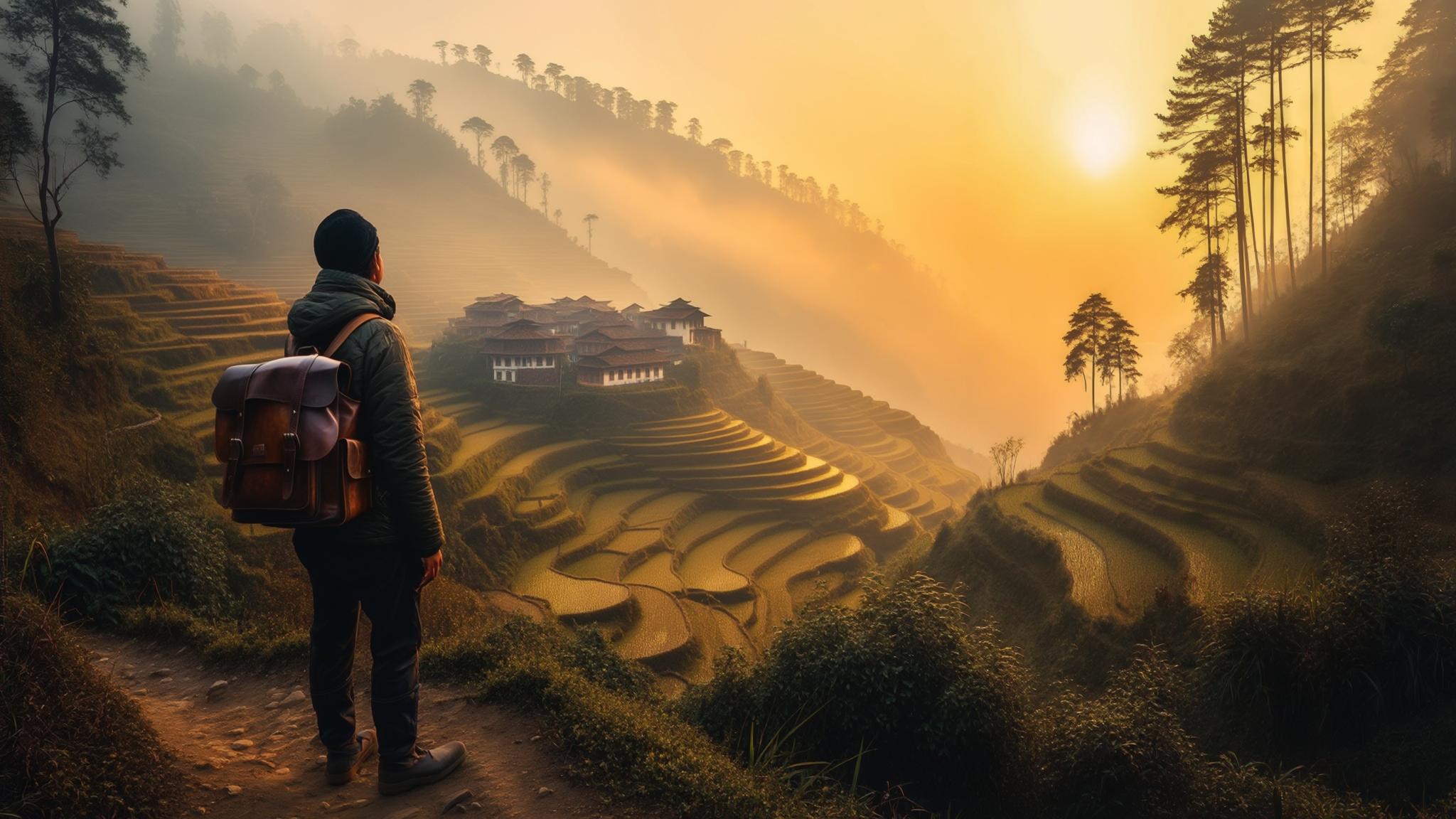
Here is an uncomfortable truth about Mussoorie that no travel influencer will post: the version of Mussoorie that most Indian tourists experience — Mall Road bumper-to-bumper, Kempty Falls so crowded you cannot see the water, Gun Hill via the same ropeway queue since 1998 — is not really Mussoorie at all. It is a theme park built over one of the oldest and most atmospheric hill stations in the country.
The actual Mussoorie sits just off the main drag, on roads that Google Maps marks as “narrow” and guesthouses that have no Instagram presence whatsoever. It sits in the morning fog at Lal Tibba before any other tourist wakes up, in the 7 PM quiet of Landour Bazaar, and in the cold smell of deodar forests along the Camel’s Back Road at dusk. This article is about that Mussoorie — and how to reach it from Delhi in under seven hours.
The Setup: Why Everyone Ends Up at the Same Three Places
Mussoorie became a tourist destination under British colonial administration in the 1820s, developed primarily as a summer escape for officers stationed in the plains. The infrastructure — the Mall Road promenade, the Picture Palace, the Library Bazaar — was designed for leisurely strolling, not mass tourism. But over the past two decades, weekend visitor numbers have swelled dramatically, particularly from Delhi-NCR, and the original character of the town has been compressed into a smaller and smaller strip.
Most first-time visitors follow a default itinerary that travel agents and online listicles have calcified over years: arrive Friday evening, Mall Road on Saturday morning, Kempty Falls Saturday afternoon, Gun Hill ropeway Sunday morning, leave by noon. This itinerary is not wrong, exactly. Kempty Falls is genuinely beautiful when the monsoon feeds it between July and September. The ropeway view at Gun Hill on a clear day is worth the ₹250 ticket. But the itinerary treats Mussoorie like a checklist, not a place.
The Reveal: Landour Is the Mussoorie That Mussoorie Used to Be
Approximately 2 km east of Mussoorie’s Landour Bazaar, the road climbs to a cantonment area called Landour — technically a separate entity, governed by the Landour Cantonment Board, and quieter than anything you will find on the main tourist circuit. This is where Ruskin Bond, arguably India’s most beloved English-language author, has lived for most of his adult life. It is also where you will find Char Dukan, a small cluster of four old colonial-era shops at Landour’s highest point (roughly 2,270 metres), serving hot Maggi, omelettes, and tea with views across the Doon Valley.
The landmark Char Dukan area — which translates simply as “four shops” — has existed in this form for decades. On weekday mornings, you might share a wooden bench with a retired army officer and a couple of Mussoorie locals. The food is simple: Maggi noodles at approximately ₹60–80, anda bhurji at ₹70, chai at ₹20. The view, on a clear day, covers the Doon Valley floor and the distant Shivalik range. No entry fee. No queue. No parking problem because you walk here.
Beyond Char Dukan, the Landour loop walk takes roughly 90 minutes at a relaxed pace. It passes the old Kellogg Church (built 1903), the Sisters Bazaar, and several stone colonial bungalows that have not changed structurally since the 1930s. There are no souvenir stalls. There are, occasionally, langurs watching you from the oak trees.
The Evidence: Specific Places, Costs, and How to Get There
A realistic Mussoorie budget for two adults over three days — not backpacker-bare, not luxury — looks approximately like this. Accommodation in Landour or the Library area: ₹1,800–3,500 per night for a double room with mountain view at a decent guesthouse. Total meals: ₹600–900 per day for two people eating at local dhabas, bakeries, and the Landour canteen. Transport from Delhi by Volvo AC bus (Dehradun ISBT, then shared cab): approximately ₹900–1,200 per person return. Private car from Delhi: approximately ₹4,500–6,000 one way.
Here are the specific places that most visitors miss, with enough logistical detail to actually get to them:
- Lal Tibba Viewpoint — The highest point accessible in central Mussoorie at approximately 2,275 metres. From Library Chowk, it is a 5 km drive or a steep but doable 45-minute walk via the Depot Hill route. On clear winter mornings (November–February), you can see Bandarpunch, Kedarnath, and Chaukhamba peaks. Entry to the observation deck: ₹30. Arrive before 8 AM for clean air and no crowds.
- Camel’s Back Road — A 3 km walking path that contours around the western edge of the ridge, named for a rock formation visible from below. No vehicles allowed. Best walked at 6 AM or after 5 PM. The road connects Library Chowk to the Rink Mall area and takes about 45 minutes at a leisurely pace.
- Benog Wildlife Sanctuary — Located 11 km west of Mall Road, this 342-hectare sanctuary is home to leopard, barking deer, and the rare hill partridge. Entry fee is approximately ₹150 for Indian adults. The Forest Department maintains a basic guesthouse at ₹600–800 per night. Hire a local guide for ₹300–400 — birding here in the early morning (March–May) is genuinely exceptional.
- Dhanaulti — 24 km from Mussoorie on the Chamba road, often treated as a day excursion but worth an overnight stay. The Eco Park here (entry ₹100) has open meadows ringed by deodar forest. In winter, it receives heavier snowfall than Mussoorie town, making it a better bet for snow-seekers.
- Cloud’s End — The western tip of Mussoorie’s main ridge, roughly 7 km from Library Chowk. A heritage property sits here but the road and forest trail leading to it are public. At the actual end point, the ridge drops sharply into the Aglar River valley. This is one of the few spots in the hill station where you genuinely feel the exposure of the Himalayan foothills.
Season by Season: When to Come and What to Expect
No single season is objectively “best” for Mussoorie — the right time depends entirely on what you want from the trip. The answer changes dramatically depending on whether you want mountain views, rain-soaked drama, snow, or empty roads.
April — the current month as of this writing — is arguably the single most underrated time to visit Mussoorie. Temperatures sit between 10°C and 18°C. The rhododendrons along the Landour loop and Benog trail are in full bloom, painting the hillside in deep red. Hotel rates have not yet hit the May–June peak, meaning you can book a room with a valley view for ₹1,800–2,500 per night that would cost ₹4,000–6,000 in May. According to Uttarakhand Tourism, April visitor numbers are roughly 35–40% lower than the June peak.
Getting There and Getting Around Without a Car
Many travelers assume Mussoorie requires a private car. It does not. The logistics without a private vehicle are straightforward and significantly cheaper, though they require slightly more planning.
One practical note about accommodation location: book in the Library Chowk area (western Mussoorie) or in Landour rather than the Picture Palace end if you want quieter mornings and easier access to the Camel’s Back Road and Benog sanctuary. The eastern end near Picture Palace is more commercial and louder on weekends. The distance between the two ends of Mall Road is about 2.5 km — walkable, but the terrain is uneven and tiring with luggage.
The Mussoorie most travelers experience is real, but it is a narrow slice of a place that has been absorbing travellers, writers, and hill-country romantics for two centuries. The other Mussoorie — the fog-wrapped cantonment paths of Landour, the empty meadows at Dhanaulti, the 6 AM silence at Lal Tibba with the Himalayan wall lit orange — is available to anyone willing to leave Mall Road behind. It costs the same money, sometimes less. It just requires a slightly different map.
.pvv-faq-section details summary::-webkit-details-marker{display:none}.pvv-faq-section details summary::marker{display:none;content:””}.pvv-faq-section details[open] summary .pvv-faq-arrow{transform:rotate(90deg)}