
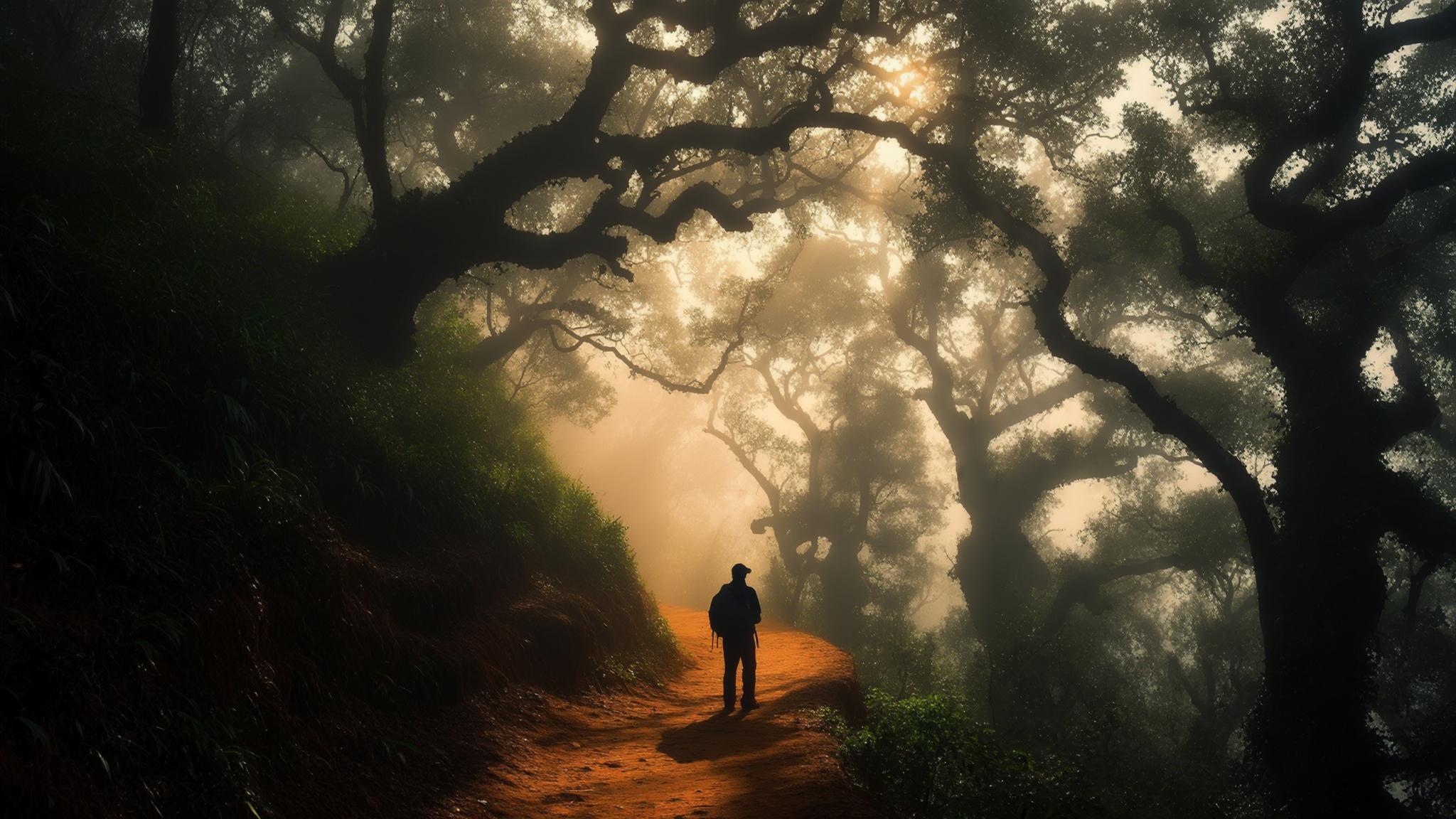
Have you ever stood on a famous viewpoint, surrounded by honking cars and selfie sticks, and wondered whether you came to the right place? If that thought has crossed your mind on the Mall Road stretch in Mussoorie, you are not alone — and you are not wrong to feel it. The Queen of Hills has been hiding something from casual visitors for decades, and it takes only a small detour to discover what that is.
Mussoorie sits at roughly 2,005 metres above sea level in the Garhwal Himalayan foothills, about 35 kilometres from Dehradun. It was established as a hill station by the British in 1823 and has been one of India’s most visited mountain destinations ever since. Approximately 3 to 4 million tourists visit annually, according to Uttarakhand Tourism estimates — most of whom spend the majority of their time within a one-kilometre stretch of the same road.
Why the Standard Mussoorie Trip Feels Disappointing
The honest answer is that the standard Mussoorie itinerary was designed for a different era. When British officers first popularised the route from Dehradun to Landour and down to the Mall, the place had clean air, empty paths, and a carrying capacity of a few thousand people. That infrastructure has not scaled proportionally with the tourism numbers.
Today, the Dehradun–Mussoorie road (NH-707A) regularly jams for two to four hours on peak weekends between April and June. Parking fees near Library Chowk can run ₹100–₹200 per hour, and hotel rates on Mall Road during peak season (May–June) routinely touch ₹4,000–₹12,000 per night for mid-range properties. Visitors often spend more time in traffic and queues than in any actual natural setting.
None of this means Mussoorie is overrated. It means that the version most people visit — the packaged, pre-routed, peak-season version — is not the full picture. The fix is simpler than it sounds.
The Seasons Nobody Talks About
Ask any Mussoorie local when the best time to visit is, and they will almost certainly say either September–November or February–March. These windows are the town’s best-kept scheduling secret, and the data backs them up.
Post-monsoon Mussoorie (mid-September to November) is arguably the most visually dramatic version of the destination. The rain clears the haze, Doon Valley spreads out sharp and green below, and the Himalayan peaks — including distant views of Bandarpunch and Swargarohini — become visible on clear mornings. Hotel rates drop by 30–50% compared to peak summer months. A decent mid-range hotel room that costs ₹5,500 in May can be had for ₹2,500–₹3,000 in October.
February and March bring a different kind of reward: rhododendrons in bloom along the higher trails, near-empty roads, and the distinct possibility of light snowfall — particularly around Lal Tibba and the Landour cantonment area. Temperatures in February average between 2°C at night and 12°C during the day, so carry layers, but the payoff in solitude and scenery is significant.
The Areas That Reward Slower Travel
Mussoorie is not just Mall Road. The hill station extends across a ridge roughly 15 kilometres long, and several of its most rewarding corners require nothing more than willingness to walk or hire a local cab for a short distance.
Landour Cantonment sits about 3 kilometres east of Mall Road and climbs another 300 metres in elevation. It is quieter, cooler, and lined with colonial-era architecture including the famous Char Dukan — a cluster of four small shops at Landour’s Chowk that has been serving tea, omelettes, and Maggi since the 1970s. Ruskin Bond, India’s most beloved hill-station writer, has lived in Landour for decades and has written about Penguin-published memoirs capturing the texture of the neighbourhood in precise, unhurried detail.
Benog Wildlife Sanctuary lies about 11 kilometres west of Library Chowk and covers roughly 239 hectares of oak and rhododendron forest. Entry costs ₹150 for Indian adults. The sanctuary is home to Himalayan barking deer, leopards (rarely sighted), and over 100 bird species — making it one of the more accessible birdwatching spots in the Garhwal foothills. The trail to Benog Hill viewpoint is a moderate 4-kilometre walk from the gate and rewards with a clear sight line toward Bandarpunch on cloudless days.
George Everest’s House sits about 6 kilometres from Library Chowk on the Hathipaon road, at an elevation of approximately 2,290 metres. Sir George Everest — the British surveyor-general after whom the world’s highest peak is named — used this property as his home and laboratory in the 1830s. The ruins are partially restored, the walk there from Park Estate is genuinely beautiful, and the valley views from the ridge are among the best in Mussoorie. Entry is free.
- Camel’s Back Road — A 3-kilometre morning walk looping around the ridge with Doon Valley views; best before 8 AM
- Lal Tibba — The highest point in Mussoorie at 2,275 metres; the observation tower has coin-operated telescopes trained on Kedarnath and Badrinath ranges
- Jharipani Falls — A 7-kilometre downhill trek from Mussoorie town, less visited than Kempty and more rewarding for the effort
- Mussoorie Lake — A Dehradun Development Authority project about 6 kilometres from town; paddle boating available at ₹80–₹120 per person
The Honest Budget Breakdown
One of the most searched questions about Mussoorie is whether it is expensive. The honest answer is: it depends entirely on when you go and whether you stay on Mall Road. A family of four can have a genuinely memorable two-night trip for ₹8,000–₹12,000 total, or spend ₹30,000 on the same duration if they book peak-season hotels on the main strip and eat exclusively at tourist-facing restaurants.
The Uttarakhand Roadways bus from Dehradun’s ISBT to Mussoorie Library costs approximately ₹65 per person one-way and runs regularly from early morning. This single decision — bus versus private cab — saves a family of four roughly ₹1,200–₹1,800 on the journey alone. According to Uttarakhand Tourism, the Library bus stand is the primary public transport terminus and places you directly on Mall Road within walking distance of most hotels.
What Nobody Tells First-Time Visitors About Logistics
The Cable Car (Ropeway) near the Picture Palace end of Mall Road is one of Mussoorie’s most popular attractions, running to Gun Hill — the second highest point in Mussoorie at 2,122 metres. It costs ₹150 per person for a round trip and offers good Himalayan panoramas on clear days. The queue during peak season can stretch 45 minutes to an hour. Arriving before 9 AM or after 4:30 PM cuts that wait significantly.
One practical note on vehicles: Mussoorie municipality runs an Odd-Even vehicle entry scheme during peak season (typically May 1 to June 30), restricting certain private vehicles on specific days. Check the current restrictions on the Mussoorie official portal before driving up. Violations draw on-the-spot fines and can mean a long wait at the barrier near Kingcraig.
The version of Mussoorie that lives up to its reputation — the one with crisp mountain air, quiet forest walks, valley-spanning sunrises, and a chai that actually tastes like it should — has not gone anywhere. It is simply not on the route most people default to. Change the timing, move slightly off-centre from the main drag, and Mussoorie delivers exactly what the Queen of Hills promised in the first place.
.pvv-faq-section details summary::-webkit-details-marker{display:none}.pvv-faq-section details summary::marker{display:none;content:””}.pvv-faq-section details[open] summary .pvv-faq-arrow{transform:rotate(90deg)}