
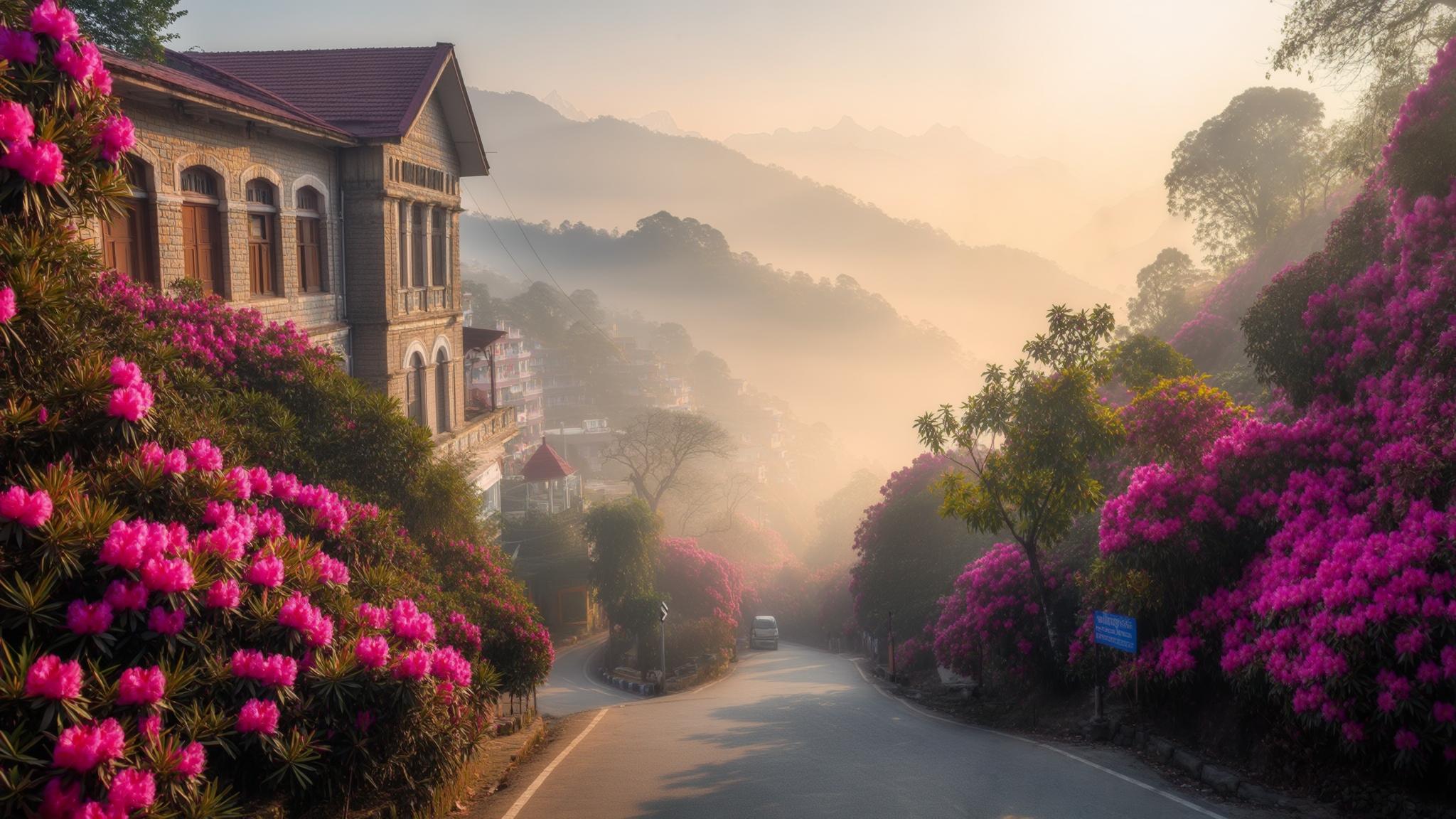
As of the first week of April 2026, Mussoorie’s hospitality sector is tracking an accelerating shift from lean-season pricing to peak-summer demand — and the transition is happening faster than in previous years. Local hotel operators and travel aggregators confirm that room availability at mid-range properties along The Mall Road and Landour is tightening, with rates expected to cross the ₹3,500-per-night threshold for standard double rooms by the second week of May.
For travelers with flexible schedules, the roughly three-week window between April 8 and April 30 represents the last viable stretch to visit Mussoorie at near-winter pricing while still enjoying clear skies, manageable crowds, and open road access from Dehradun.
Why April Pricing Drops — and When It Stops
April occupies a structural gap in Mussoorie’s tourism calendar. The town sees a lull after the March school-holiday rush and before the May–June wave driven by plains travelers escaping 40°C-plus temperatures in Delhi, Lucknow, and Jaipur. According to Mussoorie Hotel and Restaurant Association representatives, average occupancy in the first three weeks of April hovers between 42 and 55 percent — well below the 85–95 percent saturation seen from mid-May through June.
That occupancy gap translates directly into room pricing. Properties that list standard doubles at ₹3,800–₹5,500 in peak season are currently advertising the same rooms at ₹1,200–₹2,400, according to listings reviewed across two major travel booking platforms. The discount is most pronounced for walk-in bookings and stays of two nights or more on weekdays.
What Travelers Can Actually See and Do in April
April in Mussoorie offers specific experiential advantages over peak season that go beyond cost. The rhododendron bloom along Lal Tibba — the highest point in Mussoorie at 2,275 metres above sea level — peaks between late March and mid-April, drawing photographers and trekkers who specifically time their visits for this window. Visibility from Lal Tibba toward Gangotri and Yamunotri ranges is typically at its clearest before the summer haze settles in.
Camel’s Back Road, the 3-kilometre heritage walking track that skirts the western ridge of Mussoorie, is navigable in April without the shoulder-to-shoulder congestion reported throughout May and June. Sunrise walks along this stretch, starting from the Rink Mall end at approximately 5:45 a.m., are a routine activity among Landour-based residents and early-arriving tourists.
- Lal Tibba Viewpoint: Entry via telescope charge of approximately ₹30–₹50 per person; clearest Himalayan views reported in April mornings before 9 a.m.
- Camel’s Back Road: Free to walk; horse rentals available at ₹200–₹400 for a full circuit.
- Kempty Falls: Located 15 km from Mussoorie on the Chakrata Road; entry fee approximately ₹50 per person; significantly less crowded in April than in peak months.
- Landour Bazaar: The market area above Mussoorie, known for its Char Dukan café cluster, operates without peak-season price inflation on most food items in April.
- Cloud’s End: A forested estate at the western tip of Mussoorie, approximately 6 km from The Mall; accessible by road or on foot via a marked trail.
Getting There: Costs and Route Options in April 2026
Mussoorie is accessible by road from Dehradun railway station in approximately 35–55 minutes under normal traffic conditions — a journey of roughly 35 kilometres via the main Rajpur Road route. In May and June, the same route can take two to three hours due to vehicle queuing near Kolukhet and Library Chowk. April travelers report no significant traffic delays on weekday mornings, according to accounts shared on travel community forums.
Taxi services from Dehradun’s ISBT or railway station to Mussoorie Library Bus Stand are currently priced at ₹700–₹900 for a shared cab and ₹1,400–₹1,800 for a private cab, based on current operator listings. Uttarakhand Transport Corporation (UTC) buses connect Dehradun ISBT to Mussoorie at a fare of approximately ₹80–₹100 per person and run at roughly 30-minute intervals during morning hours.
A Realistic Three-Day Budget Breakdown for April 2026
For a solo traveler or couple traveling from Delhi, a three-day Mussoorie trip in the current April window is achievable within ₹5,000–₹8,000 per person, all-inclusive, according to itineraries shared by recent visitors on travel communities. The primary cost variables are accommodation tier and food preferences — Landour’s Char Dukan cafés charge ₹250–₹400 per meal, while dhabas near Kulri Bazaar serve full meals at ₹80–₹150.
What Happens After April 30: The Peak Season Mechanics
The shift from shoulder to peak season in Mussoorie is not gradual — it is, by most hospitality accounts, abrupt. The trigger is typically the onset of sustained 40°C days in Delhi and the NCR, which drives a sharp surge in weekend bookings and walk-in inquiries. Local operators told NPP Mussoorie that confirmed bookings for the May 1–10 period were already at 70–80 percent capacity as of early April, compared to roughly 30 percent at the same point in 2025.
Parking restrictions enforced by the Mussoorie Municipal Council also come into force on key approach roads during peak weekends, with private vehicles restricted below Kolukhet checkpoint and shuttle services operating from designated lots. These restrictions were first introduced in 2019 and have been applied every peak season since, according to municipal records reviewed by NPP Mussoorie.
Travelers who miss the April window and plan May or June visits are advised to book accommodation at least 3–4 weeks in advance, arrange transport from Dehradun early in the morning to avoid traffic, and budget for a minimum 40 percent premium over the prices cited in this article.