
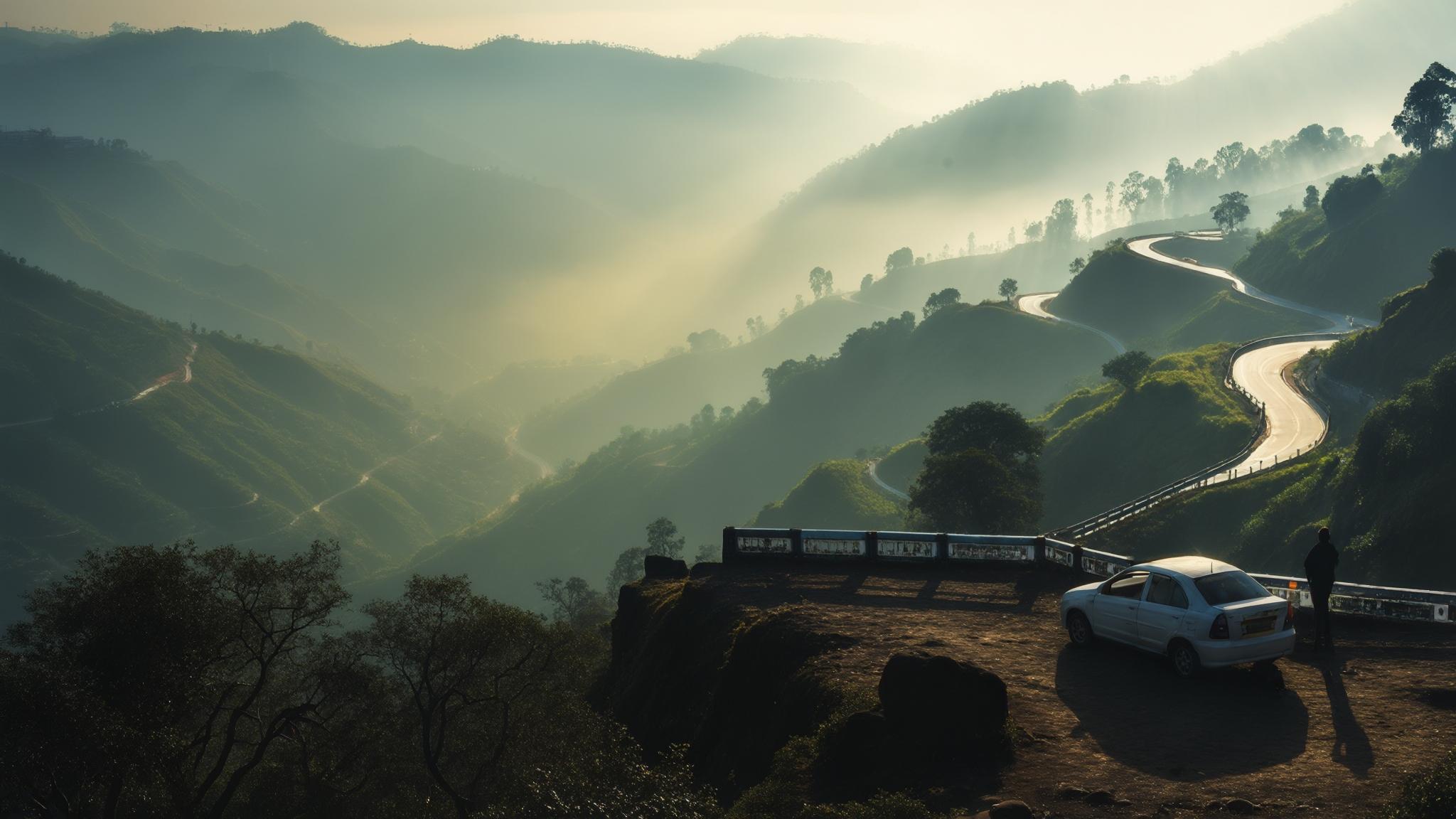
When was the last time you threw luggage in the car on a Friday evening, pointed it toward the hills, and assumed Mussoorie would simply absorb you — no booking confirmed, no plan beyond arriving? That assumption no longer holds.
Mussoorie, Uttarakhand’s most visited hill station located approximately 290 kilometres north of Delhi, has implemented a mandatory online pre-registration system for all incoming tourists. According to the Times of India, the rule is now active and requires every visitor to register through an official portal, receive a QR code, and present it at designated entry checkpoints. Visitors who arrive without this clearance will not be permitted to enter the town.
What the New Registration Rule Actually Requires
The process is digital, sequential, and must be completed before leaving home. Under the new framework, tourists log onto an official online portal, provide identification, travel dates, the number of people in their group, and their accommodation details in Mussoorie, then receive a QR code as confirmation of registration.
According to Economic Times, Mussoorie hotels are also now required to manually complete online forms at check-in for each arriving guest. This creates a two-stage documentation process — one before the journey begins, and one at the point of accommodation — representing one of the more thorough visitor-tracking frameworks adopted by any Indian hill station to date.
Why Uttarakhand Authorities Introduced This System
The registration mandate is a structured response to a visitor surge between 2022 and 2024 that overwhelmed Mussoorie’s infrastructure. The town, home to a permanent population of approximately 30,000 residents, saw holiday weekends push road traffic to a standstill on its narrow mountain approaches, with jams reportedly stretching several kilometres on the Dehradun–Mussoorie highway.
According to NDTV, authorities designed the pre-registration system to control tourist volume during peak periods, reduce traffic congestion, and generate real-time data on how many visitors are in the town at any moment. That data, administrators have indicated, will also inform how parking, emergency services, and sanitation resources are deployed.
Mussoorie is not the first Indian hill destination to impose visitor controls. Himachal Pradesh has previously capped vehicle numbers entering Rohtang Pass, and Sikkim maintains longstanding permit requirements for restricted zones. The Mussoorie model, however, applies a digital QR-entry system across the entire town rather than a single route or protected area — a broader implementation than most comparable precedents.
How to Complete Registration Before Your Trip
Registration is entirely online and must be finalized before departure. Authorities have made clear that same-day processing at entry checkpoints will not be available during peak periods. The following steps outline the process as reported by Economic Times and Curly Tales.
What Travelers and Hotels Need to Factor Into Their Plans
For individual travelers, the most significant practical change is the end of spontaneous hill visits during peak periods. Mussoorie’s traditionally busiest windows — summer months from roughly April through June, the Diwali break, and New Year weekend — are precisely when enforcement will be most stringent. Anyone who has previously relied on finding accommodation after arriving should now book both lodging and registration well in advance.
For hotels, the new rules add administrative load. According to Curly Tales, properties in Mussoorie must now manually complete online forms for each arriving guest at check-in, cross-referencing pre-arrival registration data. Hotels that fail to comply with this requirement risk regulatory action under the new framework.
Accessibility concerns remain unaddressed in official communications. Older travelers, visitors with limited smartphone access, and those from rural areas without reliable internet may face disproportionate difficulty navigating an entirely digital registration pathway. Uttarakhand authorities had not publicly detailed any offline alternative as of March 2026.
What the Mussoorie Model Could Mean for Uttarakhand Tourism Broadly
Mussoorie sits at approximately 2,005 metres above sea level in the Garhwal Himalayas, 35 kilometres from Dehradun. Its primary thoroughfare, the Mall Road, spans less than two kilometres. The structural mismatch between the town’s physical carrying capacity and the volume of visitors it draws has been a documented problem for years, but the 2022–2024 surge pushed it into acute crisis territory.
Uttarakhand authorities have indicated the registration system will be enforced most rigorously during identified peak windows — April through June and October through November. Whether the policy expands to year-round enforcement has not been confirmed as of the date of this report. Regional tourism administrators in neighboring districts — including those overseeing Nainital, Lansdowne, and Auli — are monitoring the Mussoorie rollout closely, per Economic Times reporting, as potential models for their own visitor management challenges.
For anyone with a Mussoorie trip planned in the coming months, the practical conclusion is straightforward: register through the official portal before departure, save the QR code to your phone, confirm your hotel’s compliance with the new check-in process, and book accommodations before you travel. The margin for last-minute planning has been officially removed.
Frequently Asked Questions
{“@context”:”https://schema.org”,”@type”:”FAQPage”,”mainEntity”:[{“@type”:”Question”,”name”:”Do I need to register online before visiting Mussoorie?”,”acceptedAnswer”:{“@type”:”Answer”,”text”:”Yes. Uttarakhand authorities have made pre-registration mandatory for all tourists visiting Mussoorie, particularly during peak seasons. Visitors must complete an online form, receive a QR code, and present it at entry checkpoints. Those without a valid code will be denied entry, according to the Times of India.”}},{“@type”:”Question”,”name”:”When is Mussoorie’s peak tourist season?”,”acceptedAnswer”:{“@type”:”Answer”,”text”:”Mussoorie’s peak seasons run approximately from April to June (summer holidays) and again during October–November holiday weekends, including Diwali. The pre-registration rule is enforced most strictly during these windows, per Economic Times reporting.”}},{“@type”:”Question”,”name”:”What details do I need to provide during registration?”,”acceptedAnswer”:{“@type”:”Answer”,”text”:”Tourists must submit government-issued identification details, planned travel dates, the number of people in their group, and their confirmed accommodation address in Mussoorie through the official online portal, as reported by Economic Times.”}},{“@type”:”Question”,”name”:”Are Mussoorie hotels also affected by the new rules?”,”acceptedAnswer”:{“@type”:”Answer”,”text”:”Yes. Hotels in Mussoorie are now required to manually complete online forms for each arriving guest at check-in — a secondary verification step that cross-references pre-arrival registration data, according to Curly Tales.”}},{“@type”:”Question”,”name”:”Can I still make a spontaneous trip to Mussoorie?”,”acceptedAnswer”:{“@type”:”Answer”,”text”:”Not during peak seasons. Same-day registration at entry checkpoints is unavailable during high-traffic periods, and the portal must be accessed before departure. Advance planning is now mandatory under the new framework.”}}]}