
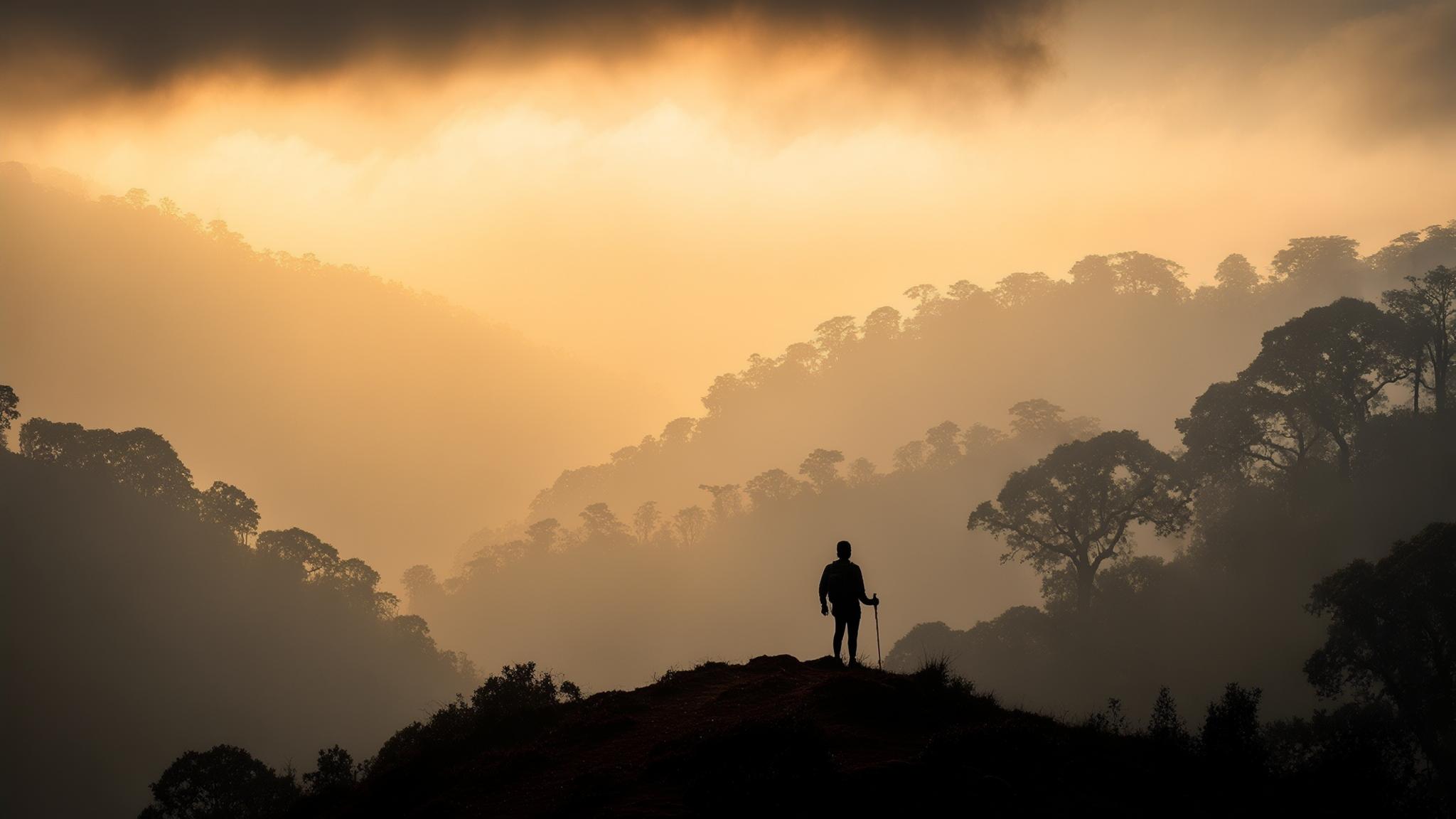
On a clear Saturday morning in late February, Arjun Mehta, a software engineer from Dehradun, arrived at Mussoorie’s Library Bus Stand, fully intending to walk the Mall Road like everyone else. A local chai vendor pointed him west instead, toward a forest road most visitors never take. Two hours later, Mehta was standing on Benog Hill at 2,290 metres, watching a Kalij pheasant move through oak trees with the Bandarpunch range behind it. He had seen fewer than a dozen other people the entire morning.
That experience — quiet, affordable, and genuinely wild — is what Benog Wildlife Sanctuary has offered for decades. The sanctuary, administered by the Uttarakhand Forest Department, covers approximately 239 hectares of mixed oak and rhododendron forest on the western edge of Mussoorie. Despite its proximity to one of India’s most visited hill stations, it remains consistently undercrowded, according to forest officials who spoke to NPP Mussoorie.
Where Benog Hill Sits and How to Reach the Trailhead
Benog Hill is the answer to a simple question: what is the highest accessible point in the Mussoorie range? The hill sits at 2,290 metres above sea level, roughly 300 metres higher than the Mall Road, and commands an unobstructed view of the Aglar River valley to the south and the high Garhwal peaks — including Swargarohini and Bandarpunch — to the northeast on clear days.
The most common approach begins at Cloud’s End, a colonial-era estate now operating as a heritage hotel, located approximately 8 kilometres from Library Chowk via the Camel’s Back Road. Visitors arriving by taxi from the Library Bus Stand typically pay between ₹200 and ₹350 for a one-way fare, according to the Mussoorie Taxi Union’s posted rates. There is no direct bus service to Cloud’s End from the main stand as of March 2026.
From Cloud’s End, a marked forest path — maintained by the Forest Department — leads uphill through dense oak and buransh (rhododendron) cover. The path is unpaved for its entire length and includes several steep sections in the final kilometre before the summit plateau. Trekking shoes are strongly recommended; the path becomes slippery after rain.
What to Expect Inside the Sanctuary: Wildlife, Birds, and Trail Conditions
Benog Wildlife Sanctuary is primarily known among birders. The Uttarakhand Biodiversity Board has recorded over 100 bird species in the sanctuary, including the White-capped Water Redstart, the Himalayan Griffon Vulture, and multiple species of laughingthrush. Birdwatching is most productive between February and May, when migratory species are passing through and resident birds are active at dawn.
Larger mammals, including barking deer and leopard, are present in the sanctuary according to Forest Department records, though leopard sightings on the main trail are rare. Visitors are advised by forest staff not to trek alone after dusk. The department closes the trail at sunset and does not permit overnight camping inside sanctuary boundaries.
Trail conditions in March 2026 are reported as good by local trekking guides, with the rhododendron bloom beginning in the lower sections of the forest. The peak bloom — when buransh flowers cover the canopy in deep red — typically runs from mid-March through early April and is considered the single best visual reason to visit during spring.
Cost Breakdown for a Day Trip From Mussoorie Town
A full day trip to Benog Hill from Mussoorie’s central Library Chowk is achievable on a budget of under ₹1,000 per person, including transport, entry, and a packed lunch. The Forest Department entry fee of ₹50 per adult covers access to the entire sanctuary trail network. There is no additional charge for photography for personal use, though commercial shoots require prior departmental approval.
There are no food stalls or chai points inside the sanctuary itself. Visitors should carry water — at minimum one litre per person for the return trek — and any food they intend to consume on the trail. The nearest restaurants to the Cloud’s End trailhead are back toward Mussoorie town along the Camel’s Back Road.
Best Season to Visit and Practical Planning Notes
The sanctuary is open year-round, but three seasons stand out for different reasons. Spring (February to April) brings the rhododendron bloom and active birdlife. Summer (May to June) offers clear sky views of the Himalayan peaks before the monsoon arrives. Post-monsoon autumn (September to November) gives the sharpest mountain visibility of the year, according to trekking operators based in Mussoorie who spoke to NPP Mussoorie.
The monsoon period — roughly July through August — sees the trail become slippery and leech-prone. The Forest Department does not close the trail during monsoon, but footfall drops sharply and the risk of falls on the steeper sections increases significantly. Winter (December to January) is manageable but cold, with temperatures on the summit sometimes dropping below 0°C overnight.
For visitors who want structured guidance, several trekking operators in Mussoorie offer half-day guided walks to Benog Hill for approximately ₹600–₹800 per person, which includes the entry fee and a local naturalist who can identify bird species along the route. Bookings can be made through guesthouses in the Library Chowk area, where most operators maintain a physical presence.
The Uttarakhand Tourism Development Board lists Benog Wildlife Sanctuary as an eco-tourism destination on its official portal, and the Forest Department has indicated — according to statements shared with local media — that trail signage improvements are planned for the 2026 tourist season, though a confirmed completion date had not been announced as of publication.
Frequently Asked Questions
{“@context”:”https://schema.org”,”@type”:”FAQPage”,”mainEntity”:[{“@type”:”Question”,”name”:”How far is Benog Wildlife Sanctuary from Mussoorie Mall Road?”,”acceptedAnswer”:{“@type”:”Answer”,”text”:”Benog Wildlife Sanctuary is approximately 10 kilometres from Mussoorie’s Library Chowk, reachable via the Camel’s Back Road to Cloud’s End. A taxi from Library Bus Stand covers the distance in roughly 30 to 40 minutes.”}},{“@type”:”Question”,”name”:”What is the entry fee for Benog Wildlife Sanctuary?”,”acceptedAnswer”:{“@type”:”Answer”,”text”:”The Uttarakhand Forest Department charges ₹50 per adult for entry into Benog Wildlife Sanctuary. There is no additional fee for personal photography. Commercial photography requires prior departmental approval.”}},{“@type”:”Question”,”name”:”What is the best time of year to visit Benog Hill?”,”acceptedAnswer”:{“@type”:”Answer”,”text”:”Spring (February to April) is widely considered the best season due to the rhododendron bloom and active birdlife. Post-monsoon autumn (September to November) offers the clearest mountain views. The Forest Department keeps the trail open year-round, but monsoon months (July–August) bring slippery conditions and leeches.”}},{“@type”:”Question”,”name”:”Can you camp overnight at Benog Wildlife Sanctuary?”,”acceptedAnswer”:{“@type”:”Answer”,”text”:”No. The Uttarakhand Forest Department prohibits overnight camping inside the sanctuary. The trail closes at sunset, and all visitors must exit before dark. Day-trekkers must enter before 3:00 PM.”}},{“@type”:”Question”,”name”:”Are guides available for the Benog Hill trek?”,”acceptedAnswer”:{“@type”:”Answer”,”text”:”Yes. Local trekking operators near Library Chowk in Mussoorie offer half-day guided walks to Benog Hill for approximately ₹600–₹800 per person, including the sanctuary entry fee and a naturalist guide.”}}]}