
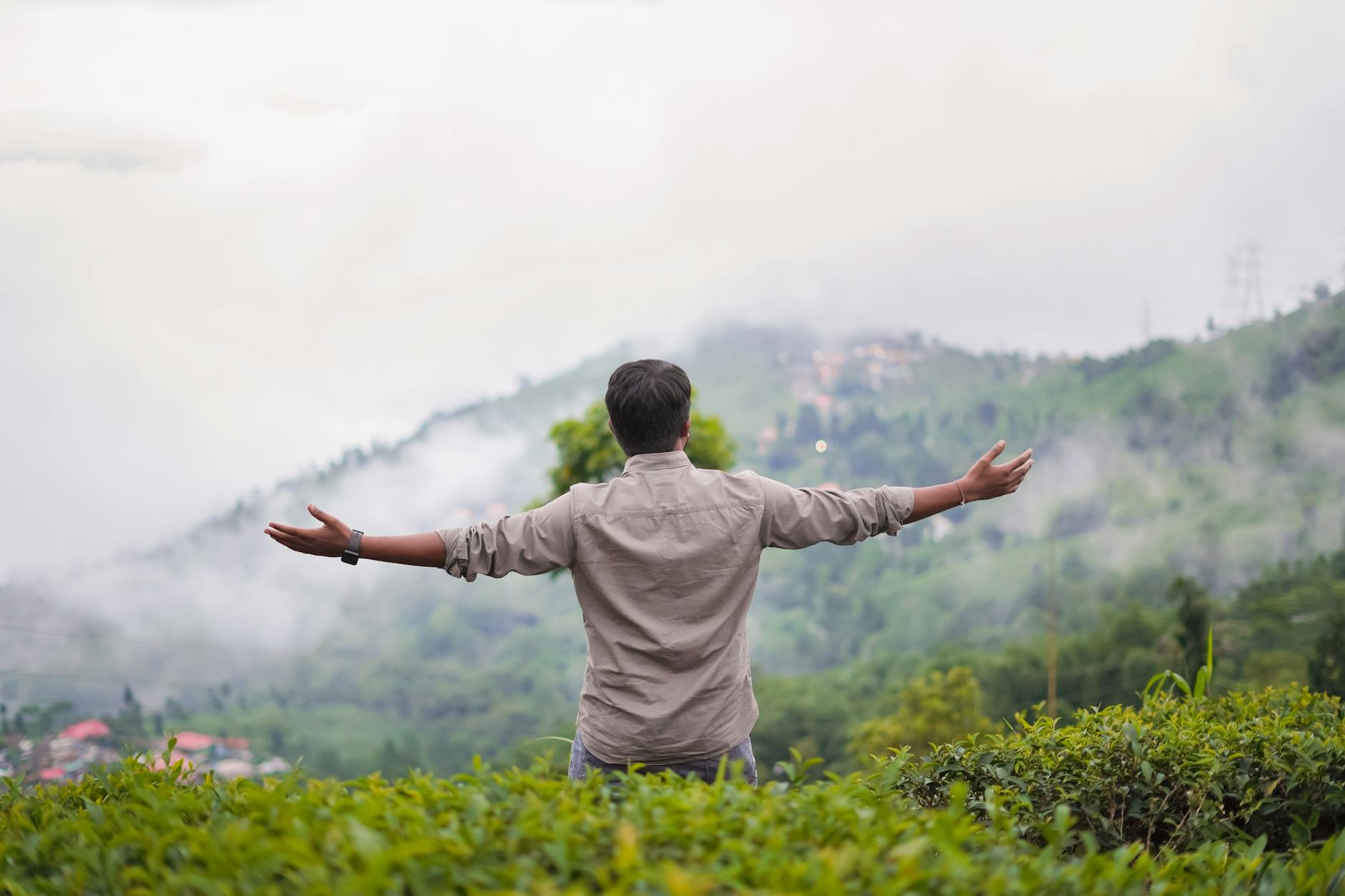
Roughly 74 lakh tourists visited Mussoorie in 2023, according to data compiled by the Uttarakhand Tourism Development Board — yet the Benog Wildlife Sanctuary, sitting less than 10 kilometres from the town’s most photographed stretch of road, recorded fewer than 18,000 registered visitors that same year. The gap is not explained by difficulty of access or prohibitive cost. It is, by most accounts, a failure of signage and itinerary habits.
Benog Hill rises to approximately 2,290 metres above sea level at its summit, where a small Tibba temple marks the end of the main trail. The sanctuary itself covers around 239 hectares of mixed oak and rhododendron forest and falls within the buffer zone of Rajaji National Park. For travellers who have already done Mall Road, Kempty Falls, and Lal Tibba, Benog represents the most substantive half-day excursion available within the Mussoorie municipal limits.
What the Trail Actually Looks Like on the Ground
The sanctuary entrance is located near Cloud End, accessible by shared taxi from Library Chowk in Mussoorie for approximately ₹30 to ₹50 per seat, or by private cab for roughly ₹300 to ₹400 one way. The forest department maintains a small ticket booth at the gate, staffed between 7 a.m. and 5 p.m. on most days.
From the entrance, the main trail climbs steadily through dense oak forest for approximately 4 to 5 kilometres before reaching the summit clearing and Tibba temple. The path is mostly earthen, with stone steps on steeper sections. Footwear with grip is advisable; the trail becomes slippery after rain.
Local guide Ramesh Nautiyal, who has led treks in the sanctuary for over a decade, told NPP Mussoorie that the most common mistake visitors make is starting after 10 a.m. “By late morning, cloud cover moves in from the valley side and the Himalayan views from the top are gone,” Nautiyal said. “People who start at 7 a.m. see Bandarpunch and sometimes Kedarnath peaks clearly. People who start at 11 a.m. often see only fog.”
Wildlife: What Has Been Recorded and What Visitors Realistically Encounter
Benog is not a zoo-format wildlife experience. Visitors who expect guaranteed sightings of large mammals will likely leave disappointed. What the sanctuary does reliably offer is bird diversity: the area is listed on eBird as a significant birding location for the Mussoorie region, with over 150 species recorded, including the cheer pheasant, Kalij pheasant, and multiple species of laughingthrush.
Barking deer and langurs are commonly seen along the lower trail sections, particularly in the early morning. Himalayan black bear sign — scratch marks on trees and overturned logs — has been documented in the upper forest zone, though direct sightings are uncommon. The forest department advises against solo trekking above the midpoint after 4 p.m.
According to eBird’s regional checklist data, the October to April window produces the highest species counts for the Benog area, with the cheer pheasant most reliably spotted between February and April when males display on open ridge sections near the summit.
Costs, Logistics, and How to Plan the Day
A full-day trip to Benog from central Mussoorie — including transport, entry, a hired guide, and food — costs between ₹800 and ₹1,400 per person depending on whether a private cab or shared transport is used. Hiring a registered local guide adds approximately ₹400 to ₹600 for a half-day engagement and is considered worthwhile for first-time visitors navigating the trail’s less-marked upper sections.
There are no food stalls inside the sanctuary. A small dhaba operates near the Cloud End gate area and typically opens by 7:30 a.m., offering tea and basic snacks. Trekkers are advised to carry at least 1.5 litres of water per person; refill points do not exist on the trail itself.
Best Season, Worst Season, and What the Monsoon Actually Does to Access
The sanctuary is formally open from October through June, with partial or full closures common between mid-July and mid-August due to landslide risk and trail degradation during peak monsoon. The forest department can issue closure notices at short notice; checking at the Mussoorie Municipal Council office or directly at the Cloud End gate on arrival is the most reliable approach.
Winter visits between December and February require particular preparation. Temperatures at the Benog summit can drop below freezing by mid-morning on clear days following overnight snowfall. The trail itself rarely accumulates snow deep enough to block passage, but sections become icy; microspike attachments are used by repeat visitors in January and February.
According to the Uttarakhand Tourism Development Board, the Mussoorie region sees its lowest tourist density in November and January — months that local guides consistently describe as the best for Benog given clear visibility, minimal crowds, and active bird populations moving through the forest as temperatures shift.
What Distinguishes Benog From Mussoorie’s Other Green Spaces
Mussoorie has no shortage of viewpoints and short walks — Camel’s Back Road, Lal Tibba, Gun Hill, and the George Everest Estate each attract substantial visitor numbers. Benog differs in one fundamental way: it is managed as a protected forest area rather than a developed tourist attraction. There are no cable cars, no paid photography stalls, and no permanent vendor rows inside the boundary.
This absence of infrastructure is both its defining characteristic and the reason it remains undervisited. Visitors accustomed to the fully facilitated experience of Kempty Falls will find Benog requires more self-sufficiency. Those who have done any moderate hiking elsewhere in India will find the trail well within their capability.
The Tibba temple at the summit is a functional religious site and receives regular visits from local residents, particularly on weekends. Visitors are expected to behave accordingly at the temple area. Shoes are typically removed before entering the small shrine, and photography of worshippers without consent is discouraged by guides operating in the area.
For travellers building a two- or three-day Mussoorie itinerary, the standard recommendation from local operators is to reserve Benog for the first full morning, departing from accommodation by 6:30 to 7 a.m., completing the return trek by noon, and then using the afternoon for Mall Road and Lal Tibba. This sequencing takes advantage of the summit’s early-morning clarity while leaving the afternoon’s inevitable crowd activity for sites that function equally well under overcast conditions.
Frequently Asked Questions
{“@context”:”https://schema.org”,”@type”:”FAQPage”,”mainEntity”:[{“@type”:”Question”,”name”:”What is the entry fee for Benog Wildlife Sanctuary in Mussoorie?”,”acceptedAnswer”:{“@type”:”Answer”,”text”:”The entry fee for Indian nationals is approximately ₹150, payable at the forest department booth at the Cloud End gate. The booth is typically staffed between 7 a.m. and 5 p.m.”}},{“@type”:”Question”,”name”:”How far is Benog Wildlife Sanctuary from Mussoorie Mall Road?”,”acceptedAnswer”:{“@type”:”Answer”,”text”:”Benog Wildlife Sanctuary is approximately 10 kilometres west of Mussoorie’s Mall Road, accessible by shared taxi from Library Chowk for ₹30–50 per seat or by private cab for approximately ₹300–400 one way.”}},{“@type”:”Question”,”name”:”Is Benog Wildlife Sanctuary open during monsoon season?”,”acceptedAnswer”:{“@type”:”Answer”,”text”:”The sanctuary is typically closed between mid-July and mid-August due to landslide risk. It formally operates October through June, with partial reopening from mid-August. The forest department can issue closures at short notice.”}},{“@type”:”Question”,”name”:”What wildlife can be seen at Benog Wildlife Sanctuary?”,”acceptedAnswer”:{“@type”:”Answer”,”text”:”Wildlife Institute of India camera trap surveys between 2021 and 2023 documented at least three resident leopards within sanctuary boundaries. Barking deer, langurs, and over 150 bird species including the cheer pheasant are regularly recorded.”}},{“@type”:”Question”,”name”:”How long does the Benog Hill trek take?”,”acceptedAnswer”:{“@type”:”Answer”,”text”:”The return trek from the entrance to Benog Hill summit (approximately 2,290 metres elevation) and back takes 3 to 4 hours at a moderate pace, covering roughly 4 to 5 kilometres each way.”}}]}