
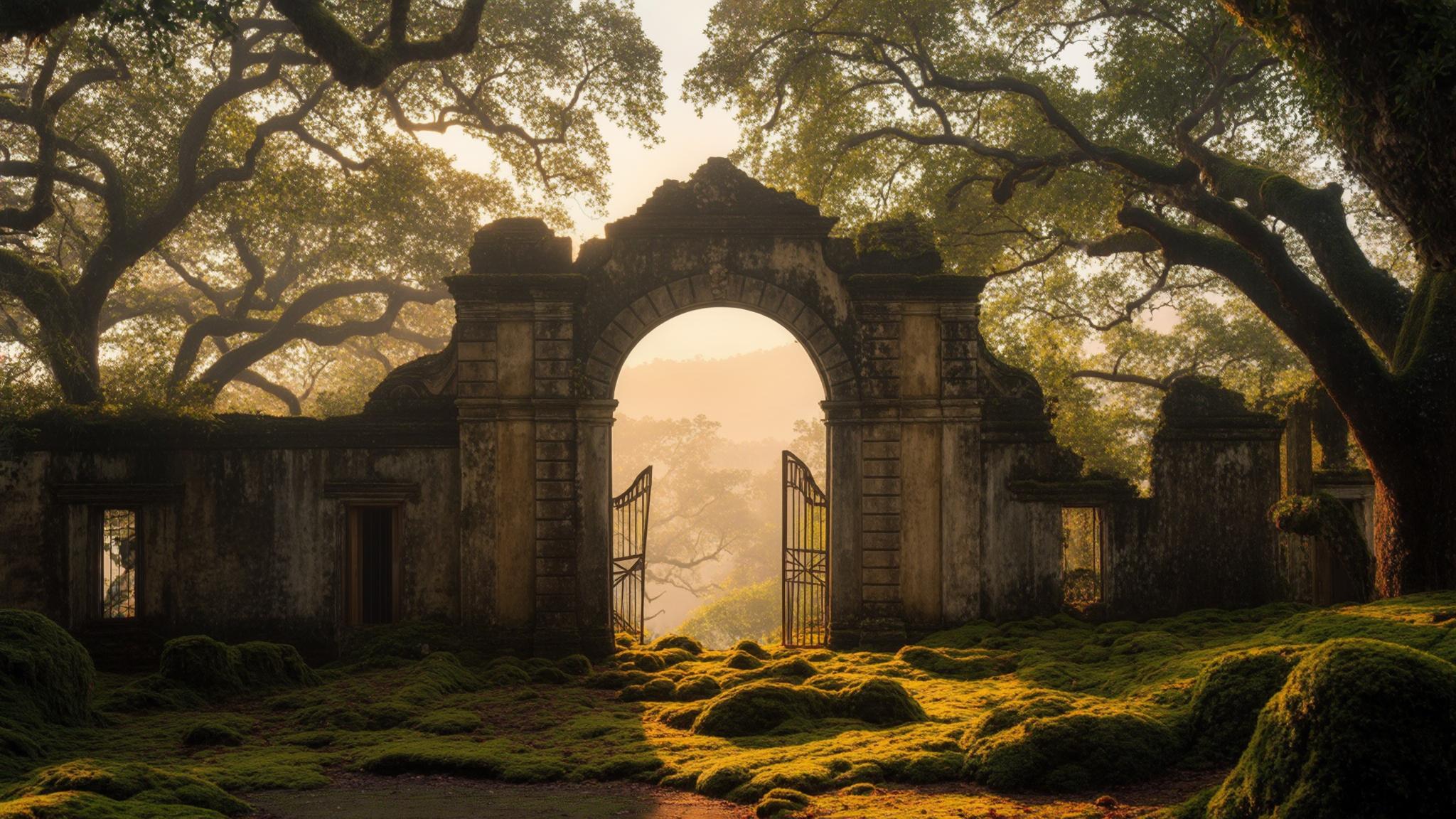
With the spring travel window for Uttarakhand now open and Mussoorie’s peak tourist season running from April through June 2026, a specific six-kilometre trail departing from the town’s Library Bus Stand is drawing renewed attention from trekkers and heritage travellers. The destination is the Park Estate, widely known as George Everest’s House — the colonial-era residence and survey laboratory of Sir George Everest, the Welsh geographer and Surveyor General of India whose triangulation work across the subcontinent ultimately led to the naming of Earth’s highest peak after him.
The estate, administered by the Archaeological Survey of India, sits at an elevation of approximately 2,000 metres on a ridge that divides views of the Doon Valley to the south and the high Himalayan ranges to the north and east. According to Uttarakhand Tourism records, the site sees considerably fewer daily visitors than Mussoorie’s major commercial attractions, making it one of the more accessible off-circuit destinations in the region for travellers arriving between March and November.
Who Was George Everest and Why Is This Estate Significant
Sir George Everest (1790–1866) served as Surveyor General of India from 1830 to 1843 and is best known for completing the Great Trigonometrical Survey of India, a decades-long project that mapped the Indian subcontinent with unprecedented precision. According to the Survey of India, Everest’s team used this ridge near Mussoorie as both a living quarters and a base for triangulation calculations that fed into the eventual measurement of Peak XV — later renamed Mount Everest in his honour in 1865, a year before his death.
The estate was constructed in the early 1830s and consists of two primary structures: a residential block and a separate laboratory building where instruments were calibrated. Both structures have undergone partial restoration by ASI, though large sections retain their original ruined character, with exposed stone walls and archways that frame the ridgeline views.
The Trek Itself — Route, Terrain, and What to Expect
The trail begins at Library Bus Stand in central Mussoorie and follows a paved road through the quieter Hathipaon area before transitioning to a dirt track for the final 2 kilometres to the estate. The total distance is approximately 6 km one way, with a return journey of the same length. Most walkers of moderate fitness complete the round trip in three to four hours, including time spent at the site.
The elevation gain from Library Chowk to the estate is roughly 150–200 metres, making it a low-difficulty trek suitable for older adults and children above the age of eight. The final approach to the estate involves a short, steeper ascent of about 10–12 minutes.
Shared cabs and auto-rickshaws from Mussoorie Library to Hathipaon village run for approximately ₹50–₹80 per person, cutting the one-way walk distance to about 3 km. Taxis hired privately for the full journey to the estate gate and back — including a wait time of 90 minutes — are quoted by local operators at approximately ₹400–₹600 depending on vehicle type and negotiation.
Best Time to Visit in 2026 and Seasonal Conditions
The trail is accessible for most of the year, but two windows stand out for visibility and trail conditions. The spring window (March to mid-June) offers clear Himalayan views, blooming rhododendrons along the upper stretch of the walk, and mild daytime temperatures ranging from 12°C to 22°C. The post-monsoon autumn window (mid-September to November) delivers the sharpest air clarity after the rains have cleared the valley haze, often yielding unobstructed sightlines to peaks including Bandarpunch and the Gangotri group.
Monsoon months — July and August — bring heavy rainfall to the Garhwal hills and are generally not recommended for the trail. December through February sees snowfall at Mussoorie’s elevation and can make the unpaved final section of the approach icy and unsafe without traction devices.
How the George Everest Trek Compares With Other Mussoorie Day Outings
Mussoorie’s most-visited day attractions in 2026 remain Kempty Falls (approximately 15 km from town), Lal Tibba viewpoint (4 km from Library Chowk), and Gun Hill (accessible by ropeway from Mall Road). The George Everest Estate differs from each of these in meaningful ways for travellers specifically seeking solitude, heritage context, or a moderate physical outing.
Practical Planning Notes for the Spring 2026 Season
Travellers planning the George Everest Estate walk during the April–June 2026 peak window should aim for an early morning start — departing Library Bus Stand by 7:00 a.m. — to reach the estate before midday haze reduces Himalayan visibility. The estate grounds are generally open from sunrise to sunset, though travellers are advised to confirm current ASI operating hours locally before setting out, as schedules can vary around national holidays.
No formal accommodation exists at or near the estate itself. Mussoorie’s hotel and guesthouse inventory ranges from budget properties along Gandhi Chowk starting at approximately ₹800–₹1,200 per night to mid-range hotels near Library Chowk quoted at ₹2,500–₹5,000 per night during peak season, according to Uttarakhand Tourism’s registered accommodation listings.
- Carry a minimum of 1 litre of water per person — no vendors operate on the final 2 km of trail.
- Mobile connectivity is patchy on the ridge; download offline maps before departure.
- The estate is dog-friendly, though the unpaved trail section requires leash control.
- Binoculars are a practical addition for Himalayan peak identification from the estate terrace.
- Parking is available near Hathipaon for travellers arriving by taxi or private vehicle.
The George Everest Estate represents a convergence of accessible terrain, genuine historical significance, and low visitor density that is increasingly rare in popular Uttarakhand hill destinations. For travellers arriving in Mussoorie between April and June 2026, it remains one of the most logistically straightforward half-day outings available — provided the early start is respected and footwear is appropriate for the dirt trail section.
Frequently Asked Questions
{“@context”:”https://schema.org”,”@type”:”FAQPage”,”mainEntity”:[{“@type”:”Question”,”name”:”How far is the George Everest Estate from Mussoorie town centre?”,”acceptedAnswer”:{“@type”:”Answer”,”text”:”The estate is approximately 6 km from Library Bus Stand in central Mussoorie. Travellers can walk the entire route in 3–4 hours round trip, or take a shared cab to Hathipaon village (roughly ₹50–₹80 per person) and walk the final 3 km.”}},{“@type”:”Question”,”name”:”What is the entry fee for George Everest’s House near Mussoorie?”,”acceptedAnswer”:{“@type”:”Answer”,”text”:”The entry fee is approximately ₹25–₹30 per person, as the site is administered by the Archaeological Survey of India (ASI). Fees should be confirmed locally as they may be revised.”}},{“@type”:”Question”,”name”:”What is the best time of year to visit the George Everest Estate?”,”acceptedAnswer”:{“@type”:”Answer”,”text”:”The two recommended windows are March to mid-June (mild temperatures, wildflowers, clear skies) and mid-September to November (sharpest Himalayan visibility after monsoon rains clear). July and August monsoon months are not recommended due to muddy, slippery trail conditions.”}},{“@type”:”Question”,”name”:”Is the George Everest trek suitable for children and older adults?”,”acceptedAnswer”:{“@type”:”Answer”,”text”:”Yes. The elevation gain is roughly 150–200 metres over 6 km, classifying it as low-to-moderate difficulty. Children above approximately age eight and older adults of moderate fitness can complete it, though the final 10–12 minutes involve a steeper ascent.”}},{“@type”:”Question”,”name”:”Who was Sir George Everest and why is his Mussoorie estate historically significant?”,”acceptedAnswer”:{“@type”:”Answer”,”text”:”Sir George Everest (1790–1866) was the Surveyor General of India from 1830 to 1843. He completed the Great Trigonometrical Survey of India, and the ridge estate near Mussoorie served as his residential and instrument-calibration base. Mount Everest was named after him in 1865 by the Royal Geographical Society.”}}]}