
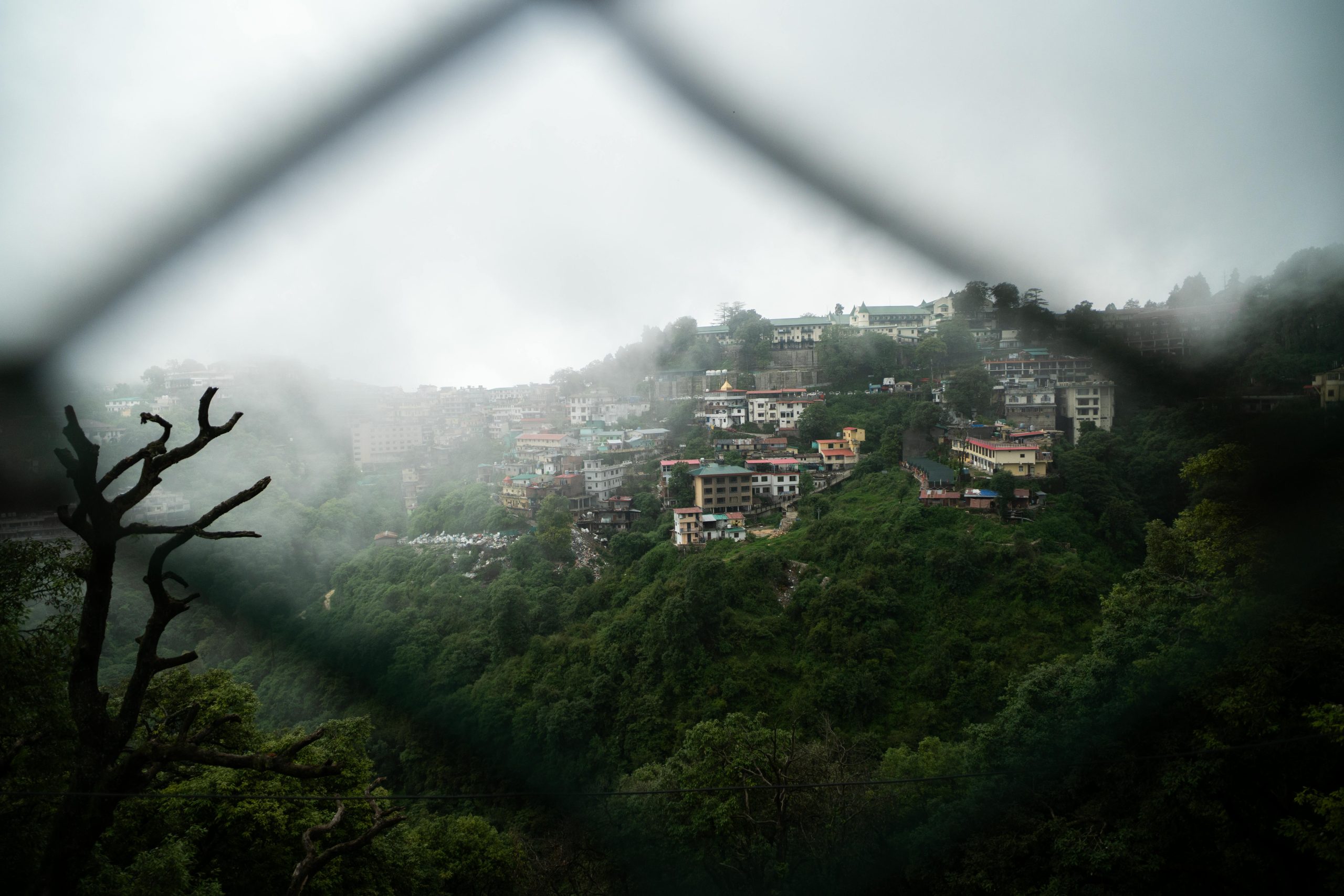
Approximately two million domestic tourists travel to Mussoorie every year, making it one of the most visited hill stations in northern India. Yet if you ask a returned visitor what they saw, the answer is almost always the same: Mall Road, Kempty Falls, and a cable car ride to Gun Hill. That loop takes about six hours. Most people stay three days.
The gap between what Mussoorie offers and what most visitors actually experience is striking. The hill station sits at roughly 2,000 metres above sea level in the Garhwal Himalayas, spreads across two ridges connected by a 5-kilometre municipal road, and contains walking trails, heritage bungalows, forested campsites, and viewpoints that most tourists drive past on their way to the next Instagram spot.
The Geography Nobody Explains to You Before You Go
Mussoorie is not one place — it is two connected ridges. Understanding this saves you significant time and confusion on arrival. The western ridge runs from Barlowganj through Landour to the Char Dukan area. The eastern ridge covers Library Bazaar, Mall Road, and down to Kulri. Most tourist infrastructure sits on the eastern side, but the quieter, more scenic stretches are on the western end near Landour.
Landour, technically a cantonment area, is where Mussoorie’s slower, more residential character lives. Writer Ruskin Bond has called this neighbourhood home for decades. The lanes around Landour Clock Tower and Char Dukan — a cluster of four old shops at a crossroads — offer a completely different atmosphere from the hawker stalls of Mall Road. Many visitors who discover Landour on day two wish they had planned their entire stay around it.
The road distance from Delhi to Mussoorie is approximately 290 kilometres via the NH-58 and Dehradun route. Most travellers from Delhi take an overnight train to Dehradun (roughly ₹300–₹800 in sleeper/3AC) and then a shared cab or Uttarakhand Roadways bus to Mussoorie — an additional ₹50–₹150. Private taxis from Dehradun station cost around ₹700–₹900. This combination is considerably cheaper than driving and avoids the parking chaos at Mussoorie’s entry points, where vehicles are often held at Library Chowk during peak season.
When to Go and What to Expect Each Season
The honest answer is that no single season is perfect for every traveller. Each period offers something genuinely distinct, and the right choice depends entirely on what you want from the trip.
May and June are the most crowded months — hotel rates during this window can be two to three times the off-season rate, and Mall Road on a weekend evening resembles a street fair rather than a mountain promenade. Monsoon travel (July–September) is genuinely underrated. Landslides occasionally affect the Dehradun–Mussoorie road, so check road conditions before departing, but the town thins out dramatically and prices drop by roughly 30–40 percent. October and November offer the best trade-off: manageable crowds, the clearest views of Bandarpunch and Kedarnath peaks, and comfortable walking weather.
What Mussoorie Actually Costs: A Realistic Budget Breakdown
Budget travel in Mussoorie is entirely achievable, but the numbers depend heavily on where you stay and whether you eat on Mall Road or one block behind it. Restaurants on Mall Road charge a significant premium — a basic thali that costs ₹120 at a lane-side dhaba near Kulri Bazaar will be priced at ₹250–₹320 on the main drag with no meaningful difference in quality.
For two people travelling together, a three-day off-season trip from Delhi works out to roughly ₹6,000–₹9,000 total — ₹3,000–₹4,500 per person. During peak May–June, the same trip comfortably crosses ₹12,000–₹16,000 for two, mostly driven by hotel prices. Booking accommodation 3–4 weeks in advance and avoiding long weekends cuts costs significantly.
The Attractions Worth Planning Around (and One to Skip)
Kempty Falls is Mussoorie’s most visited attraction and also its most misrepresented one. Located about 15 kilometres from town at a lower elevation, the waterfall is genuinely impressive after the monsoon — but during peak summer, the pool below fills with hundreds of visitors and the approach road becomes a gridlock. If you are visiting between October and March, Kempty is worth the trip and takes roughly half a day. In May or June, it is better skipped unless you arrive before 9 a.m.
Gun Hill, accessible by ropeway from Kulri Bazaar, offers the best panoramic view of the Himalayan range from within Mussoorie town. On a clear morning in October or November, you can see Bandarpunch (6,316 metres), Kedarnath (6,940 metres), and on exceptional days, Gangotri peaks. The ropeway costs approximately ₹100–₹150 per person for a return ride. The walk up is also possible and takes about 20–25 minutes from Mall Road.
Cloud’s End, at the far western tip of the hill station, is where the road stops and the forest begins. The GMVNL (Garhwal Mandal Vikas Nigam) operates a heritage property there. The walk from Library Chowk to Cloud’s End covers roughly 7 kilometres and passes the Camel’s Back Road, one of Mussoorie’s most pleasant walking routes with consistent Himalayan views and minimal traffic. It takes about two hours at an easy pace and costs nothing.
Jharipani Falls, located about 8–9 kilometres from town en route to Dehradun, is significantly less crowded than Kempty and equally scenic after rainfall. A shared cab from Library Bazaar costs around ₹40–₹60 per person. This is a practical half-day excursion that most first-time visitors skip entirely because it does not appear prominently on travel aggregator sites.
Practical Logistics: Getting Around Once You Are There
Private vehicles are restricted from parts of Mall Road between certain hours during peak season. The main modes of local transport are shared Vikrams (local tempos/jeeps), taxis, and walking. Shared Vikrams run fixed routes for ₹15–₹40 per person and are the cheapest way to move between Library Chowk, Kulri Bazaar, and Picture Palace Chowk. Taxis are available at fixed government rates from the taxi stand near Library Chowk.
- Library to Kempty Falls (one way): ₹600–₹800 for a private cab; ₹250–₹400 if sharing with other tourists at the stand
- Library to Landour Clock Tower: ₹150–₹250 private; ₹20–₹30 by Vikram
- Library to Cloud’s End: ₹400–₹500 private cab; walkable in 1.5–2 hours
- Dehradun railway station to Mussoorie: ₹700–₹900 private; ₹50–₹150 by shared cab or UPSRTC bus
Accommodation is concentrated near Library Bazaar (quieter, easier vehicle access), Kulri (central, noisier), and Landour (most peaceful, best for walkers). According to Uttarakhand Tourism, the state has a significant number of registered hotels and guesthouses in the Mussoorie municipal area — ranging from sub-₹1,000 budget rooms to heritage properties charging upwards of ₹12,000 per night.
What a Good Mussoorie Itinerary Actually Looks Like
Three days is the right amount of time. One day is not enough; four days requires deliberate planning to avoid repetition. A practical structure for first-time visitors would be: Day 1 for arrival and Landour exploration, Day 2 for Mall Road, Gun Hill, and Camel’s Back Road, and Day 3 for Kempty Falls or Jharipani followed by departure.
Couples and honeymooners tend to find the winter months (December–February) most atmospheric — snowfall is possible but not guaranteed, hotel tariffs are at their lowest, and the town has a genuinely quiet quality that peak season completely erases. Families with young children generally do better in March–April or October, when the weather is mild and the crowds have not yet peaked.
Mussoorie rewards the traveller who slows down. The town’s character is not in its waterfalls or its cable car — it is in the quality of light on the Doon Valley at dusk, the smell of pine on Camel’s Back Road early in the morning, and the lanes behind Char Dukan that have changed very little in decades. The two million people who pass through each year largely miss this. That, more than any single attraction, is what the hill station is actually offering.
Frequently Asked Questions
{“@context”:”https://schema.org”,”@type”:”FAQPage”,”mainEntity”:[{“@type”:”Question”,”name”:”What is the best time to visit Mussoorie in 2026?”,”acceptedAnswer”:{“@type”:”Answer”,”text”:”October and November offer the clearest Himalayan views, comfortable walking temperatures (5°C–18°C), and manageable crowds. March–April is good for families. Avoid May–June if you want lower prices and fewer crowds — hotel rates can double or triple during this peak window.”}},{“@type”:”Question”,”name”:”How do I get to Mussoorie from Delhi by train?”,”acceptedAnswer”:{“@type”:”Answer”,”text”:”Take an overnight train from Delhi to Dehradun (approximately ₹300–₹800 in sleeper/3AC, roughly 6–7 hours). From Dehradun railway station, take a shared cab or Uttarakhand Roadways bus to Mussoorie for ₹50–₹150, or a private taxi for ₹700–₹900. Total journey time from Delhi door to Mussoorie is 8–10 hours.”}},{“@type”:”Question”,”name”:”How much does a 3-day Mussoorie trip cost per person from Delhi?”,”acceptedAnswer”:{“@type”:”Answer”,”text”:”Off-season (excluding May–June), a budget of ₹3,500–₹4,500 per person covers return train fares, 3 nights in a budget guesthouse, all meals, and major attractions including Gun Hill ropeway (₹100–₹150) and a Kempty Falls cab. Peak season (May–June) pushes this to ₹6,000–₹8,000 per person due to hotel price surges.”}},{“@type”:”Question”,”name”:”Is Landour worth visiting separately from Mall Road?”,”acceptedAnswer”:{“@type”:”Answer”,”text”:”Yes — Landour is a distinct cantonment area on Mussoorie’s western ridge, roughly 3–4 km from Mall Road. It has a slower pace, colonial-era lanes, and the Char Dukan crossroads area. Most travel itineraries skip it in favour of Mall Road, but local guesthouse owners consistently rate it the better half of any Mussoorie trip. No entry fee; accessible by Vikram tempo for ₹20–₹30 from Library Chowk.”}},{“@type”:”Question”,”name”:”Can I visit Mussoorie without a private car?”,”acceptedAnswer”:{“@type”:”Answer”,”text”:”Entirely — and during peak season it is actually preferable. Trains to Dehradun run from most major North Indian cities. Shared cabs from Dehradun station cost ₹50–₹150 to Mussoorie. Within the hill station, shared Vikram tempos run for ₹15–₹40 per ride, and the main attractions on Mall Road and Camel’s Back Road are walkable.”}}]}