
As of March 30, 2026, the countdown has begun. Within the next three to four weeks, Mussoorie will flip from a calm, fog-draped hill town into one of North India’s most congested tourist destinations. Hotel prices will jump by 60 to 90 percent. The Mall Road will be shoulder-to-shoulder with visitors. Parking queues on the Dehradun–Mussoorie highway will stretch for kilometres.
Right now, that version of Mussoorie does not exist. The one that exists today — cooler mornings, half-empty cafés, snow still visible on distant Himalayan ridges — is available for a few more days. This article is about that Mussoorie, why it matters, and how to plan a trip before the window closes.
Why the Timing of Your Mussoorie Trip Changes Everything
Mussoorie sits at approximately 2,005 metres above sea level in the Garhwal Himalayan foothills of Uttarakhand, roughly 35 kilometres from Dehradun. The hill station earned its “Queen of Hills” reputation during the British colonial era and has retained its visitor appeal for over 150 years. But the experience it delivers is dramatically different depending on when you arrive.
The peak tourist season runs from May 1 through July 15 — driven by school summer holidays across India. During this window, according to Uttarakhand Tourism, Mussoorie receives upwards of 1.5 lakh visitors on peak weekends. The infrastructure — roads, parking, guesthouses, and restaurants — was not designed for that volume.
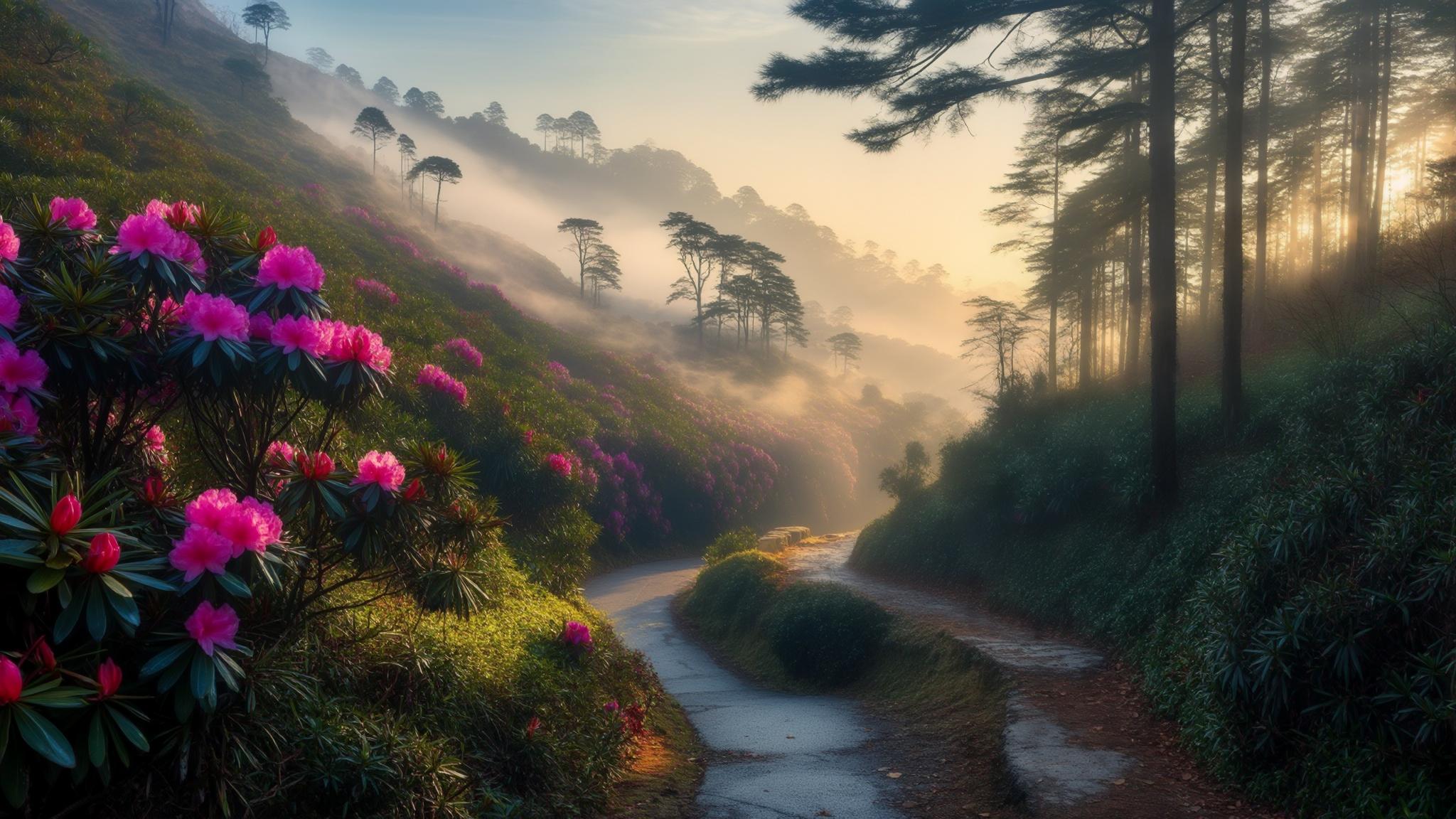
Late March through mid-April sits in a peculiar sweet spot. The harsh winter cold has lifted. The rhododendrons are in full bloom along the Camel’s Back Road. The Himalayas are still sharp and snow-capped on clear mornings. And critically, the crowds have not yet arrived.
The Places That Disappear Under Tourist Pressure
Most first-time visitors to Mussoorie follow an almost identical route: Kempty Falls, Gun Hill via ropeway, a walk down Mall Road, and Lal Tibba if they are ambitious. This is not a bad itinerary. But it represents perhaps 30 percent of what Mussoorie actually offers, and it is the 30 percent that becomes completely overwhelmed in summer.
The following locations are best experienced in the pre-peak window, and each offers something the standard tourist circuit does not.
- Dhanaulti (25 km from Mussoorie): A quieter hill escape with eco-park cabins and open meadows. Apple orchards are just beginning to blossom in late March. Average day-trip cost by shared taxi: ₹200–₹300 per person.
- Benog Wildlife Sanctuary: A 2-kilometre walk from the western end of Mall Road leads into a protected forest. Leopards, barking deer, and Himalayan birds including the Khalij pheasant are active in spring. Entry: ₹150 for Indian adults.
- Camel’s Back Road: A 3-kilometre loop road that is genuinely peaceful in March. The rhododendron trees along this stretch are in peak bloom right now. Horse rides available at ₹300–₹500 for the full loop.
- Cloud’s End: At the far western edge of Mussoorie, this former private estate now operates as a heritage hotel and open viewing point. Dense oak and rhododendron forest begins here — a proper forest walk is available and free to access from the road.
- Jharipani Falls: Approximately 8.5 kilometres from Mussoorie town, this waterfall sees a fraction of Kempty’s footfall even in peak season. In late March, the water volume is good from lingering winter runoff.
A Real Budget Breakdown for a 3-Day Mussoorie Trip Right Now
Budget travel in Mussoorie is entirely possible, but the numbers shift considerably depending on season and choices. The following breakdown is based on a 3-day, 2-night trip for two people arriving from Delhi by train to Dehradun, then road to Mussoorie.
The gap is significant. A couple or family of four planning the same trip in May can expect to pay nearly double, with the added friction of finding available hotel rooms, traffic delays on the Mussoorie bypass road, and competition for restaurant tables. The Uttarakhand Tourism Development Board actively encourages shoulder-season travel to reduce pressure on hill station infrastructure.
Where to Eat and What to Order in Mussoorie Right Now
Mussoorie’s food scene is better than most visitors expect, and the restaurant experience in late March is considerably more relaxed than in peak summer. The following establishments are consistently recommended and are open year-round.
Café Coffee Day and Landour Bakehouse are the reliable anchors on Mall Road, but the more interesting eating is in Landour — the quieter cantonment area uphill from central Mussoorie. Char Dukan (Four Shops), a cluster of small eateries near Landour, serves maggi, omelettes, and chai at an altitude of roughly 2,100 metres with Himalayan views that are genuinely difficult to find elsewhere in the region.
For sit-down meals, Tavern Restaurant on Mall Road has been operating for decades and is known for its Continental and North Indian menu. Average meal for two: ₹600–₹900. For budget eating, the stalls near Library Chowk serve chaat, momos, and corn on the cob — a full snack meal for two costs under ₹200.
- Char Dukan, Landour: Maggi and chai with Himalayan views. ₹80–₹150 per person.
- Landour Bakehouse: Fresh bread, pastries, and filter coffee. ₹200–₹400 for two.
- Tavern Restaurant, Mall Road: Full meals, good for families. ₹600–₹900 for two.
- Rice Bowl, Kulri Bazaar: Reliable Chinese and momos. ₹400–₹700 for two.
- Library Chowk stalls: Street food — momos, corn, bhutta. ₹150–₹250 for two.
The Practical Trip-Planning Checklist for Late March Travel
One logistical note worth raising: private vehicles are subject to entry restrictions at the Mussoorie barrier during peak season. In late March, no such restrictions currently apply. This means you can drive to your hotel directly without waiting at checkpoints — a convenience that disappears entirely by early May.
Mussoorie is not going anywhere. It will be there in June, in August, and in October. But the version of Mussoorie that is peaceful, affordable, and actually lets you experience the landscape rather than manage the crowd — that version has a closing date, and it is approaching faster than most planners realise.
Frequently Asked Questions
{“@context”:”https://schema.org”,”@type”:”FAQPage”,”mainEntity”:[{“@type”:”Question”,”name”:”What is the best time to visit Mussoorie to avoid crowds?”,”acceptedAnswer”:{“@type”:”Answer”,”text”:”Late March to mid-April is the least crowded period before peak summer season. Hotel rates during this window average ₹1,800–₹3,200 per night for 3-star properties, compared to ₹4,500–₹7,000 during May–June peak season.”}},{“@type”:”Question”,”name”:”How far is Mussoorie from Delhi and Dehradun?”,”acceptedAnswer”:{“@type”:”Answer”,”text”:”Mussoorie is approximately 35 kilometres from Dehradun and roughly 290 kilometres from New Delhi. The Shatabdi Express from New Delhi to Dehradun takes approximately 5–6 hours, after which a taxi to Mussoorie takes 45–75 minutes depending on traffic.”}},{“@type”:”Question”,”name”:”What is the temperature in Mussoorie in late March?”,”acceptedAnswer”:{“@type”:”Answer”,”text”:”Late March mornings in Mussoorie average 8–12°C, with afternoons warming to 18–22°C. A light jacket combined with a fleece layer is sufficient for most visitors during this period.”}},{“@type”:”Question”,”name”:”What are the entry fees for major Mussoorie attractions?”,”acceptedAnswer”:{“@type”:”Answer”,”text”:”Gun Hill ropeway costs ₹100 per person return. Benog Wildlife Sanctuary charges ₹150 for Indian adult entry. Camel’s Back Road is free to walk, with horse rides costing ₹300–₹500 for the full 3-kilometre loop.”}},{“@type”:”Question”,”name”:”How much does a 3-day Mussoorie trip cost for two people?”,”acceptedAnswer”:{“@type”:”Answer”,”text”:”A 3-day, 2-night trip for two people from Delhi including train tickets, taxi, hotel, food, and activities costs approximately ₹7,700–₹11,600 in late March. The same trip in peak May–June season costs an estimated ₹13,100–₹22,500.”}}]}