
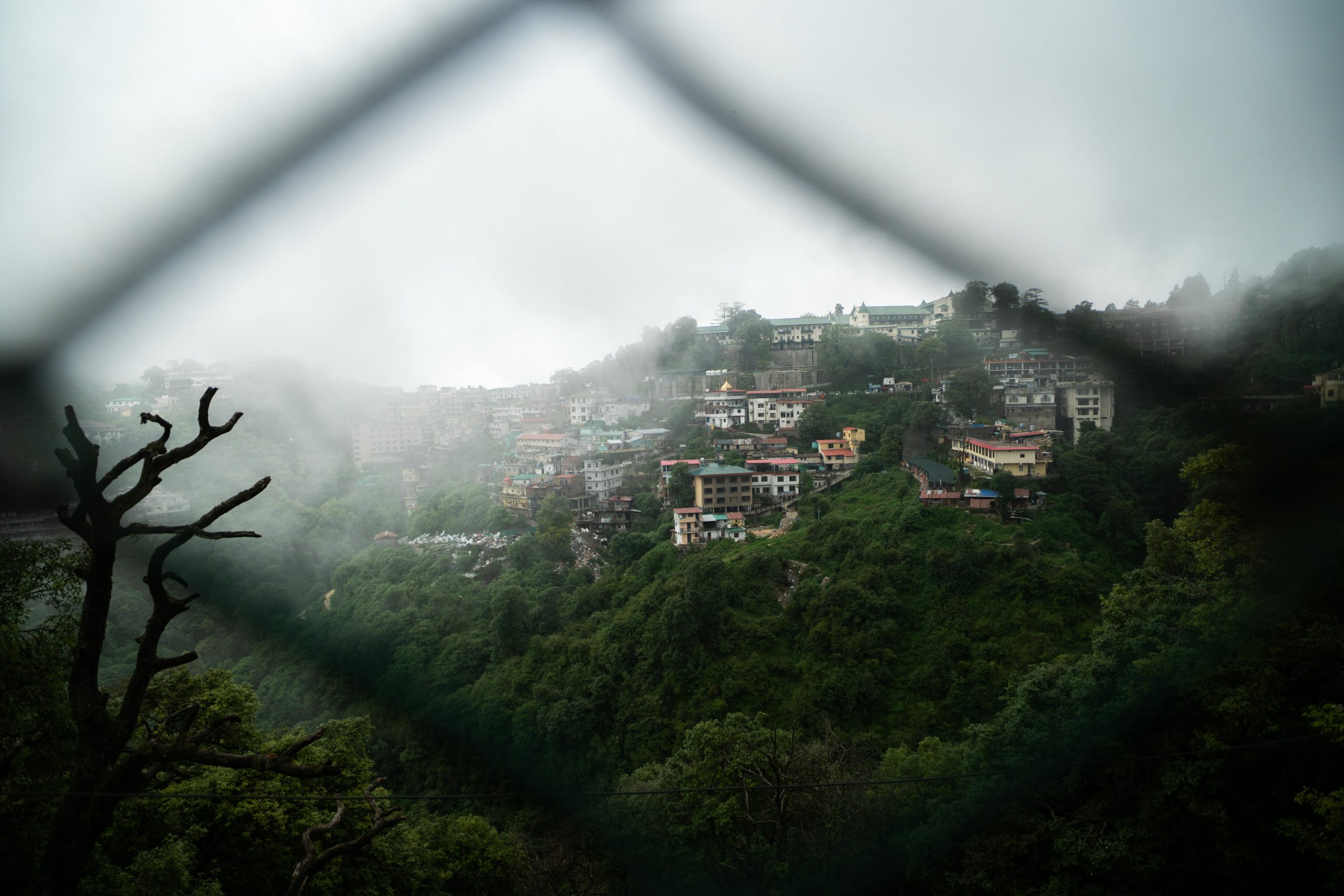
Have you ever returned from Mussoorie feeling vaguely cheated — like the photos you took looked identical to every other traveler’s photos, and the trip cost twice what you expected for half the peace you wanted? You are not alone, and the reason is simpler than you think.
Mussoorie has two versions. One version is sold to tourists. The other version is lived in by locals, retired officers, Tibetan monks, and a small community of writers who have quietly kept it beautiful. Most domestic travelers never find the second version because nobody on the tourist bus is pointing them there.
The Story Every Traveler Believes About Mussoorie
The standard itinerary writes itself. You arrive from Dehradun (roughly 35 km, an hour by taxi), check into a hotel near Library Chowk or Picture Palace, walk Mall Road, take the ropeway up to Gun Hill, drive to Kempty Falls, buy some fudge and woolens, and go home. It is the same trip your parents took in 1998 and the same trip your cousin posted about on Instagram last October.
This itinerary is not wrong, exactly. Mall Road has a genuine Victorian-era charm on early mornings before the vendors set up. Gun Hill does offer a panoramic Himalayan view on clear days — you can spot Bandarpunch and Srikantha peaks if the air is clean. Kempty Falls, for all its chaos, is legitimately dramatic after a monsoon.
But here is what the standard itinerary misses: Mussoorie was never designed to be a day-tripper destination. It was built as a residence — a place where British officers, missionaries, and later Indian civil servants came to live for months. The infrastructure, the architecture, the walking paths — they were all built for people who were staying, not passing through.
Where the Crack Appears: What Returning Visitors Start to Notice
Ask anyone who has been to Mussoorie more than twice and a pattern emerges. On the second or third visit, they drifted away from the main road — usually by accident — and found something that felt completely different. A quieter road. An old church with a cemetery. A tea stall with a view that no signboard pointed to.
That drift almost always leads the same direction: upward and eastward, toward Landour.
Landour is technically a separate cantonment area, sitting about 300 metres higher than Mussoorie’s main bazaar. It is where author Ruskin Bond has lived for most of his adult life. It is where Char Dukan — a cluster of four heritage eatshops — serves maggi and tea on a terrace overlooking the Doon Valley. It is where St. Paul’s Church, built in 1840, still holds Sunday services attended mostly by the families of Tibetan refugees who settled here after 1959.
The Evidence: What Tourist Mussoorie Gets Wrong and Why
The problem is not that the popular attractions are bad. The problem is that they have been scaled for volumes they were never meant to handle, which degrades the experience for everyone.
Kempty Falls, discovered and developed by British officer John Mekinan in 1835, was originally a private picnic spot accessible by a narrow trail. Today the road to it is lined with plastic chair rentals, tarp-covered food stalls, and parking attendants shouting over each other. The falls themselves are real and beautiful — but reaching them involves a 200-step descent through a crowd that can number in the thousands on a summer weekend.
Gun Hill, Mussoorie’s second highest peak at 2,122 metres, is genuinely worth visiting — but the ropeway queue on peak days can mean a 45-minute wait each way for a 5-minute ride. The alternative is a 20-minute uphill walk from the Mall Road that most travelers skip because nobody tells them it exists.
The real issue with tourist Mussoorie is that it optimizes for throughput rather than experience. Every commercial decision — the souvenir shops, the ropeway, the photo-point boards — is designed for someone who has two hours and wants to tick a box. If you have two days, that infrastructure actively works against you.
The Real Mussoorie: Five Places the Tourist Bus Never Stops
Once you accept that the famous spots are just the entry point, a completely different Mussoorie becomes available. These are not obscure secrets — they are simply places that require a little more walking or a slightly earlier start than most package tourists manage.
- Lal Tibba: The highest accessible point in Mussoorie at 2,290 metres, located in the Landour cantonment. On a clear winter morning, the Japanese telescope installed here offers a view of Badrinath and Kedarnath peaks. Entry is ₹25 per person. Most tourists never make it this far because it is beyond the main bazaar.
- George Everest’s House: About 6 km from Library Chowk, the ruins of the estate belonging to Surveyor General George Everest (after whom Mt. Everest is named) sit on a dramatic ridgeline with 270-degree valley views. The walk from Park Estate takes about 45 minutes. There is no entry fee, no crowd, and no souvenir stall.
- Camel’s Back Road: A 3-km loop road named for a rock formation that resembles a camel’s hump. This is where Mussoorie residents walk in the early morning. Horses can be hired along the route, and the sunrise view toward the Doon Valley is among the best in the region.
- Char Dukan, Landour: Four small eateries at a crossroads in upper Landour that have been operating since the 1970s. The Anil’s Char Dukan maggi is locally famous. You will find more honest conversation here in one hour than in a full day on Mall Road.
- Benog Wildlife Sanctuary: A 342-hectare forest sanctuary about 11 km from Mussoorie town. Home to leopards, barking deer, and the Himalayan white-capped redstart. The entry permit costs ₹150 for Indians. Early morning entry (before 8 AM) offers the best chance of birdwatching, with over 100 species recorded.
What This Actually Means for How You Plan Your Trip
The practical shift this requires is surprisingly small. You do not need a special permit for Landour (it is open to visitors, though some roads are restricted after dark). You do not need a guide for Camel’s Back Road. George Everest’s House requires a shared taxi from Library Chowk costing roughly ₹300 for the round trip if you negotiate.
What you do need is to stay at least two nights. Mussoorie done in a day is Mussoorie done badly. The distances between the real highlights are not dramatic, but the morning-to-evening rhythm matters — the mist lifts differently at 7 AM than at 11 AM, and the light on the Himalayan ridgeline at 5 PM is something that cannot be replicated in a photo from Gun Hill at noon.
Budget-wise, a two-night Mussoorie trip for two people — staying in a decent mid-range hotel in Landour or upper Mall Road at roughly ₹2,500–₹3,500 per night, eating at local dhabas and Char Dukan, hiring a shared taxi for George Everest’s House — can be done comfortably for ₹8,000–₹12,000 total. That is without the markups that come with peak-season package deals.
According to Uttarakhand Tourism, Mussoorie is categorized as a Tier-1 hill destination in the state, which means ongoing infrastructure investment but also regulated visitor zones in sensitive areas like Benog Sanctuary. Checking their portal before your trip for any seasonal closures or permit updates takes five minutes and can save a wasted journey.
The version of Mussoorie that disappoints people is the one they plan without asking what they actually want from a hill station. If the answer is mountain silence, old stone buildings, forest walks, and tea with a view — that version is available, fully intact, and waiting about 20 minutes’ walk from where most tour buses stop.
Frequently Asked Questions
{“@context”:”https://schema.org”,”@type”:”FAQPage”,”mainEntity”:[{“@type”:”Question”,”name”:”How do I get from Dehradun to Mussoorie?”,”acceptedAnswer”:{“@type”:”Answer”,”text”:”Dehradun railway station is approximately 35 km from Mussoorie. Shared taxis run regularly from Dehradun’s Mussoorie bus stand for around ₹150–₹200 per seat. Private taxis cost approximately ₹700–₹900 one way. The drive takes 45–75 minutes depending on traffic.”}},{“@type”:”Question”,”name”:”Is Landour open to tourists or is it a restricted cantonment?”,”acceptedAnswer”:{“@type”:”Answer”,”text”:”Landour is open to tourists during daylight hours. Some internal cantonment roads may restrict vehicles, but walking access is generally permitted. There is no entry fee to visit Char Dukan or surrounding lanes; Lal Tibba charges ₹25 per person.”}},{“@type”:”Question”,”name”:”What is the best time of year to visit Mussoorie for clear Himalayan views?”,”acceptedAnswer”:{“@type”:”Answer”,”text”:”Late September to mid-November offers the clearest mountain visibility after the monsoon, with temperatures between 8–18°C. Winter (December–February) can also deliver stunning views from Lal Tibba at 2,290 metres on cloudless days.”}},{“@type”:”Question”,”name”:”How much does a 2-night Mussoorie trip cost for two people?”,”acceptedAnswer”:{“@type”:”Answer”,”text”:”A mid-range two-night trip for two people costs approximately ₹8,000–₹12,000 total, including hotel (₹2,500–₹3,500 per night off-peak), meals at local restaurants, and taxi hire for George Everest’s House at roughly ₹300 shared.”}},{“@type”:”Question”,”name”:”Is Benog Wildlife Sanctuary worth visiting and how do you get there?”,”acceptedAnswer”:{“@type”:”Answer”,”text”:”Benog is a 342-hectare forest about 11 km from Mussoorie town with over 100 bird species and leopards. Entry costs ₹150 for Indian nationals. A return taxi from Library Chowk costs approximately ₹400–₹500. Arrive before 8 AM for the best wildlife experience.”}}]}